

Table of Contents
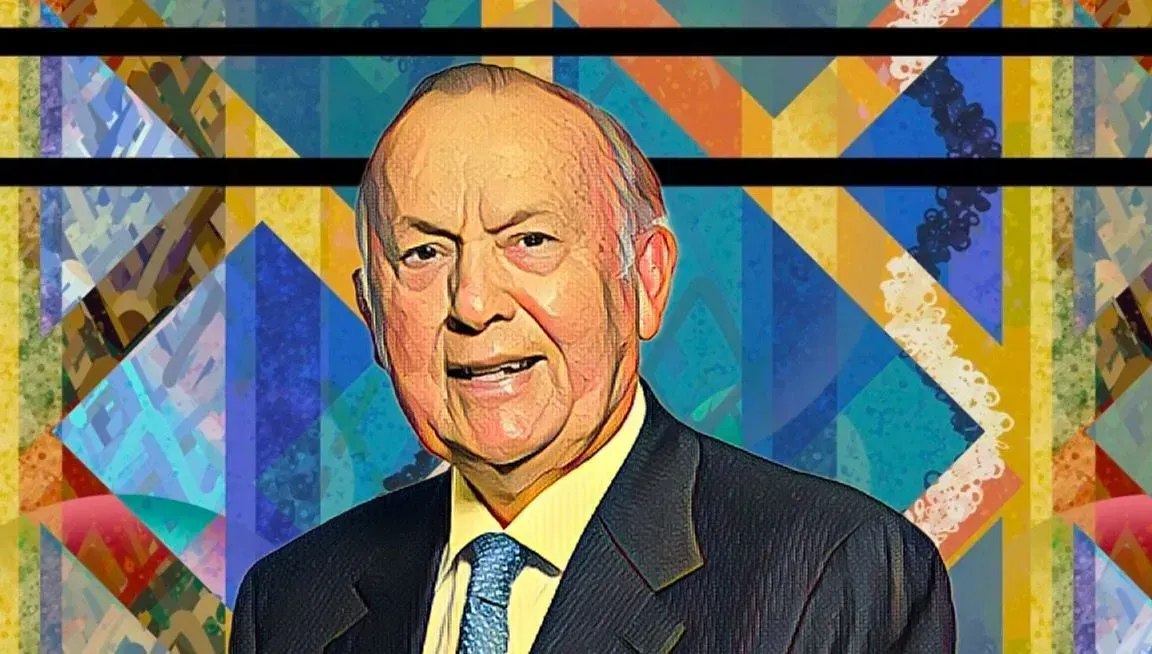
South African retail billionaire Christo Wiese helped buy an eight-store grocery chain in Cape Town for R1 million in 1979. Forty-seven years later, Shoprite Holdings is Africa's largest retailer and is valued at close to R200 billion ($12 billion) on the Johannesburg Stock Exchange.
The group closed its latest financial year with record numbers. In the 52 weeks to June 28, 2026, sales rose 7.2% to R270.8 billion ($16.3 billion) and trading profit climbed 8.4% to R16.2 billion ($972 million). Shoprite ran 3,710 stores at the end of the period, employed 174,430 people and raised its full-year dividend 11.8% to 873 cents a share. Sixty60, its on-demand delivery service, lifted sales 34.5% to R25.5 billion ($1.53 billion).
Wiese, 85, still owns about a tenth of the company, a stake worth roughly R20 billion ($1.2 billion) at current prices, and keeps a much larger say in its affairs through a separate class of shares.
The 1979 deal
Shoprite opened its first store in Wynberg, Cape Town, in 1966. It was founded by Barney Rogut and Basil Geller and still had only eight outlets in the Western Cape when Pep Stores, the discount clothing chain Wiese was helping to run, bought it in May 1979 for about R1 million.
The deal was the work of Wiese and Whitey Basson, a chartered accountant who had joined Pep in 1971 and run its operations since 1974. Basson had persuaded the Pep board to let him either buy a food retailer or start one. He chose to buy.
"I realised it would be better and faster to buy something that already existed than to establish something from scratch," Basson has said.
Rogut and Geller stayed on in management, and every employee was kept. By the end of 1983 the chain had 21 outlets, and when Shoprite listed on the JSE in 1986 it had 33 stores and a market value of R29 million.
From Checkers to Africa
The two men then went after bigger, weaker rivals. In 1991 Shoprite took over Checkers, a 169-store chain that was losing money heavily, through a reverse merger valued at R55 million. Basson said it took nine months to turn Checkers around. Checkers now accounts for more than R100 billion of the group's annual revenue.
In 1997 Shoprite paid South African Breweries R1 for OK Bazaars, a retailer with a much larger market value, and absorbed its supermarkets and furniture stores. The group opened its first store outside South Africa in Windhoek, Namibia, in 1990 and spread into Zambia, Mozambique, Botswana and beyond later that decade.
Basson ran the business as chief executive for more than three decades before retiring at the end of 2016. Wiese served as chairman for more than 30 years and stepped down in November 2020, handing the role to Wendy Lucas-Bull. Pieter Engelbrecht has been chief executive since Basson left.
Wiese's stake today
Wiese held 63.2 million Shoprite ordinary shares at the end of June 2025, almost all of them indirectly through his Titan group, according to the company's annual financial statements. His holding amounts to roughly 10% of the 591.3 million ordinary shares in issue.
His influence goes beyond that. Titan's Thibault Square Financial Services owns 305.6 million deferred shares, which carry votes but little economic value. In 2019 Wiese used those votes to keep the chairmanship despite opposition from holders of more than 60% of the ordinary shares. Shoprite later proposed buying back the deferred shares but withdrew the plan after investor resistance.
Between late April and early May, Titan sold total return swaps over 6.86 million Shoprite shares. The two largest, covering 5.36 million shares, were worth about R1.54 billion ($92 million) at reference prices of R285.79 and R287.55 a share. Shoprite said in filings that the transactions do not change the Wiese family's beneficial holding or the voting rights attached to its ordinary and deferred shares.
The Shoprite stake has also helped Wiese rebuild after the collapse of Steinhoff International. He sold Pepkor to Steinhoff in 2014 in exchange for about 20% of the furniture and clothing group, became its chairman in 2016, and lost billions of dollars when Steinhoff disclosed accounting irregularities in December 2017 and its shares crashed. Titan later sued Steinhoff over R59 billion of share purchases, and the dispute was settled in 2022.
His net worth is now estimated at $1.9 billion, with Shoprite his most valuable asset. He also holds stakes in investment company Brait, industrial group Invicta Holdings and Collins Property Group.
The intelligence satisfies curiosity. The paid briefings satisfy strategy.
Every Monday, Elite subscribers receive an Investor Memo...
Subscribe now