

Table of Contents
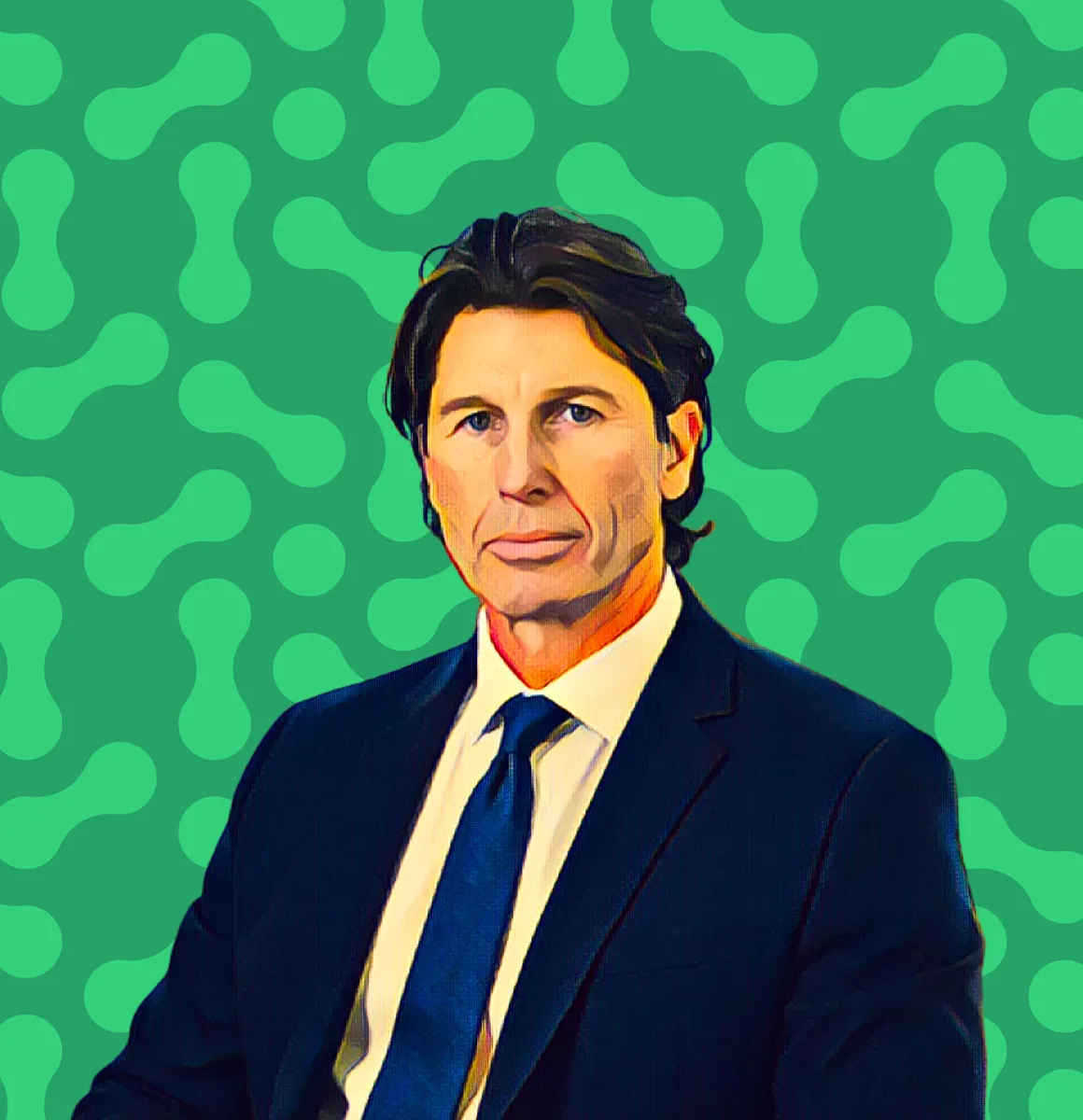
Glen Steward grew up on a sugar cane farm in the Midlands of KwaZulu-Natal, the son of a former Essex county cricketer turned cane farmer and a nursing sister. On Oct. 14, the South African financier stood with his leadership team at the Nasdaq MarketSite in New York’s Times Square to ring the opening bell for Stewards Inc., the Florida-based financial company he chairs.
The ceremony capped a run of milestones for the company. Stewards began trading on the Nasdaq Capital Market on Sept. 10 under the ticker SWRD after moving up from the over-the-counter market, a step its own filings had warned in April it was not yet equipped to take. The company traded for years as FAVO Capital, a Fort Lauderdale lender to small businesses, before adopting the Stewards name in November 2025 to bring it under the brand Steward has built across South Africa and Mauritius over close to three decades. He served as chief strategy officer before becoming chairman of the board in April.
Today, Stewards runs a private credit business, a real estate portfolio and a growing technology arm focused on asset tokenization and digital treasury. Since 2020, it has provided more than $153 million in merchant cash advances to over 10,000 small and medium-sized businesses in the United States. Its move into property came in August 2025 with the purchase of the 1818 Park asset in a $190 million deal.
Steward started his career in London at Merrill Lynch and DMG Deutsche Morgan Grenfell before returning home to build investment businesses in South Africa and Mauritius. His advisory firm, Stewards Investment Capital, works with wealthy individuals and institutional investors on alternative assets. He credits Mauritius as the base that carried the group into the United States.
In this interview with Billionaires.Africa, Steward talks about his childhood on the farm, the advice from his father that he calls his secret weapon in business, and the role his wife Cara and their four children have played in his career. He names the executives in Mauritius and the United States behind the listing, explains his investment approach of preservation, compounding and discipline, and sets out what African families should do about currency risk, succession and wealth concentrated in a single business.
1. You were born and raised in South Africa before building a career that later took you to London, Mauritius and the United States. Can you tell us about your early life, your education, and the experiences that shaped your outlook on business and investing?
I grew up on a sugar cane farm in the Midlands of KwaZulu-Natal, during a period when the country was undergoing profound economic and social change. That environment teaches resilience. It teaches you that markets, currencies and political systems are never static, and that opportunities often emerge where others see uncertainty.
It was a close household: my parents, my younger sister Mary, and me. We were all animal lovers, so the farm was humming with every farm animal you can think of, including a vervet monkey and wild pigs. There was never a dull moment. My father had been a professional cricketer, representing Essex, before he turned to sugar cane farming and, later, to insurance as a Liberty Life agent. My mother mostly looked after us at home, and she was also a nursing sister. They had humble means, and they emphasised respecting money rather than idolising it. I have carried that approach with me. One of our biggest values was prioritising family. We were incredibly close, and we thrived on not taking life, or ourselves, too seriously. My father also gave me wise words at a young age: to be successful, you have to learn to cater and adapt to different personalities. That has been one of my secret weapons in business, given the diverse nature of any industry and the value created by investing in relationships.
My education provided the technical foundation. I attended Merchiston College Preparatory School in Pietermaritzburg, then Maritzburg College, and I completed matric at Westville Boys’ High. I received my Bachelor of Commerce at the University of Durban-Westville, and years later I pursued an MBA through a university in Scotland. Most of the lessons that shaped me, though, came from observing entrepreneurs and business owners, and from home. I was always fascinated by the people who built companies from scratch, employed others and created value over long periods of time. They understood something that financial markets occasionally forget: wealth is ultimately created by productive businesses solving real problems.
My ambition for finance really kicked in at the age of sixteen. I was suddenly hit by the reality of what it meant to be successful, and I was captivated by the opportunities within the world of finance and investing. From that stage I developed a strong interest in capital allocation: not only in how money is invested, but in how businesses are financed, how risk is managed and how long-term value is created. That perspective has stayed with me throughout my career. An earlier, lighter memory is from about the age of nine, when a friend, Jeremy, and I decided we were going to start a business selling ducks, named GJ Ducks. The farm animals had inspired it. My mother quickly shut it down, but it is my earliest memory of those entrepreneurial instincts starting.
What shaped me most was the combination of operating in emerging markets while being exposed to global financial centres. It taught me to appreciate both discipline and adaptability. The discipline comes from understanding risk; the adaptability comes from recognising that every market, every client and every opportunity is different, which is exactly what my father had tried to teach me.
2. You began your financial career at Merrill Lynch and DMG Deutsche Morgan Grenfell in London. What did those formative years teach you, and how did they influence the way you later built businesses across South Africa, Mauritius and the United States?
Those years in London were incredibly formative. Merrill Lynch and DMG Deutsche Morgan Grenfell exposed me to world-class financial institutions, sophisticated clients and global capital markets operating at scale. Coming from a sugar cane farm in the Midlands, the scale itself was an education.
What impressed me most was the discipline. Every investment decision had to be supported by rigorous analysis. Risk management was not a separate function; it was embedded in the culture. There was a constant focus on liquidity, transparency and accountability. My father’s advice about adapting to different personalities proved as useful there as it has been everywhere since.
At the same time, I observed a gap in the market. Large institutions are exceptionally good at serving large pools of capital, but many successful entrepreneurs and families wanted more flexibility, more personal attention and solutions tailored to their specific circumstances.
When I later built businesses in South Africa and Mauritius, I wanted to combine institutional-quality processes with entrepreneurial agility. We adopted the governance, reporting standards and risk disciplines I learned in London, while maintaining the flexibility that private clients and growing businesses often require. The habit of respecting capital, rather than idolising it, came from home and fitted naturally with that institutional discipline.
That philosophy remains central to Stewards today. Whether we are managing wealth, structuring investments or financing businesses, we aim to combine institutional standards with entrepreneurial thinking.
3. Behind every demanding professional journey there is also a personal one. As a husband and father of four, how have you balanced family life with the pressures of building and leading an international financial group?
The honest answer is that balance is not something you achieve once and then keep forever. It is something you work on continuously.
Building businesses across multiple jurisdictions inevitably involves long hours, travel and difficult decisions. There are periods when professional demands become intense. During those times, family provides perspective. Prioritising family was one of the biggest values I grew up with, and it has remained the reference point.
My wife, Cara, has been an extraordinary source of support throughout the journey. My mother introduced us, because they were friends, and we married on 20 December 1999. Building a business is often portrayed as an individual achievement, but the reality is that no entrepreneur succeeds alone. Family makes many sacrifices that are rarely visible from the outside. We have four children: our daughter Jordan, and our sons Connor, Skye and Jagger.
Having children also changes how you think about success. Early in your career, success can be measured by transactions, growth or financial outcomes. As you get older, you start asking different questions. Are you building something that will endure? Are you creating opportunities for others? Are you setting an example that your children can be proud of?
Those questions tend to focus the mind on long-term stewardship rather than short-term results. That was brought home to me personally when Jordan, our only daughter, was married in July 2026 in Chatham, on Cape Cod in Massachusetts. Seeing her unite with her life partner, as I had with Cara, was the proudest moment of my life as a father. It sharpened my sense of legacy, family and continuity: the next generation was no longer an abstraction. It was in the room.
4. Your journey has many elements of the classic American Dream: an African entrepreneur building across continents and ultimately taking Stewards Inc. to Nasdaq. How did that journey unfold, and what did the Nasdaq listing represent for you personally and professionally?
The Nasdaq listing was not a single event. It was the culmination of more than two decades of building businesses, serving clients and adapting to changing markets.
The journey started with a simple idea: create investment and financial-services businesses that help clients access opportunities beyond their local markets. Over time that evolved into a platform spanning wealth management, private credit, real assets and financial infrastructure. I never left Africa in the sense of abandoning it. The companies and trusted partners in South Africa and Mauritius remained, and continued to grow the local business. Mauritius, in particular, was the launchpad that allowed us to go into the United States.
The United States represented a particularly attractive opportunity because of the depth of its capital markets, the scale of its economy and the enormous demand for private capital among small and medium-sized businesses. It is a market where hard work and perseverance can make a real difference, and it offered the international reach I wanted, alongside an Africa that remains one of the richest continents in the world in opportunity.
Reaching Nasdaq was a major achievement, not an easy stepping stone. The regulatory environment was challenging, which made the prize more meaningful. The US market is the number one in the world for the very reason that governance, reporting, audit readiness, legal work, investor communication and operational structure are monitored closely, to protect investor interests. There were many sleepless nights, and we had to get out of our comfort zones, rise to the challenge and learn new things. I had made it my objective from the moment I stepped onto US soil.
The Nasdaq listing represented validation rather than completion, and also the beginning of something bigger, a lasting legacy. It demonstrated that a business with roots in Africa and Mauritius could meet the standards required to operate on one of the world's most recognised public markets. Personally, it was a proud moment because it showed what can be achieved through persistence and long-term thinking. As a South African, I also see achievements of this kind as belonging to my people and my country. Professionally, it provides a platform from which we can access broader pools of capital, attract stronger partners and continue building for the future.
5. No company reaches the public markets through one person alone. Who were the key people behind the Stewards Inc. story, and how did they help turn the vision into a Nasdaq-listed business?
Every successful business is ultimately a team effort.
I have been fortunate to work alongside talented professionals who brought different strengths to the organisation. Some contributed strategic vision, others operational expertise, financial discipline, technology capabilities or deep industry knowledge. The Mauritian core has been essential to that. Bilal Adam has been the driving engine behind the global expansion of Stewards. Nathaniel Tsang Mang Kin is the engineer who keeps the company running on a day-to-day basis. Suneeta Motala crafted and implemented the strategy that has made Stewards the firm it is. Nothing of the international build would have been achieved without that Mauritian platform and those people.
On the United States side, Shaun Quin is a founding pillar of Stewards Inc., a visionary who unites the team whatever the difficulty. Vincent Napolitano, chairman emeritus, founded FAVO Capital, which was subsequently rebranded to Stewards Inc. Vaughan Korte is the person the hardest operating problems go to. Katy Murless brings the discipline that ensures things are done properly, which is indispensable in a listed company. Scott McGowan has been pivotal in driving investor relations, corporate messaging, brand positioning and the full suite of capital-markets communications required to take a company through the rigorous process of a Nasdaq listing.Together they helped position Stewards Inc. as a serious US-listed financial platform.
The leadership team at Stewards has been particularly important because building a public company requires far more than entrepreneurial energy. It requires governance, reporting, compliance, operational execution and the ability to scale systems while maintaining standards.
Our partners, shareholders and clients also deserve significant credit. Public listings attract attention, but they are built on years of trust. Clients entrusted us with capital, shareholders supported our growth and employees committed themselves to the organisation's mission.
The Nasdaq listing may carry a company name, but it represents the efforts of hundreds of people over many years.
6. Now that Stewards Inc. is listed on Nasdaq, what comes next? How do you intend to use that platform to grow the business and create long-term value for clients, shareholders and partners?
The listing is a foundation, not a destination.
Our objective is to continue building a diversified financial platform focused on private credit, real assets and technology-enabled financial infrastructure, including the work we are doing around asset tokenisation and digital treasury. We believe all three areas benefit from long-term structural trends that will remain relevant for many years. Today Stewards Inc. is a diversified financial company with activities in private credit, real estate and asset tokenisation.
In private credit, we see substantial opportunities to provide capital to businesses that are underserved by traditional banking channels. We believe private credit should be part of a well-built portfolio. It is the part of fixed income that can offer a higher return for the same or a lesser amount of risk, provided the underwriting is disciplined. In real assets, we continue to look for investments capable of generating durable cash flows and long-term value. In financial infrastructure, we see opportunities to improve efficiency, transparency and access to capital.
Being listed on Nasdaq enhances our visibility and credibility, but ultimately value creation still comes down to execution. Our focus remains the same as it was twenty years ago: disciplined capital allocation, prudent risk management and long-term relationships. Stewards Investment Capital continues, alongside this, to provide investment advisory to high-net-worth individuals and institutional investors, with a focus on alternative assets as a way to diversify portfolio risk and improve risk-adjusted returns. We are active investors and advisers. We take an active role in the companies we invest in.
If we continue doing those things well, the growth will follow naturally. Readers should understand the long-term plan as underwriting carefully, keeping operating discipline, and keeping the African and Mauritian relationships on the same platform as the American credit and real-assets book.
7. What is your core investment philosophy, and how does that philosophy shape the way Stewards invests and serves clients?
My philosophy can be summarised in three words: preservation, compounding and discipline.
Preservation comes first because capital that is permanently lost cannot compound. Too many investors focus exclusively on returns and underestimate risk. Stewardship is in our name. We are stewards of your capital, and respecting money rather than idolising it is how I was brought up.
Compounding is the most powerful force in investing. Exceptional outcomes are often created not through extraordinary annual returns but through consistent returns over long periods of time.
Discipline is what connects the first two. Markets move through cycles. Fear and greed never disappear. The ability to remain rational when others become emotional is one of the most valuable advantages an investor can possess.
At Stewards, this philosophy translates into a focus on quality opportunities, careful underwriting, diversification and long-term thinking. We are less interested in chasing trends and more interested in identifying opportunities where risk and reward are appropriately aligned. In practice, at Stewards Investment Capital, we focus on risk-adjusted returns. We can tolerate risk where the return is there to justify it. Every client has their own needs, so we assess each client on their requirements and each investment on its own merit, balancing long-term compounding with liquidity and downside protection. We are active investors and advisers, and we take an active role in the companies we invest in.
8. From your vantage point across Africa, Mauritius and the United States, what major investment trends are you seeing that you believe African investors should be paying closer attention to?
The most significant trend is the continued globalisation of African wealth.
Successful African families are increasingly seeking diversification across currencies, jurisdictions and asset classes. They still maintain strong ties to their home markets, but they also recognise the importance of having part of their wealth positioned internationally. We live in a global world, and we need to invest as global citizens.
A second trend is the growing importance of private markets. Investors are looking beyond traditional stocks and bonds and exploring private credit, infrastructure, real assets and specialised investment strategies. Private credit, in particular, deserves a place in the fixed-income allocation. It is where a higher return can be available for the same or a lesser amount of risk. Real assets remain relevant for income and for something tangible, now held with more diversification than a single city or a single operating company.
A third trend is the institutionalisation of family wealth. We are seeing greater interest in governance structures, succession planning, family offices and long-term wealth preservation. For high-net-worth individuals and institutional investors, preservation is often the primary goal.
Finally, technology is reshaping finance. While much of the public attention focuses on cryptocurrencies, the more significant development may be the digitisation of financial infrastructure, settlement systems and capital markets, which is the direction of our own infrastructure work.
The common theme is that investors are becoming more sophisticated, more globally connected and more focused on long-term resilience. Mauritius sits in the middle of that. It has been important to the Stewards story as the launchpad into the United States. It is peaceful, it has a strong rule of law, and it can act as a bridge between Africa, global capital and the United States.
9. Many African investors are thinking about wealth preservation, currency diversification, succession and access to global opportunities. What advice would you give them as they plan for the next decade?
My first piece of advice is to think beyond returns.
Most successful entrepreneurs spend decades building wealth, yet relatively little time thinking about how that wealth will be protected, structured and transferred to future generations. African investors need to think globally on currency. The operating company can remain the best asset a family owns. The surplus should not all sit in the same currency as the business.
Second, diversify intelligently. Diversification is not about owning many assets; it is about reducing concentration risk. Many wealthy individuals remain heavily exposed to a single business, industry, currency or geography. Across generations, diversification and a long-term view matter more than chasing the next shiny thing.
Third, invest with a long-term horizon. The next decade will undoubtedly contain periods of volatility, uncertainty and disruption. Investors who focus on long-term fundamentals rather than short-term headlines will be better positioned to succeed. The mistakes to avoid are overconfidence and asset concentration. Markets have a tendency to prove people wrong when they least expect it.
Finally, remember that wealth is a responsibility as much as it is an asset. Capital should provide financial security, create opportunities, support future generations and contribute positively to society. Governance, succession planning and proper structuring are becoming more important because they are the foundation of continuity.
To young African entrepreneurs who want to build internationally, the qualities that matter most are patience, resilience, credibility and execution. Ambition gets you started. Disciplined execution is what a client, a regulator and a bank can trust. Adapt to the person in front of you. Respect the capital. Stay close to the people who knew you before the title. That is the difference between ambition and a business that lasts.
The intelligence satisfies curiosity. The paid briefings satisfy strategy.
Every Monday, Elite subscribers receive an Investor Memo breaking down the deal, the structure and the positioning behind the week's most consequential African wealth story — the kind of analysis that doesn't appear anywhere else.
Twice a month, a Wealth Intelligence brief profiles a single billionaire's holdings, cash flows and expansion pipeline in detail no public source matches.
→ Executive ($25/mo): Daily newsletter + Deep-Dive Reports
→ Elite ($75/mo): Everything above + Investor Memos + Wealth Intelligence + Quarterly Analyst Briefings
Subscribe now