


Table of Contents
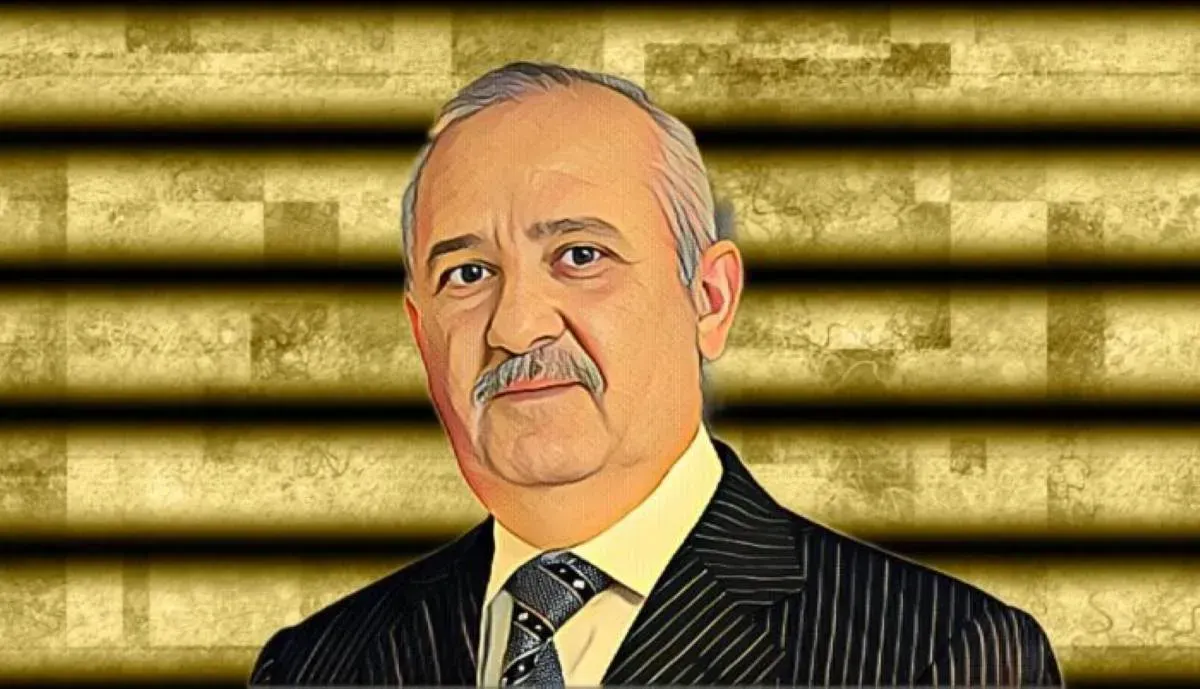
Moroccan tycoon Moulay Hafid Elalamy, the founder of Saham Group and chairman of French outsourcing company Teleperformance, laid out 10 rules for building a lasting business on Saturday, telling hundreds of executives that compliance, patience and the willingness to sell matter as much as ambition.
Elalamy, a former industry minister and former head of Morocco's main employers' federation, spoke in Casablanca at the first edition of "Entrepreneurs en mouvement," a forum organized by the federation, known as CGEM. More than 800 business leaders attended the event at the Mohammed VI University of Health Sciences, along with delegations from 13 African countries. He billed his talk as an "anti-manual" for entrepreneurs, and it drew a standing ovation.
He opened by separating action from agitation and boldness from recklessness. Citing Amazon founder Jeff Bezos, he said entrepreneurs should be ready to decide with about 70% of the information they would like to have. He also warned that enjoying an activity does not guarantee success in it, and spoke about his own setbacks, including ventures in information technology and health care that he launched too early or without studying the market well enough.
Compliance first
His first rule was to stay fully in line with tax, customs, foreign-exchange, social-security and other regulators, and to document everything. He tied it to the listing of Majorel, the call-center company Saham co-owned, on the Amsterdam stock exchange, when banks combed through the company's records. "Never cross the yellow line," he said, speaking in French.
The other rules followed from experience. He told the audience to keep direct contact with customers as a company grows, and to think big but start small, testing a model at a controlled scale before accelerating. He cited Majorel among his examples. He urged Moroccan companies to compete in mature foreign markets and bring the lessons home, and to master their core business before diversifying, changing only one variable at a time rather than entering a new country and a new industry at once.
He said the drive to grow rich is legitimate as long as founders behave ethically, pay their taxes and look after their employees.
Knowing when to sell
The seventh rule was to recognize the right moment to sell, a decision Elalamy has made several times. "Selling is not betrayal," he said, and warned that refusing to sell a family company only because a parent built it can destroy value. He pointed to the decline of Kodak.
Elalamy founded Saham in 1995 and built it into one of Africa's largest insurance groups outside South Africa. In 2018, Saham sold its remaining stake in the insurance arm, Saham Finances, to South Africa's Sanlam for $1.05 billion. In 2023, Teleperformance agreed to buy Majorel in a deal valued at about €3 billion, or about $3.4 billion. Elalamy became chairman of Teleperformance's board in 2024. Saham now invests in banking, real estate, education and agriculture, and owns Saham Bank, the former Moroccan unit of France's Société Générale.
His final three rules dealt with people. Partners should share ethics, risk appetite and investment horizon, he said, adding that no shareholder agreement can fix a deep misalignment. Bosses should hire people better than themselves and watch for what he called a "cushion of incompetence," managers who block talented subordinates. "Your value is equal to the sum of the value of your team," he said. Family members, he said, must earn their place in a succession, which he urged founders to plan early.
He also told the audience to prepare for the effect of artificial intelligence and robotics on jobs and on where factories locate, including in Moroccan manufacturing. "The audacity to start a business is not a gamble. It is a risk taken knowingly, on solid foundations," he said.
A message to the new government
Elalamy also spoke about the government of Fatima Zahra El Mansouri, the country's first woman head of government, whose cabinet King Mohammed VI appointed on Friday. He said the appointment had drawn international attention and called it "an important intangible asset" for Morocco.
"We are going to go through complex years," he said, citing global tensions and technological change. He said business needs a strong government and will back it, but will also push back. "We will mobilize at its side. We will also box it when necessary," he said. "If they succeed, we will succeed. If they fail, we fail."
Elalamy served as Morocco's minister of industry and trade from 2013 to 2021 and led CGEM from 2006 to 2009.
The intelligence satisfies curiosity. The paid briefings satisfy strategy.
Every Monday, Elite subscribers receive an Investor Memo breaking down the deal, the structure and the positioning behind the week's most consequential African wealth story — the kind of analysis that doesn't appear anywhere else.
Twice a month, a Wealth Intelligence brief profiles a single billionaire's holdings, cash flows and expansion pipeline in detail no public source matches.
→ Executive ($25/mo): Daily newsletter + Deep-Dive Reports
→ Elite ($75/mo): Everything above + Investor Memos + Wealth Intelligence + Quarterly Analyst Briefings
Subscribe now