
Table of Contents
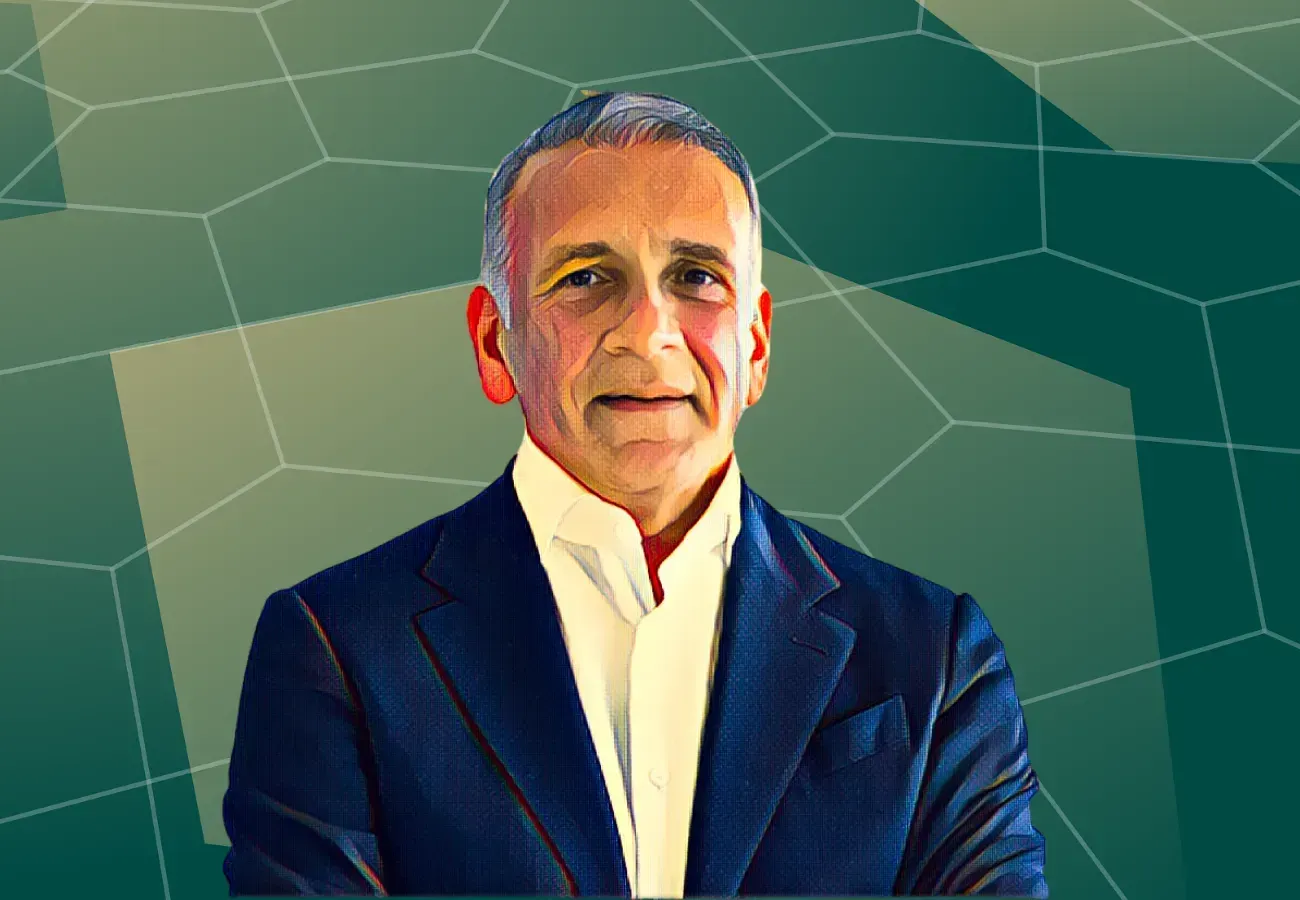
Tanzanian billionaire Edha Nahdi has agreed to pay more than $230 million for the Tanzanian fuel business of Oryx Energies, the largest deal yet for a businessman who has spent about $430 million buying companies in East Africa in less than two years.
Nahdi's Amsons Group will take over the stations, storage terminals and distribution network that Geneva-based Oryx has run in Tanzania since 1999, along with its equity interests in fuel storage partnerships, including operations at the Tanzania International Petroleum Reserves terminal in Dar es Salaam. Amsons said the deal will lift its fuel storage capacity to 800,000 metric tons from 300,000 tons and take its retail network to about 300 stations across several countries.
The companies announced the agreement on Oct. 16. Completion is subject to regulatory approvals and other customary conditions, and Oryx will keep running the business as usual until then. Neither side has given a closing date. Talks between the two companies in May were centered on a price of about $250 million.
By Billionaires.Africa's calculations, Nahdi is one of four Tanzanians worth at least $1 billion, alongside flour and beverage magnate Said Salim Bakhresa, telecom and gas investor Rostam Aziz and Mohammed Dewji, the head of MeTL Group. He is the youngest of the four. He was 19 when he started Camel Oil, the fuel importer that grew into Amsons, in 2006.
"We are delighted to finalize this acquisition, which marks a transformative step in our strategic vision to expand Amsons Group's footprint in energy and logistics," Nahdi said in the statement announcing the deal. Oryx's network and storage would help "strengthen domestic fuel security" and "anchor Tanzania as a vital regional logistics hub for East and Central Africa," he said.
What Amsons is buying
Oryx entered Tanzania in 1999 by buying the local assets of Agip, the fuel arm of Italy's Eni. That purchase gave it half of the Tanzania International Petroleum Reserves Ltd., known as TIPER, which it has owned jointly with the Tanzanian government. TIPER sits in Kigamboni, across the harbor from the main port of Dar es Salaam. Eni built it as a refinery in the mid-1960s. Refining stopped in the 1990s and the plant closed in 2000, after which the site was rebuilt as a storage depot. It is one of the country's largest oil terminals, with bonded warehouse status that lets traders hold fuel there before it is taxed or shipped on.
Oryx's own business in Tanzania includes 54 service stations, a depot and oil terminal at Kurasini in Dar es Salaam with about 56,000 cubic meters of storage, and a lubricant blending plant in the city. It also supplies fuel to mining companies, builders, hotels and shipping firms. Subira Mgalu, the chair of a Tanzanian parliamentary committee that visited the company in May, said Oryx had contributed about 1.2 trillion shillings ($454 million) to the economy between 2021 and 2024 and employed about 1,000 people directly, with 25,000 more in indirect jobs.
The company's fuel business has been losing ground. Oryx Oil held 2.8% of Tanzania's petroleum market in the 2024-25 financial year, down from 5.99% a year earlier, and fell to 11th place from sixth among oil marketing companies, according to the Energy and Water Utilities Regulatory Authority, the country's energy regulator.
Its strongest position is in cooking gas, which it sells through a separate company, Oryx Gas Tanzania. Oryx is the country's largest supplier of liquefied petroleum gas, with a 35.2% share, down from 46.6% in 2020, as Taifa Gas, controlled by Aziz, climbed to 32.1%. Oryx had more than 1 million gas cylinders in circulation by 2016 and opened Zanzibar's first gas import terminal, a 1,300-ton facility at Mangapwani port, in 2024. The two companies have described the sale as covering Oryx's downstream oil business in Tanzania.
The seller is going through its own change of ownership. On Oct. 8, Oryx chief executive Moussa Diao and trading manager Hervé Bouvet agreed to buy a majority stake in the company from its founder, Swiss businessman Jean Claude Gandur, in a management buyout that values Oryx at about $1 billion. Diao said the Tanzania sale was part of a review of the group's downstream assets in Africa and would let Oryx focus its money on energy infrastructure and trading.
"We are pleased to have reached this agreement with Amsons Group, a Tanzanian business with strong roots in the country and a clear ambition for growth," Diao said.
How the deal fits with Camel Oil
The purchase builds on the fuel business where Nahdi started. Camel Oil imports fuel in bulk through Dar es Salaam, stores it at a 60,000-cubic-meter depot at Kurasini, close to Oryx's own terminal, and sells it through more than 60 stations. The group also sells cooking gas under the Cam Gas brand and lubricants under Camel Lubricants, and runs a fleet of more than 800 trucks. Camel Oil exports fuel to Kenya, Uganda, Mozambique, Malawi and Zambia.
Camel Oil has grown quickly at home. Its share of the Tanzanian petroleum market more than doubled to 11.4% in the 2024-25 financial year from 5.54%, lifting it to second place from eighth, behind Puma Energy with 15.5%. Added to Oryx's share for that year, Amsons would hold about 14.2% of the market, close to Puma.
Tanzania is the main fuel gateway for its landlocked neighbors. Uganda, Rwanda, Burundi, Zambia, Malawi and eastern Congo all bring in fuel through the port of Dar es Salaam, and Oryx has long supplied customers in those markets from Tanzania. The government is building a separate 378,000-cubic-meter fuel terminal at Kigamboni, due for completion in February 2027, as part of a plan to double the port's annual oil handling to 12 million tons.
With Oryx, Amsons will control most of the chain from import to pump in Tanzania: berths and storage at the port, a truck fleet to carry fuel inland and across borders, and stations to sell it.
Two Kenyan cement makers
The Oryx deal follows two years in which Nahdi turned Amsons into the biggest force in Kenya's cement industry.
In July 2024, Amsons Industries (K) Ltd. offered 65 Kenyan shillings a share in cash for all of Bamburi Cement Plc, Kenya's largest cement maker, valuing it at about 23.6 billion shillings ($183 million). The offer was a 44.4% premium to Bamburi's last share price. Swiss building materials group Holcim, which owned 58.6% of Bamburi, agreed to sell. Savannah Clinker, a rival Kenyan bidder, raised its offer to 76.55 shillings a share before withdrawing it, and the COMESA Competition Commission cleared the Amsons deal in November 2024.
Amsons bought 96.54% of Bamburi in December 2024, with Holcim receiving more than $100 million in cash for its stake. It then moved to buy out the holdouts in a compulsory acquisition worth about 815.9 million shillings ($6.3 million). By the end of June 2025, it owned 99.98% of the company, and trading in Bamburi's shares on the Nairobi Securities Exchange has been suspended. In December 2025, Bamburi signed an agreement to build a $250 million clinker plant in Kwale County on Kenya's coast to cut its reliance on imported clinker, the main ingredient in cement.
Nahdi then went after East African Portland Cement Co., a Nairobi-listed producer with a long history of state ownership. His company Kalahari Cement Ltd. bought Holcim's 29.2% stake for 718.66 million shillings ($5.6 million) in a deal that closed on Nov. 4, 2025, after a parliamentary review in which Kenyan lawmakers raised concerns about his growing dominance of the industry. With the 12.5% that Bamburi already held, that gave Amsons 41.75%. A month later Kalahari bought the National Social Security Fund's 27% stake for about 1.6 billion shillings ($12.4 million), taking control of the company with 68.7%.
The Consumers Federation of Kenya went to court in December 2025 to challenge the sale by the pension fund, arguing that it would hand a strategic Kenyan company to foreign control without proper disclosure. Kalahari said it had no intention of making a takeover offer to the remaining shareholders.
At home, Amsons owns a cement grinding plant at Mbagala in Dar es Salaam and agreed in 2023 to buy Holcim's 65% stake in Mbeya Cement, a 1.1 million-ton-a-year plant in southern Tanzania, for an undisclosed sum. It has also announced a $320 million investment that includes a 5,000-ton-a-day plant in Tanga, in the country's north. In December 2025 it signed an agreement with Zambia's Exergy Africa to develop 1,300 megawatts of power plants in Zambia, 1,000 megawatts of it solar and 300 megawatts coal-fired, at a cost of about $900 million.
A family business
Amsons is a family company. Nahdi, whose full name is Edhah Abdallah Munif, owns 80% of its main Tanzanian unit, Amsons Industries (T) Ltd., and his brothers Hassan Abdallah Nahdi and Yasser Abdallah Nahdi hold 10% each. Their father, Abdallah Munif Nahdi, is the group's founder and chairman and began trading in the early 1980s. Edha Nahdi, the managing director, has led its expansion since 2006.
That unit had sales of 184.3 billion Tanzanian shillings ($69.7 million) in 2023 and a profit of 9.33 billion shillings ($3.5 million). The wider group, which also mills wheat under the Camel Flour brand and runs container depots, ready-mix concrete and real estate businesses, employs more than 10,000 people.
Nahdi was named African Young Business Leader of the Year in 2015. He rarely speaks about his wealth and has called descriptions of him as a tycoon a media exaggeration.
In September, he and Kenyan President William Ruto broke ground in Bomet County on the first of 10 mother-and-child hospitals that Amsons is paying for in Kenya. The group has committed 4.5 billion shillings ($35 million) to build and equip them in counties including Nairobi, Mombasa, Kisumu and Kwale, and will hand them over to the government to run. In Dar es Salaam it has paid for women's wards at Amana, Temeke and Mwananyamala hospitals since 2018.
Speaking at the Africa CEO Forum in Kigali in May, Nahdi said African companies had to build their own industry. "We can no longer depend on external solutions," he said. "Africa's private sector must think in terms of scale."
The intelligence satisfies curiosity. The paid briefings satisfy strategy.
Every Monday, Elite subscribers receive an Investor Memo breaking down the deal, the structure and the positioning behind the week's most consequential African wealth story — the kind of analysis that doesn't appear anywhere else.
Twice a month, a Wealth Intelligence brief profiles a single billionaire's holdings, cash flows and expansion pipeline in detail no public source matches.
→ Executive ($25/mo): Daily newsletter + Deep-Dive Reports
→ Elite ($75/mo): Everything above + Investor Memos + Wealth Intelligence + Quarterly Analyst Briefings
Subscribe now