

Table of Contents
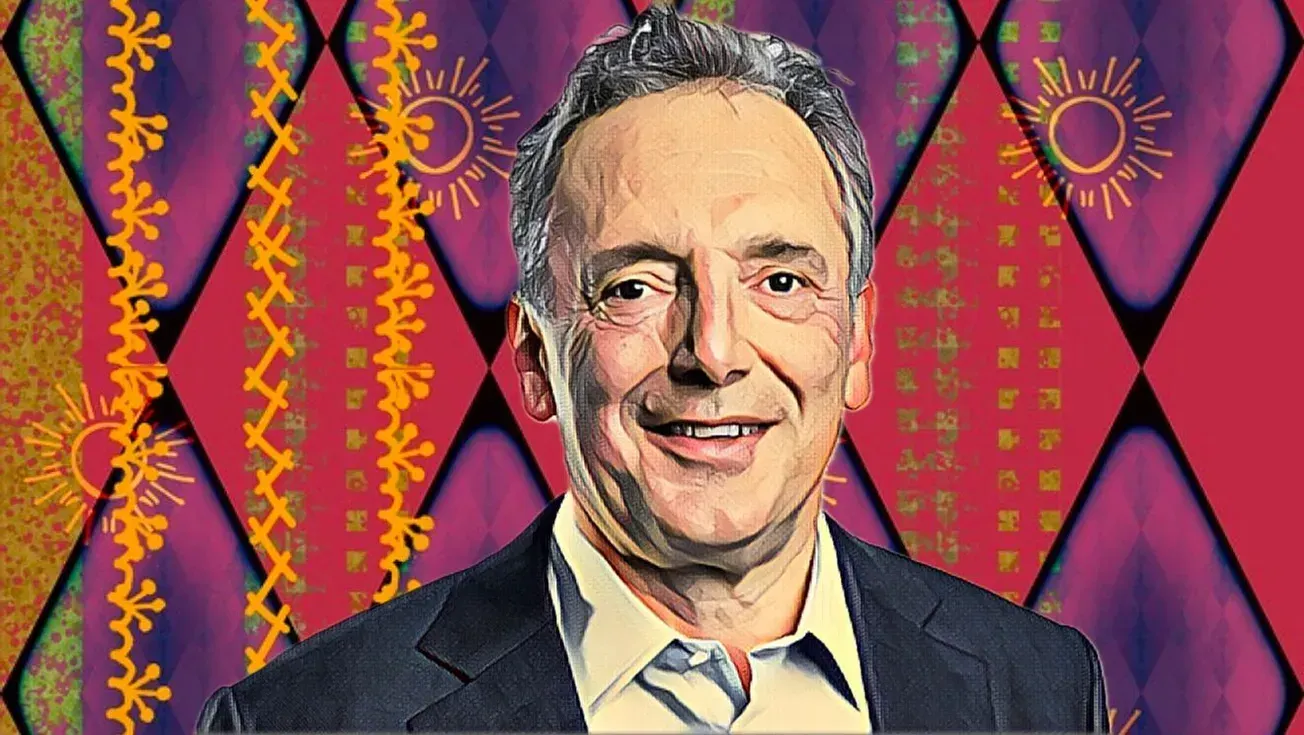
American billionaire Gary Michelson, the spine surgeon who made his fortune from medical patents, is asking California voters to approve $8.4 billion in state borrowing for immunology research, a plan that could send about half the money to a Los Angeles institute he co-founded and has backed with $120 million of his own.
Proposition 38 goes before voters on Nov. 3. It would authorize the state to sell $8.4 billion of general obligation bonds to fund research into how the immune system can be used to prevent and treat cancer, heart disease, Alzheimer's and other illnesses. There is no new tax. The bonds would be repaid from the state's general fund, which also pays for schools and health care.
The Legislative Analyst's Office, the state legislature's nonpartisan fiscal adviser, puts the cost at $500 million to $600 million a year for about 20 years. Supporters say drugs that come out of the program would be sold to Californians at a 20% discount and that 10% of the revenue from them would flow back to the state.
Half the money for one institute
The measure splits the money in two. Roughly $4.2 billion would go to a single nonprofit institute affiliated with the University of California. The rest would be handed out as competitive grants by a council chosen by the chancellors of seven UC campuses.
The measure does not name the institute. Its criteria include a medical center with more than 3.5 million outpatient visits a year, at least 200,000 square feet of space, $250 million in philanthropic support and two gifts of at least $50 million each for vaccine and microbiome research. A UCLA spokesman has confirmed that only the California Institute for Immunology and Immunotherapy, which Michelson co-founded and chairs, meets them. The state Department of Public Health would make the final award.
Michelson and his wife, Alya, committed $120 million to the institute in August 2024 through the Michelson Medical Research Foundation. The gift included $50 million each for a rapid vaccine development program and a microbiome research program, the same two areas named in the ballot measure, plus a $20 million endowment for grants to young scientists. Its other co-founders include Meyer Luskin, Arie Belldegrun, Michael Milken and Sean Parker. The institute is being built at UCLA's research park on the site of the former Westside Pavilion shopping mall and has also received $200 million from the state budget.
"Scientific research is the key to making possible longer and healthier lives," Michelson said when he announced the gift.
A one-sided money race
Michelson, 77, has paid for most of the campaign. Committees backing Proposition 38 had raised about $64.2 million through Oct. 6, according to the California secretary of state, most of it from Michelson and the Michelson Center for Public Policy, the advocacy group he founded. The opposition had raised $3,782. Michelson has said he will not profit from the measure and that the institute will go ahead even if voters reject it.
Governor Gavin Newsom endorsed the bond on Oct. 9, and both the state Democratic and Republican parties back it, along with groups including the Michael J. Fox Foundation and the Alzheimer's Association. Supporters say California needs to step in as the Trump administration cuts federal research funding.
A Public Policy Institute of California poll taken Sept. 4-10 found 55% of likely voters in favor and 42% against.
Critics include the League of Women Voters of California and the Howard Jarvis Taxpayers Association. Robert Kaplan, a Stanford researcher and former associate director of the National Institutes of Health, said the plan steers too much to one place. "All the institutions are scrambling, and so tracking a huge portion of it to one institution, I think, is a bad idea," he said. Opponents also point to the state's 2004 stem cell bond, which was promised to pay for itself but has returned only a small fraction of its cost in royalties.
Patents, then philanthropy
Michelson, a Los Angeles orthopedic spine surgeon, invented implants, instruments and techniques for spinal surgery and holds hundreds of patents. In 2005, after a legal fight, he sold a large portfolio of them to Medtronic for $1.35 billion. He is worth about $1.8 billion.
He has spent much of that money on causes ranging from free online textbooks and intellectual property education to animal welfare, including a $75 million program to develop a non-surgical way to sterilize cats and dogs.
The intelligence satisfies curiosity. The paid briefings satisfy strategy.
Every Monday, Elite subscribers receive an Investor Memo breaking down the deal, the structure and the positioning behind the week's most consequential African wealth story — the kind of analysis that doesn't appear anywhere else.
Twice a month, a Wealth Intelligence brief profiles a single billionaire's holdings, cash flows and expansion pipeline in detail no public source matches.
→ Executive ($25/mo): Daily newsletter + Deep-Dive Reports
→ Elite ($75/mo): Everything above + Investor Memos + Wealth Intelligence + Quarterly Analyst Briefings
Subscribe now