

Table of Contents
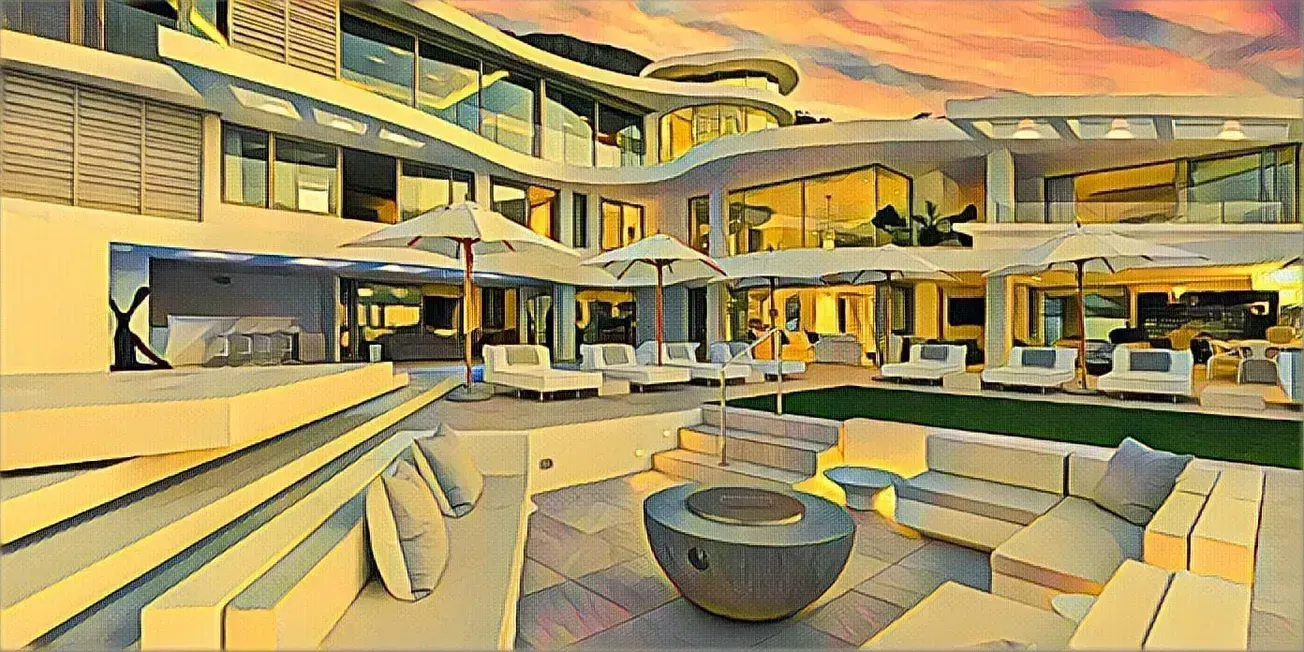
Cape Town is running short of luxury homes as millionaires from Johannesburg, Europe and the US compete for a small number of houses on the city's Atlantic coast and in its leafy southern suburbs, pushing prices to records.
Real estate agents say homes in the city's most sought-after areas often sell before or soon after they are listed, and well-priced properties regularly draw several offers. Cash deals and purchases by buyers who never view the house have become more common.
"Well-located homes are being sold within days of listing," said Andrew Golding, chief executive officer of Pam Golding Properties, one of South Africa's largest real estate groups.
Seeff Property Group recorded 115 home sales above R20 million ($1.2 million) in Cape Town in the first half of 2026, including 13 above R50 million ($3 million), based on PropStats data. The city had a record 190 such sales in 2025, up from 144 in 2024 and only 49 in 2019. "Stock levels remain tight," said Ross Levin, who runs Seeff's Atlantic Seaboard and City Bowl offices.
Records on the Atlantic coast
The shortage is sharpest along the Atlantic Seaboard, in suburbs such as Clifton, Camps Bay, Fresnaye and Bantry Bay, which sit between Table Mountain and the ocean. Nettleton Road in Clifton, which has fewer than 30 properties, has become the most expensive street in the country. Prices of R100 million to R150 million ($6 million to $9 million) are no longer unusual there, according to Golding.
Grammy-winning South African DJ Black Coffee paid R157 million ($9.5 million) last year for a five-level house on the road, believed to be the highest price paid for a house in South Africa in 2025. A Spanish buyer paid R170 million for two empty plots on the same street. A four-bedroom house there is now on the market for R175 million ($10.5 million).
Apartments have also climbed. The median price of a sectional-title unit in Clifton reached a record R31.17 million ($1.9 million) in the first five months of 2026, up 64% from R19 million in 2020, according to property data company Lightstone. Units there now sell for more than R200,000 a square meter.
Sales on the Atlantic Seaboard and in the City Bowl, the central suburbs below Table Mountain, rose 26% to R11.3 billion ($681 million) in 2025, Seeff said. Sales above R20 million climbed 61% to R4.2 billion. International buyers spent about R2.8 billion, or a quarter of the total.
Further south, family homes in Constantia, a wine-farming suburb, start at about R20 million, and a house there sold this year for R48 million, at the full asking price, to a foreign buyer who did not view it. Entry prices in neighboring Bishopscourt run from R30 million to R35 million, with growing interest in estates above R100 million. Owners in both suburbs are holding on to their homes, which has kept supply low.
"Winter has become less a period of reduced demand and more a phase of reduced supply," said Basil Moraitis, Pam Golding's regional head for the Western Cape.
Where the buyers come from
Much of the demand comes from inside South Africa. Wealthy families have been moving from Johannesburg and Pretoria to the Western Cape for years, citing crime, failing water and power supplies and poorly run municipalities in Gauteng province. Many keep their Johannesburg homes and buy a second house on the coast, where prices for this group of buyers start at about R60 million.
Buyers from abroad add to the pressure. Agents report steady demand from Britain, Germany, the Netherlands and France, and rising interest from the US.
The city's wealthy population has grown quickly. Cape Town had 8,500 dollar millionaires, 35 people worth at least $100 million and three billionaires in 2025, according to the Africa Wealth Report by Henley & Partners and New World Wealth. That is more centi-millionaires than any other city in Africa. The same report put prime residential prices in Cape Town at about $5,800 a square meter, compared with about $1,800 in Sandton, Johannesburg's main business district. The 2026 edition of the report says private wealth in Cape Town has grown 35% over the past decade and that the city could overtake Johannesburg as Africa's wealthiest city by 2030.
South Africa gained 7,100 dollar millionaires in the past year, taking the total to 48,200, or 38% of Africa's millionaires, the report said.
The rebound followed a long slump. Cape Town's top-end market struggled for most of a decade through a severe drought between 2015 and 2018, the threat of taps running dry in what became known as Day Zero, power cuts and the Covid-19 pandemic. Agents say demand picked up after South Africa's 2024 national elections, which produced a coalition government.
Figures were converted at R16.6 to the dollar.
The intelligence satisfies curiosity. The paid briefings satisfy strategy.
Every Monday, Elite subscribers receive an Investor Memo breaking down the deal, the structure and the positioning behind the week's most consequential African wealth story — the kind of analysis that doesn't appear anywhere else.
Twice a month, a Wealth Intelligence brief profiles a single billionaire's holdings, cash flows and expansion pipeline in detail no public source matches.
→ Executive ($25/mo): Daily newsletter + Deep-Dive Reports
→ Elite ($75/mo): Everything above + Investor Memos + Wealth Intelligence + Quarterly Analyst Briefings
Subscribe now