
Table of Contents
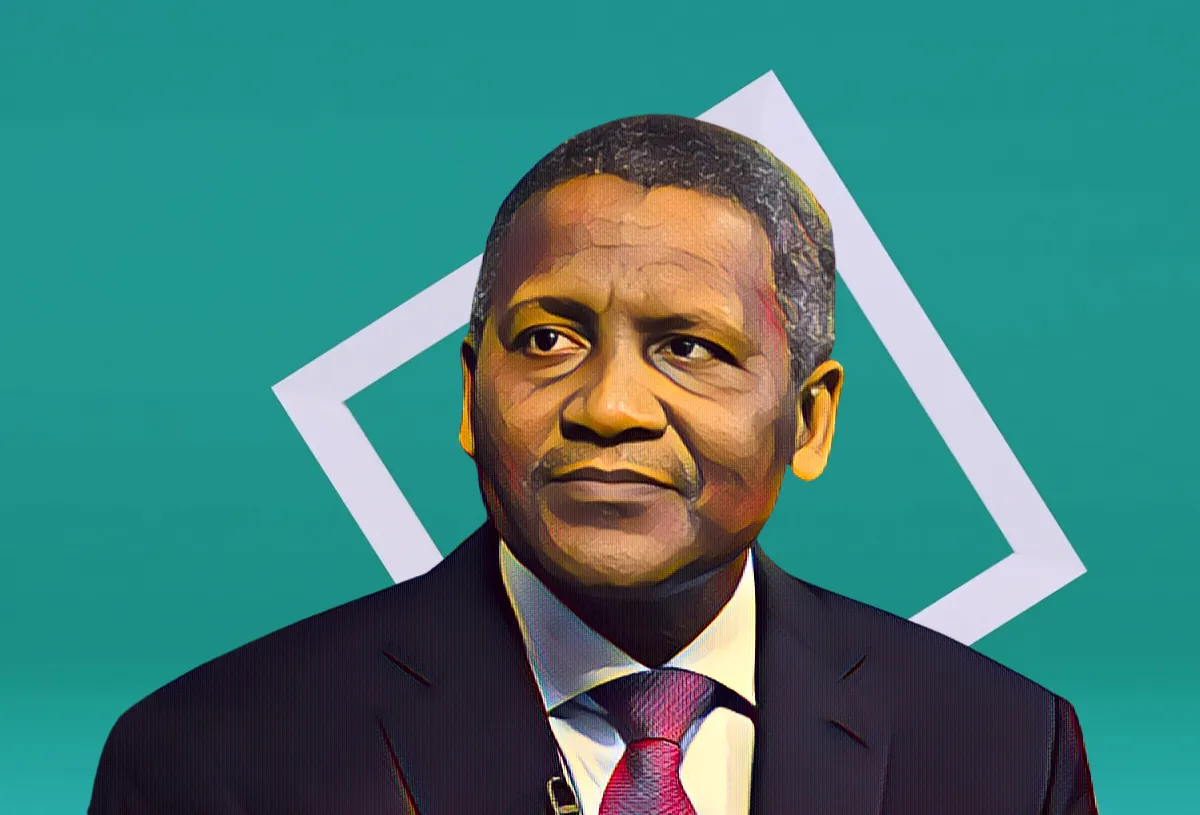
Nigerian banker Aigboje Aig-Imoukhuede said Access Holdings Plc may exit at least one foreign market as the lender works to cut its overseas investments below a ceiling set by the Central Bank of Nigeria.
Aig-Imoukhuede, chairman of the Lagos-based group, told Bloomberg on the sidelines of the African Financial Industry Summit in Luanda, Angola, on Nov. 9 that the group has picked out one underperforming subsidiary that could be sold.
"Do we have one or two troublesome subsidiaries? I can think of one," he said. He did not name the business. Any unit that "cannot meet its cost of capital and the strategic objectives for which it is set up" is open to review, he said. "You have to do dynamic portfolio management."
A 10% ceiling
The central bank rule caps a Nigerian bank's equity investment in foreign subsidiaries at 10% of total shareholders' funds. Access Bank Plc, the group's main lending arm, stood at 19.4% in May, nearly twice the limit, and was given 12 months to comply. That puts the regulatory deadline in March.
"We gave ourselves up till January next year, and I think we're completing this ahead of schedule," Aig-Imoukhuede said.
Group Chief Executive Officer Innocent Ike has set out three ways to close the gap: pulling surplus capital back from six foreign subsidiaries, selling minority stakes and restructuring some operations. One capital repatriation has been completed, and Access is in talks with regulators in five countries on the others.
The group has already started trimming. On July 15, Access Bank sold 12,085,318 shares, or 7.44%, of Access Bank (Ghana) Plc after clearance from the Bank of Ghana.
Aig-Imoukhuede said the international business remains sound. "The portfolio is very healthy," he said.
Pressure points abroad
Access Bank operates in Nigeria, 15 other African countries and five markets outside the continent, according to its 2025 results presentation. Much of that footprint was built through acquisitions after 2016, including assets bought from Standard Chartered Plc, Atlas Mara Ltd. and KCB Group Plc, whose National Bank of Kenya became part of Access.
In 2025 alone, the lender bought 74.9% of Standard Chartered's Gambian unit for ₦9.5 billion ($7 million), Standard Chartered's consumer and business banking operations in Tanzania for ₦14 billion ($10.3 million) and 76% of AfrAsia Bank Ltd. in Mauritius for ₦611.1 billion ($447.7 million).
Several units have struggled. The South African subsidiary has posted repeated losses, and a planned purchase of Bidvest Bank fell through. The Mozambique business lost money after Access bought African Banking Corp. there, before returning to profit in 2025. The Kenyan unit reported a loss in the first half of 2026 and fell below the Central Bank of Kenya's minimum core-capital requirement.
Access has walked away from a foreign market before. In 2014, after the central bank restricted the use of parent-bank capital to support offshore units, it sold its loss-making Ivory Coast subsidiary to Cameroon's Afriland First Group.
Banks and growth
At the summit's closing session, Aig-Imoukhuede said African banks must do more than stay safe and profitable. "A banking system can be well, can be as safe as you want it to be, it can be profitable," he said, but "it can still serve an economy that is very underperforming."
He warned that heavy government borrowing crowds out companies trying to raise money to expand, and called for pension funds to put more money into infrastructure rather than government securities. "We can't use bank deposits, which can be withdrawn tomorrow, to finance long-term projects which require 20-year money," he said.
Small businesses that sell to creditworthy buyers should be able to borrow against those sales, he said. "When an SME supplies goods to a creditworthy buyer, that SME should be able to attract capital and financing."
Access Holdings reported pretax profit of ₦667.36 billion ($488.9 million) for the nine months through September, up 8.3% from a year earlier. Profit after tax rose 6% to ₦474.17 billion ($347.4 million), and total assets reached ₦52.6 trillion ($38.5 billion). The group earned a record ₦743 billion ($544.3 million) after tax in 2025.
Aig-Imoukhuede's stake
Aig-Imoukhuede, 60, led the 2002 takeover of Access Bank, then a small regional lender, with the late Herbert Wigwe, and ran it as chief executive until December 2013. He went on to found Coronation Capital in 2015 and returned to Access as chairman in March 2024, after Wigwe died in a helicopter crash in California.
He held about 4.998 billion Access Holdings shares, or 9.37% of the company, according to the group's 2024 annual report. Of those, 178.8 million shares were held directly and about 4.819 billion indirectly.
Aig-Imoukhuede, who studied law at the University of Benin, is a former president of the Nigerian Stock Exchange.
Figures were converted at ₦1,365 to the dollar.
The intelligence satisfies curiosity. The paid briefings satisfy strategy.
Every Monday, Elite subscribers receive an Investor Memo breaking down the deal, the structure and the positioning behind the week's most consequential African wealth story — the kind of analysis that doesn't appear anywhere else.
Twice a month, a Wealth Intelligence brief profiles a single billionaire's holdings, cash flows and expansion pipeline in detail no public source matches.
→ Executive ($25/mo): Daily newsletter + Deep-Dive Reports
→ Elite ($75/mo): Everything above + Investor Memos + Wealth Intelligence + Quarterly Analyst Briefings
Subscribe now