


Table of Contents
California voters have approved Proposition 38, an $8.4 billion bond for immunology and immunotherapy research that was bankrolled largely by American billionaire spine surgeon Gary Michelson.
The Associated Press called the measure at 6:34 p.m. Pacific time on Nov. 9. With about 89% of the expected vote counted, the bond had 6,330,928 votes in favor, or 54%, against 5,372,657 votes, or 45.9%.
The measure authorizes the state to sell $8.4 billion in general obligation bonds to fund research into immunotherapy for cancer, heart disease, Alzheimer's disease and other illnesses. Half of the money, $4.2 billion, will go to a single nonprofit immunology institute affiliated with a University of California medical center and chosen by the California Department of Public Health. The other half will be handed out through competitive grants. Repaying the bonds will cost the state about $500 million a year for 20 years.
Michelson's institute
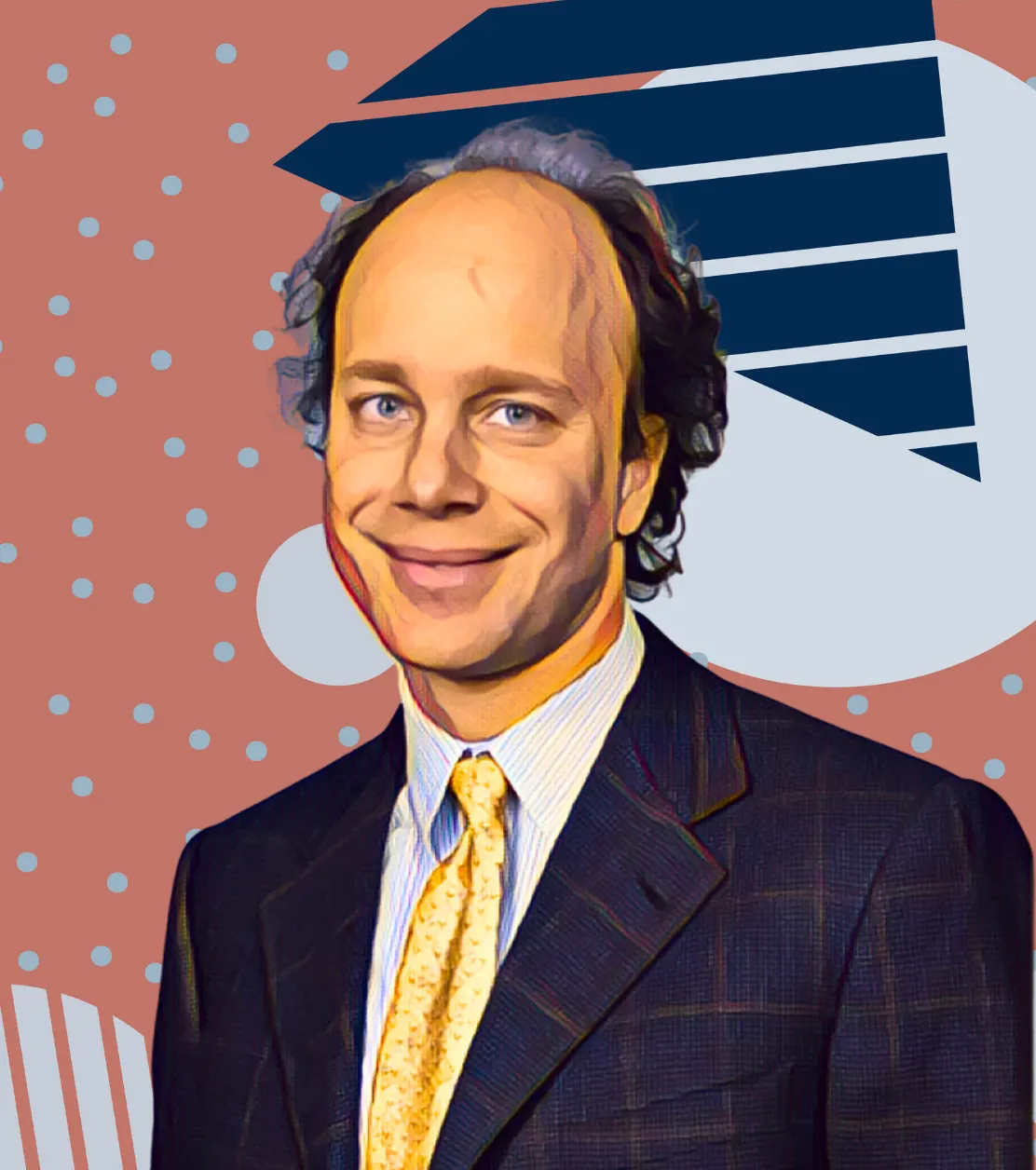
Michelson is a co-founder and the board chair of the California Institute for Immunology and Immunotherapy, which is housed in a UCLA-owned research center in Los Angeles. He has given the institute at least $120 million since it became a nonprofit in 2022, including $50 million that he and his wife donated to programs on rapid vaccine development and microbiome research. The institute has drawn about $250 million in philanthropic support overall.
The bond text does not name any institute. A UCLA spokesperson, Phil Hampton, said before the vote that among UCLA-affiliated nonprofits, only Michelson's institute could meet the measure's requirements.
Michelson and the Michelson Center for Public Policy, which he founded, put at least $8.2 million into the Yes on 38 campaign. Meyer Luskin, a Los Angeles businessman and fellow co-founder of the institute, gave at least $5 million.
Opponents argued during the campaign that the measure was written for one organization. "It is very clearly designed to support a specific nonprofit," said Sarah Hill, a political science professor at California State University, Fullerton, who called the bond's language "oddly specific with numbers."
Robert Kaplan, a former associate director at the National Institutes of Health and now a senior scholar at Stanford University's Clinical Excellence Research Center, said California has "a lot of talent in immunology, immunotherapy research," and that steering a huge share of the money to one institution "is a bad idea."
Claudia Briggs, a spokesperson for the Yes on 38 campaign, said the measure was written "to ensure a highly qualified nonprofit could receive funding," and that the campaign could not "speak to the specific institutes that may or may not qualify across California."
Michelson's background
Michelson, an orthopedic spine surgeon, built his fortune from spinal surgery inventions and patents, many of which he sold to Medtronic Inc. in a 2005 deal worth $1.35 billion. He has since spent much of his money on medical research, education and public policy through a network of foundations based in Los Angeles. Forbes lists him among the world's billionaires.
The intelligence satisfies curiosity. The paid briefings satisfy strategy.
Every Monday, Elite subscribers receive an Investor Memo breaking down the deal, the structure and the positioning behind the week's most consequential African wealth story — the kind of analysis that doesn't appear anywhere else.
Twice a month, a Wealth Intelligence brief profiles a single billionaire's holdings, cash flows and expansion pipeline in detail no public source matches.
→ Executive ($25/mo): Daily newsletter + Deep-Dive Reports
→ Elite ($75/mo): Everything above + Investor Memos + Wealth Intelligence + Quarterly Analyst Briefings
Subscribe now