

Table of Contents
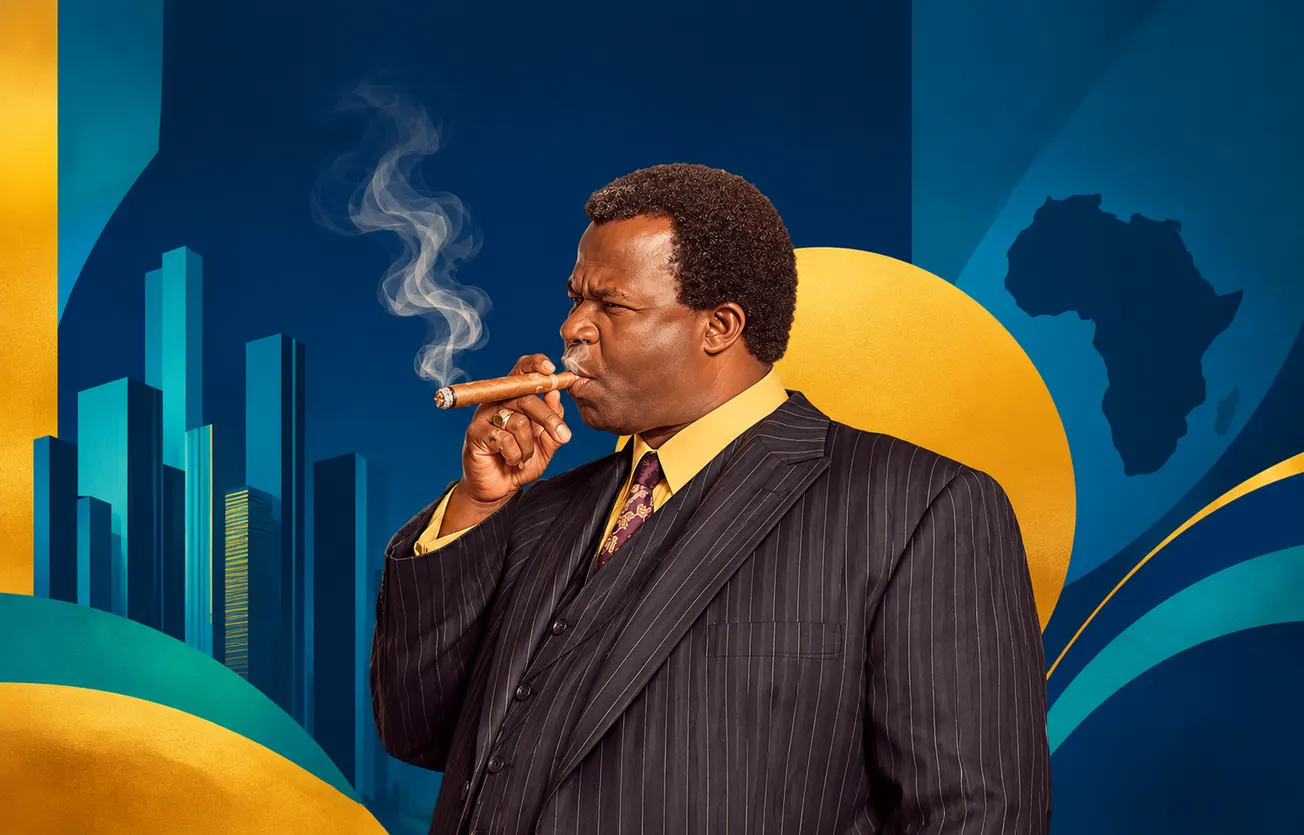
In London in the early 1980s, a grey Rolls-Royce would draw up outside a five-star hotel, and a chauffeur would open the door for a man in an immaculately tailored suit, a big cigar in one jeweled hand. He kept a penthouse suite and private chefs, summoned his investors to the Austrian Alps and the Caribbean, and introduced himself as Doctor John Ackah Blay-Miezah, the sole keeper of Ghana's hidden fortune. Former government ministers sat in his offices, a former attorney general of the United States had vouched for him, and two of Ghana's military rulers had handed him a diplomatic passport. There was only one problem: the fortune did not exist.
For almost twenty years, Blay-Miezah ran one of the longest and strangest cons of the twentieth century. He persuaded investors from Pennsylvania to Monaco to Seoul that Kwame Nkrumah, Ghana's founding president, had left billions of dollars in gold, cash and diamonds in Swiss vaults, and that only he could unlock them. All they had to do was help with the fees, and they would get ten dollars back for every one. Thousands believed him, and he signed promissory notes worth about $62 billion before he died. Not one of them was ever paid.
Billionaires.Africa Productions tells his story in a new short film, "The Man Who Sold Ghana's Gold." Watch it here, then read on.
Kerosene Boy
He was born John Kolorah Blay in 1941, into a Nzema family in Ghana's Western Region, when the country was still the British colony of the Gold Coast. As a boy he sold kerosene after school to pay his fees, and the nickname stuck: Kerosene Boy. In 1959 he went to Philadelphia and let people believe he was studying at the University of Pennsylvania. In fact he was working as a waiter at the Union League Club, one of the city's grandest private clubs, and at one point he took over the identity of a former roommate and was briefly recognized as holding a Wharton degree and a master's in international relations.
He went home in 1963 and was promptly sent to Nsawam Prison over vague claims about a threat to Nkrumah's life, and he was freed only after Nkrumah was overthrown in 1966. By the early 1970s he was telling people he was a president of the African Development Bank, or a medical doctor, or the son of a famous Ghanaian judge. None of it was true, but he had discovered that people would believe almost anything if he said it with enough confidence.
The story in the cell
In 1972, back in Philadelphia, Blay posed as a Ghanaian diplomat at the Bellevue-Stratford Hotel and ran up a bill of nearly $2,644. When the Ghanaian mission refused to pay it, he was sent to prison in Pennsylvania. That same year, Kwame Nkrumah died in exile in Romania, and in his cell Blay found the story that would make him famous.
He began telling people that Nkrumah had taken him into his confidence and entrusted him with the country's secret wealth, a fortune he later put at about $27 billion and sometimes at $47 billion, held in Swiss banks in something he called the Oman Ghana Trust Fund. The story was impossible, since Blay was in an American prison when Nkrumah died and there is no evidence the two men ever knew each other well. But it had just enough history in it to sound plausible, because, as the journalist Yepoka Yeebo has written, just after independence there really had been a plot to take Ghana's gold reserves out of the country. His first believer was a radical prison chaplain, who helped him win an early release.
So outrageous, it's gotta be true
Back on the streets of Philadelphia, Blay teamed up with a local businessman, Robert Ellis, and they began signing up investors. The pitch was always the same: the money was real, the banks just needed fees, lawyers and officials paid before they would release it. One investor, Barry Ginsberg, later explained why he had believed it: the story was so outrageous, he reasoned, that it had to be true. Ginsberg started with $5,000, his group eventually put in more than $1 million, and Blay offered them first $52 million and later $150 million in return.
The biggest name of all was John Mitchell, Richard Nixon's former attorney general, who was reportedly promised $733 million from the fund. Washington itself was less convinced. In early 1974, Henry Kissinger's State Department warned American diplomatic missions about the scheme, and in Accra the U.S. ambassador, the former child star Shirley Temple Black, wrote that the chickens would soon come home to roost. Almost nobody listened.
From prisoner to diplomat
The law caught up with him, briefly. In 1974 he was charged in the United States with using a fraudulently obtained degree and trying to cash $250,000 in stolen bank drafts, and he fled to Ghana. He also tried to cash about $150 million in forged cheques in Brussels. In Ghana he was sentenced to seven years for fraud and bribery, and at one point he escaped from police custody through a pit latrine.
Then he did something extraordinary. He persuaded the military ruler, Colonel Ignatius Kutu Acheampong, that the money in Switzerland was real and that he could bring it home. Instead of serving his sentence, he walked out with a diplomatic passport and moved to Europe to recover Ghana's gold. Former ministers from Nkrumah's government, including the former finance minister Kwesi Amoako-Atta and the former foreign minister Ebenezer Ako-Adjei, lent him their names and their credibility.
Living like a billionaire
What followed was the most glamorous decade of his life. He moved from a £1,000-a-night hotel in Knightsbridge to a mansion in St John's Wood, ran an office in Mayfair where investors gathered, and traveled with a chauffeur-driven Rolls-Royce, penthouse suites and private chefs. Investors who came to collect were summoned to the Austrian Alps, the Caribbean or London, where they were made to wait. Ginsberg once waited ten days for a meeting, only to be told, as he was told so many times: "Soon, brother Ginsberg. Very soon."
At home, he played the benefactor. He bought into a football club, Sekondi Eleven Wise, and spent money to make it a winner, and he gave $85,000 to Ghana's Olympic Committee, a cheque that, unusually, actually cleared. In 1979 his People's Vanguard party won provisional registration to contest the election, with Blay-Miezah presenting himself as the anti-corruption candidate. Ghanaians joked that PV stood for "Pay Voucher."
A coup for Christmas
On Christmas Eve 1981, Blay-Miezah called his British associate Peter Rigby at a party and told him they were flying to Accra the next day. On December 30, Rigby saw Flight Lieutenant Jerry Rawlings at the Ringway Hotel in Accra, and that night Rawlings launched the coup that brought him back to power. A new government might have been the end of Blay-Miezah, but once again he talked his way in.
In May 1982, the new regime gave him a diplomatic passport that listed his year of birth as 1924, making him seventeen years older than he was. Senior officials of the Rawlings government flew with him to the Cayman Islands to collect the gold, and they came home with nothing. The excuses that followed were always the same: an illness, a death in the family, a problem with the paperwork, an urgent trip to Geneva.
The net closes
In 1986, the Philadelphia district attorney, Ron Castille, charged Blay-Miezah with corrupt organizations, theft, conspiracy and dozens of violations of the Pennsylvania Securities Act, alleging that more than 300 local investors had lost more than $15 million. The charges carried up to 147 years in prison, but Blay-Miezah was already in a cell in Ghana, where he had been jailed on an economic sabotage charge, and he never stood trial in America. Robert Ellis, his Philadelphia partner, was convicted of securities fraud in 1987.
Even then, Blay-Miezah was not finished. By the late 1980s he was back in London and back to the high life, until American television came for him. On January 29, 1989, CBS's 60 Minutes aired a report in which Ed Bradley called him "the ultimate con man." He received the cameras in a chief's finery, seated on a reproduction Louis XV chair, and spat gin onto a fake gold sword.
Called home
The day the program aired, Blay-Miezah flew home to Accra. Rawlings revoked his diplomatic passport, and he was placed under house arrest. He never left Ghana again.
He died of a stroke on June 30, 1992, still under house arrest, and even at the end he told his family that about $15 billion was waiting for them in a bank abroad. His heirs and investors went on fighting over his estate in Ghana's courts until 2001, and in 2009, after investors petitioned the government, a Ghanaian inquiry looked for the Oman Ghana Trust Fund and found no evidence that it had ever existed. By then, the promissory notes he had signed added up to about $62 billion.
Anansi's gold
How did one man fool so many for so long? Yeebo, whose 2023 book Anansi's Gold is the fullest account of his life, compares him to Anansi, the spider of Ghanaian folklore who outwits everyone around him. Part of the answer is that his story was built on something real: a newly independent country, real fears about missing gold and real politicians who wanted to believe the money could come home. The rest was greed, and the very human hope that a fortune might be just one more payment away.
The trick has outlived him. Every day, inboxes around the world fill with messages about hidden fortunes, frozen inheritances and fees that must be paid before the money can be released. They are the descendants of the Oman Ghana Trust Fund, and the lesson of Blay-Miezah's life is the same one that would have saved his investors millions: if you have to pay to get paid, walk away.
Based on published reporting, including Anansi's Gold by Yepoka Yeebo (Bloomsbury, 2023), reviews in the London Review of Books and The Spectator, Foreign Policy, UPI and court records. Figures are estimates drawn from those sources.
© 2026 Billionaires.Africa Inc.
The intelligence satisfies curiosity. The paid briefings satisfy strategy.
Every Monday, Elite subscribers receive an Investor Memo breaking down the deal, the structure and the positioning behind the week's most consequential African wealth story — the kind of analysis that doesn't appear anywhere else.
Twice a month, a Wealth Intelligence brief profiles a single billionaire's holdings, cash flows and expansion pipeline in detail no public source matches.
→ Executive ($25/mo): Daily newsletter + Deep-Dive Reports
→ Elite ($75/mo): Everything above + Investor Memos + Wealth Intelligence + Quarterly Analyst Briefings
Subscribe now