
Table of Contents
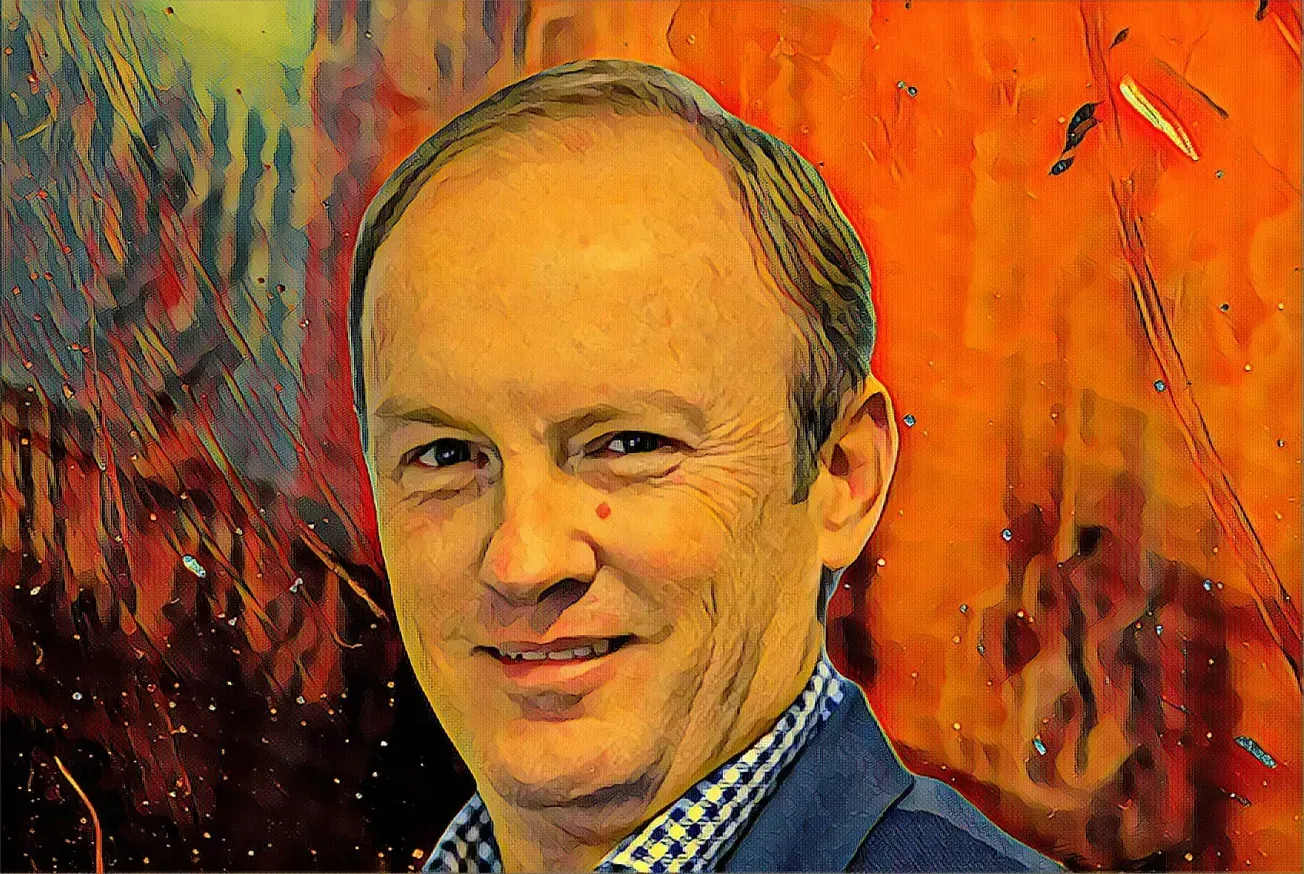
Michael Hacking has never sought the spotlight. In nearly three decades of shipping gasoline, diesel and crude oil into some of Africa's most difficult markets, the founder of Geneva-based Mocoh SA has given few interviews, published no memoir and kept his family's wealth off the rich lists.
Yet the company he started in 1998 as a small commodities trading team in southern Africa has grown into one of the steadier independent fuel suppliers on the continent. It has supplied fuel into Nigeria, Ghana, Senegal, Cameroon, Togo, Benin, Burkina Faso, Mali, the Democratic Republic of Congo, South Africa and Madagascar, held a crude export contract from Nigeria's state oil company and bought a chain of Ghanaian filling stations from a South African oil major.
Today Mocoh sits inside MISA Group, a family-owned investment platform run by Hacking's son, Guy Hacking. The group employs more than 400 people across more than 20 countries and is now developing what would be Zimbabwe's first utility-scale wind farm, a $300 million project. The family has also put money into children's education in West Africa and a 200,000-hectare conservation concession in Zimbabwe's Zambezi Valley.
The road from a small trading desk to that position ran through Iraq's sanctioned oil industry, a South African political scandal, Nigeria's fuel import business and, most recently, the arrival of Aliko Dangote's giant refinery, which took away much of Mocoh's most valuable trade.
A trader in southern Africa
Hacking, whose full name is Michael Crawford Hacking, came to the oil business as a trader rather than an engineer or a financier. South African investigators who examined his company's dealings in the early 2000s described him as a British resident with no South African identity number. The country's press called him a UK oil trader.
He set up Mocoh in 1998 and built its early business in southern Africa, where the end of apartheid had opened the fuel market to new entrants and politically connected black-owned companies were looking for experienced partners. Mocoh's South African company, Mocoh Services South Africa (Pty) Ltd., counted Tokyo Sexwale among its directors. Sexwale, a former Robben Island prisoner and the first premier of Gauteng province, had left politics for business, and his Mvelaphanda group was one of the most prominent black economic empowerment investors of the period. Sexwale was listed as Mocoh's chairman.
In 2002, Mocoh moved west into Nigeria and Ghana, the two largest fuel markets in West Africa. Nigeria, in particular, was a trader's market. The country pumped about 2 million barrels of crude a day but its state refineries barely worked, so almost all of its gasoline had to be imported. Trading houses that could secure cargoes, finance them and get them through the congested ports of Lagos earned steady margins.
Mocoh registered Mocoh SA in Geneva in 2004 and moved its headquarters to the Swiss city, the world's biggest center for physical commodity trading, in 2015. Hacking joined the board of the Swiss company in 2007 and served as its president from at least 2016 until July 2023, according to Swiss commercial register filings.
The Iraq oil
The episode that drew the most attention to Hacking came from Baghdad.
Between 1996 and 2003, the United Nations allowed Saddam Hussein's government to sell oil under the oil-for-food program, provided the money went into a U.N.-controlled account and was spent on food, medicine and other humanitarian goods. From 2000, Iraq began demanding illegal "surcharges" from buyers, charged per barrel and paid into Iraqi-controlled bank accounts outside the U.N. system.
Mocoh Services South Africa was one of the companies that bought Iraqi crude. The Independent Inquiry Committee led by former U.S. Federal Reserve Chairman Paul Volcker, which investigated the program, found that the company was allocated 10.8 million barrels under six contracts and lifted 8.59 million barrels worth $185.6 million. It said the company paid $574,699 in surcharges. Mocoh did not respond to the committee, according to its 2005 report.
Then-President Thabo Mbeki set up a commission under advocate Michael Donen in February 2006 to look into South African companies named in the Volcker report. In a 2009 summary of its work, Donen wrote that Hacking had authorized the surcharge payments made by Mocoh. He also said Hacking had used Mocoh's South African registration while bypassing South Africa's mission to the U.N., and that, according to Sexwale, the oil allocations had been obtained on the strength of Sexwale's profile. Donen described South African participation in the program as marked by "compelling indications of exploitation by foreign entrepreneurs."
Sexwale told the commission that he had been made aware by his co-directors in Mocoh that the Iraqis demanded surcharges, but that he "was not at any stage prepared to sanction the payment of surcharges." Donen said he was not satisfied with that answer but exonerated Sexwale from liability as a participant in illicit activities.
When President Jacob Zuma finally released the report in December 2011, his spokesman, Mac Maharaj, said no one named in it had broken South African law and that its comments were "interim and untried" and should not be treated as findings of fact. No charges followed against Hacking, Mocoh or Sexwale. Mocoh's ties to Mvelaphanda had ended in 2005.
Nigeria, Ghana and Dangote
The Iraq episode did not slow Mocoh's growth in West Africa. Through the 2000s and 2010s, the company supplied gasoline and other products to Nigeria and its neighbors, financing cargoes and moving them through the coastal depots that feed the region's landlocked states.
In 2016, it opened an office in Nigeria and incorporated Mocoh Oil and Gas Ltd. in Lagos. Two years later, the Nigerian National Petroleum Corp. named Mocoh among the companies awarded crude oil term contracts for July 2018 to June 2020, a list that also included Vitol, Trafigura, Litasco and Nigerian traders such as Sahara Group and Oando. The contracts, which give the holder the right to lift and sell a set volume of Nigerian crude, are among the most sought-after documents in the West African oil trade.
Mocoh's bigger business was selling refined fuel back to Nigeria. For years NNPC was one of its main customers for gasoline, the company has said.
In March 2019, Mocoh moved downstream. Mocoh Ghana Ltd., owned 55% by an affiliate of Ghanaian company Reston Energy and 45% by the Mocoh Group, signed an agreement to buy all of Engen Ghana Ltd. from South Africa's Engen Holdings. The deal brought 22 Engen-branded service stations and businesses in wholesale fuel, lubricants, liquefied petroleum gas and ship fuel, with about 250 people working directly or indirectly for the company. No price was disclosed.
"We are very happy to welcome Engen Ghana to the Mocoh family," Hacking said at the time. He said the group had "successfully navigated global financial crises and energy market volatility."
Guy Hacking wrote in July that his father built Mocoh "from the ground up" by reinvesting its profits rather than taking them out of the company.
Guy Hacking began his career in private equity and investment banking, buying and running infrastructure assets. He joined Mocoh to help with its investments in physical assets, became chief financial officer and later chief executive officer. In July 2023, he replaced his father as president of Mocoh SA's board.
In November 2024, the younger Hacking announced that he would step down as Mocoh's CEO at the start of 2025 to lead the group's parent company and become non-executive chairman of the trader. Olivier Lassagne, who had spent eight years at Mocoh and nearly two as deputy CEO, took over. Mocoh said Guy Hacking had overseen "significant growth," a wider range of products and new green projects, and that the trader employed about 100 people.
The handover came just as the business that sustained Mocoh for two decades began to shrink.
In 2024, Dangote Petroleum Refinery, the 650,000-barrel-a-day plant built by Africa's richest man, Aliko Dangote, began producing gasoline in Lagos. By early 2025 it was running at about 550,000 barrels a day, and Nigeria's gasoline imports fell to record lows.
Mocoh lost most of its gasoline trade with NNPC, Lassagne told S&P Global Commodity Insights in May 2025. Rather than fight the refinery, the trader started to work with it, handling significant volumes of Dangote fuel exported to Cameroon, Burkina Faso and Benin.
"Mocoh has been present for 27 years in Africa and especially in Nigeria," Lassagne said. He said the company would stay focused on the continent and avoid heavy spending on storage tanks. "We don't really want to diversify outside Africa. It's not in our DNA. We are an African trader."
The company had already started looking elsewhere. In July 2024, it set up a team based between Geneva and Dubai to expand in East Africa, led by senior trader Marc Bretscher, formerly of Augusta Energy, and Cédric Cloché, a former Trafigura executive. Tanzania and Mozambique were the first targets. In 2024, Mocoh also set up a biofuels trading arm and a Nigerian business collecting used cooking oil, tallow and cashew nut shell liquid for sale as biofuel feedstock.
MISA Group and the foundations
The family's wider holdings now sit under MISA Group, which took shape in 2020 as an energy investment platform and was unified under one brand this year. Mocoh Investments SA, the Geneva holding company registered in April 2020, lists both Michael and Guy Hacking among its directors.
Besides Mocoh, the group owns MISA FZC, a base oils trader set up in 2020, and MISA Energy, the former Engen Ghana, which dropped the Engen name in August 2025 under Chief Executive Officer Brent Nartey. Bioscape, founded in 2022, turns agricultural waste into biofuels and biomass feedstock in Nigeria. Modaso Energy, launched in 2025, develops power projects, mostly renewable. The group has hubs in London, Geneva, Abu Dhabi and Lagos, and says 55% of its employees are based in Africa.
Modaso's first big project was announced on Nov. 2. Working with Zimbabwean developer Tatanga Energy, it plans the Guruve-Mazowe hybrid plant, which would combine 128 megawatts of wind turbines, 100 megawatts of solar panels and a 50-megawatt battery. The $300 million project would produce about 550 gigawatt-hours a year, roughly 5% of Zimbabwe's current power generation. Standard Bank Group Ltd. has been mandated to arrange the debt, financial close is targeted for mid-2027 and power is due to flow in 2029.
"Africa is not under-resourced, it is under-invested," Guy Hacking said in announcing the project.
Michael Hacking started the mc2h foundation in 2016 to fund children's education in West Africa. It now backs 15 grassroots partners in Ghana and Nigeria and is chaired by Tara Wondraczek. Mocoh has pledged $12 million to the foundation, according to the company.
In 2024, the family set up the AWE for Nature Foundation, with Mocoh as its first funding partner. Its pilot project is Chewore South, a 200,000-hectare area inside the Mana Pools World Heritage Site in Zimbabwe's Zambezi Valley, held under a 25-year lease from the Zimbabwe Parks and Wildlife Management Authority. The foundation is working with African Parks, the nonprofit that runs national parks on behalf of African governments, and is trying to develop biodiversity credits and other ways to make conservation pay for itself.
Hacking, who stepped off the board of Mocoh SA in 2023, remains a director of the family's Geneva holding company. Neither he nor MISA publishes financial results, and no rich list has estimated his fortune.
Mocoh still trades physical energy and base oils across more than 20 African countries, and it remains the trading base of a family group that now also runs filling stations in Ghana, collects biofuel feedstock in Nigeria and is raising money for a wind and solar plant in Zimbabwe.
The intelligence satisfies curiosity. The paid briefings satisfy strategy.
Every Monday, Elite subscribers receive an Investor Memo breaking down the deal, the structure and the positioning behind the week's most consequential African wealth story — the kind of analysis that doesn't appear anywhere else.
Twice a month, a Wealth Intelligence brief profiles a single billionaire's holdings, cash flows and expansion pipeline in detail no public source matches.
→ Executive ($25/mo): Daily newsletter + Deep-Dive Reports
→ Elite ($75/mo): Everything above + Investor Memos + Wealth Intelligence + Quarterly Analyst Briefings
Subscribe now