

Table of Contents
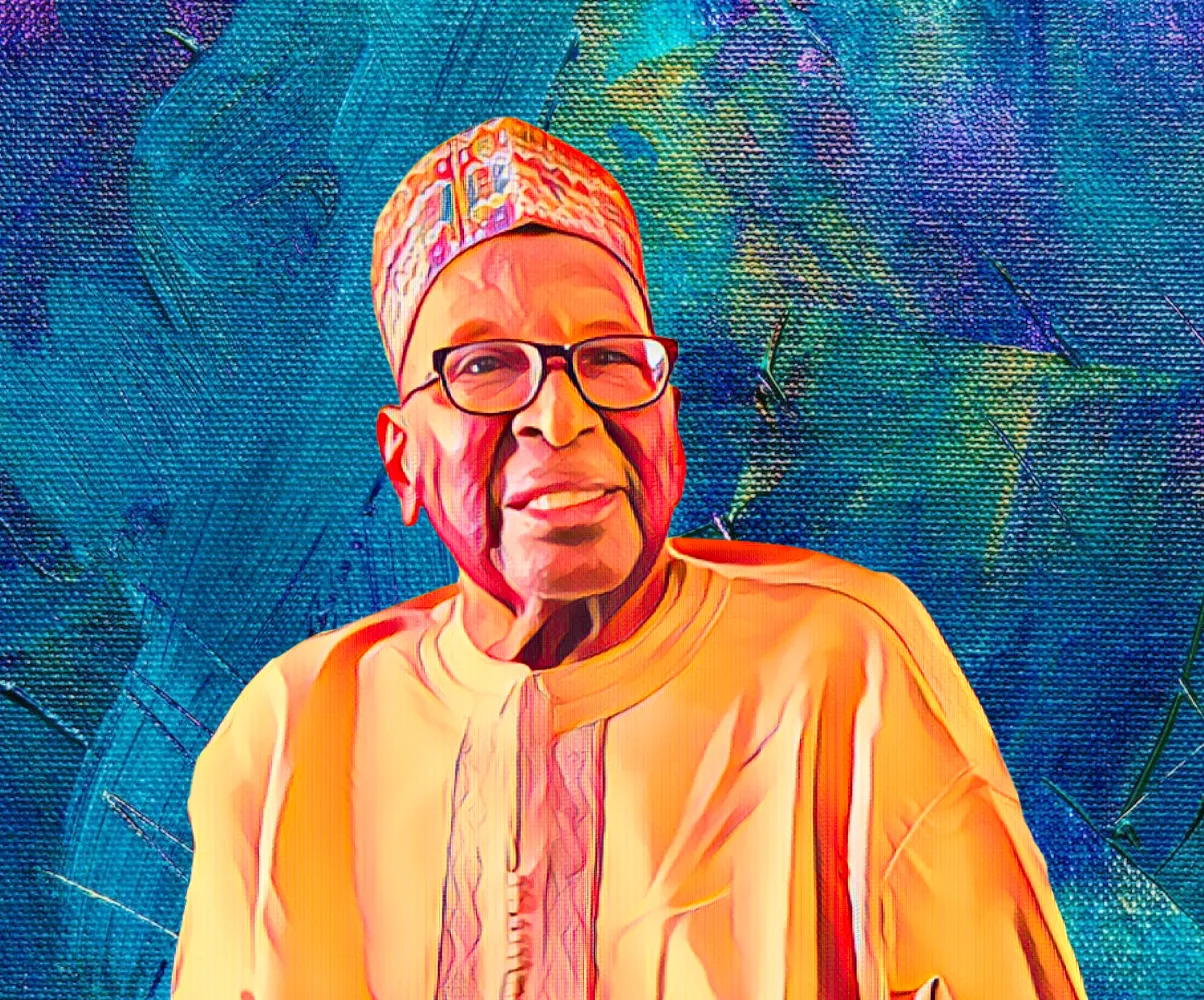
The most revealing thing Arthur Eze ever said in public he said at a fundraiser in Abuja in 2025. Standing at the podium to honour former military ruler Ibrahim Babangida, the slight, soft-spoken billionaire from Anambra pledged N500 million and then delivered a single line that summarised four decades of building the largest private oil portfolio in Africa: "Babangida has no enemy. He made all of us."
That sentence was not a throwaway remark. It was an accurate and precise description of how Eze, 77, built Atlas Oranto Petroleum into a company that now holds 22 exploration licences across 12 African jurisdictions and claims production of approximately 18,000 barrels of oil per day, despite being unable or unwilling to actually drill on the overwhelming majority of the acreage it has acquired over four decades.
The model has worked spectacularly. It has also, in recent years, begun to unravel. Governments across Africa are revoking Eze's blocks, demanding payments he has not made, and publicly questioning how a company with such a vast portfolio produces from so few of its assets. Understanding why requires going back to the beginning.
The road from state TV to oil
Arthur Eze was born in 1948 in Ukpo, a community in Dunukofia Local Government in Anambra State, into a royal family. His elder brother is the traditional ruler of the Ukpo kingdom, a lineage that gave Eze the "Prince" title he has carried throughout his business life. He studied mechanical and chemical engineering at California State University, Long Beach, graduating in 1978, and returned to Nigeria in the early 1980s at exactly the right moment.
His first fortune was not oil. It was concrete. Eze secured contracts to construct NTA television station buildings for state governments across Nigeria's north, an entry point into politics that gave him a direct line to governors who did not particularly care where he came from. The money from those contracts was real, and so were the relationships. By the time Sani Abacha's military government was awarding oil leases in the 1990s, Eze had spent a decade building the kind of access that money alone cannot buy.
In 1991 he founded Atlas Petroleum International. Two years later he established Oranto Petroleum. Under Nigeria's "sole risk" exploration policy, Atlas won OPL 75, drilled it, discovered oil, and converted the licence to OML 109. That block, producing approximately 10,000 to 18,000 barrels per day into a floating storage facility off Nigeria's coast, is the single serious producing asset that Atlas Oranto has developed in more than 30 years of operation. It is the foundation on which the credibility of everything else rests.
Everything else is a different story.
The Liberia blueprint
The most instructive episode in the Atlas Oranto story happened in Liberia in 2010, and it has never fully left the company's reputation since.
Eze acquired 3 offshore blocks in Liberia, paying approximately $200,000 for each. In the same year he acquired them, he sold those blocks to Chevron for a reported sum that multiple credible sources describe as exceeding $250 million. The arithmetic of that transaction is not complicated: a $600,000 total investment flipped to an oil major in the same calendar year for a return of more than 400 times the acquisition cost.
No exploration wells were drilled. Not a single hole was put into the ground between the acquisition and the sale. The blocks were picked up from a government with whom Eze had cultivated relationships and resold to one of the world's largest oil companies at a staggering markup. No charges were ever filed in connection with the deal, but questions about the terms of the original Liberian award haunted the episode, and the broader question of how blocks that were worth $83 million each to Chevron were sold to an acquirer for $200,000 apiece has never been satisfactorily answered.
That episode established the Atlas Oranto model in its clearest form: use political access to secure acreage at preferential terms, hold it without drilling, and sell to a major when the timing and the price are right.
In October 2024, Eze returned to Liberia and signed production sharing contracts for 4 new offshore blocks (LB-15, LB-16, LB-22 and LB-24) in Paris, committing to a $12 million signature bonus and announced investment plans of $200 million per block. The Liberian government presented it as a turning point for the country's dormant oil sector. The country's own lawmakers were less enthusiastic. Former House Speaker J. Fonati Koffa and Representative Musa Hassan Bility wrote an open letter to their legislative colleagues describing the agreements as "corrupt and dangerous," raising pointed questions about transparency, how local equity would be financed, and whether Atlas Oranto had the financial capacity to develop deepwater blocks at all. Liberia had given Eze acreage in the late 2000s that subsequently changed ownership without a single exploration well ever being drilled. Now it was giving him 4 more blocks.
Senegal: 17 years of nothing
In 2008, Atlas Oranto was awarded the Cayar Offshore Shallow exploration licence in Senegal, a block covering approximately 3,600 square kilometres north of the Dakar peninsula. The award came with standard industry obligations: bank guarantees to demonstrate financial capacity, and work programmes designed to ensure actual exploration rather than squatting on a resource.
For the next 17 years, Oranto met neither obligation in any meaningful way. The company repeatedly failed to provide the required bank guarantees. Substantive exploration activity was minimal at best. Senegal's previous governments granted multiple extensions, apparently hoping the situation would resolve itself. It did not.
In September 2025, under President Bassirou Diomaye Faye's reform-oriented administration, Minister of Petroleum Birame Souleye Diop formally revoked the Cayar Offshore Shallow licence. The new Senegalese government had no patience for an arrangement that had produced nothing for the host country in more than a decade and a half. The revocation was confirmed publicly in January 2026.
Seventeen years is a long time to hold a block without drilling a single well. It is also, in the logic of the Atlas Oranto playbook, a perfectly rational approach: hold the acreage, extend the terms whenever possible through relationship management with the relevant government, and wait for either a discovery adjacent to your block or a commodity price spike that makes the block attractive to a buyer. The problem with that logic is that it assumes the relevant government stays in place and stays accommodating. When a reform government arrived in Dakar that owed nothing to the relationships that secured the original award, the block was gone.
Equatorial Guinea: the fall from favour
Equatorial Guinea illustrates both the success and the failure of the Atlas Oranto model. In the good years, the relationship worked. Atlas Petroleum secured interests in Block G, home to the Aseng gas condensate field, and Block O, with its associated gas deposits. It also acquired a 20% interest in Block P, where a significant discovery called Venus is being developed by Houston-based Vaalco Energy. These were real assets in a genuinely productive basin, and the group had a credible presence in one of West Africa's most established offshore oil provinces.
The problems began accumulating when Atlas was expected to actually fund its share of capital expenditures. In 2019, Atlas Oranto announced plans to invest close to $350 million in Equatorial Guinea's gas "backfill" project, which routes gas from fields including Aseng and Alen into the country's LNG complex on Bioko Island. The announcement was treated seriously. The investment, in the amounts promised, did not materialise on schedule.
In 2021, Africa Intelligence reported that Eze flew to Malabo for a private meeting with President Teodoro Obiang Nguema to secure personal assurances that his blocks would not be revoked despite limited activity. The meeting was described as "fruitful." The assurances apparently held for a while.
By 2024, the assurances had run out. Equatorial Guinea's government revoked 2 Atlas Oranto exploration licences, citing violations of production sharing agreement terms. In April 2025, the government told Eze he would need to pay a $10 million bonus to have any chance of recovering the lost blocks. He reportedly visited Malabo twice in March and April 2025, accompanied by his sons Walter and Arthur Jr and the group's geologist John Nwosu Ebubechukwu, in an attempt to negotiate his way back in.
The most damaging development came in February 2026, when a payment dispute between Atlas Petroleum and Chevron over Block I -- which contains the Aseng field and is central to Equatorial Guinea's gas development strategy -- resulted in Atlas losing its entire 27% stake in the block. GEPetrol, Equatorial Guinea's state oil company, which previously held only 5% of Block I, absorbed Atlas's stake. Chevron pushed ahead. Atlas was out.
Sao Tome: the latest flip
In April 2026, Oranto Petroleum announced it was selling 75% of its 90% stake in Block 3 offshore Sao Tome and Principe to Petrobras, Brazil's state oil company. Under the revised structure, Petrobras will hold 75% and operatorship, the national petroleum agency ANP-STP will retain its 10%, and Oranto will be left with 15%.
The pattern is familiar: Oranto held the block, and when a major was ready to move, Oranto sold down its interest. It is how the model is supposed to work. The difference between Sao Tome and Liberia is that the Sao Tome transaction at least involves a credible operator coming in to potentially do real exploration work. Whether Petrobras actually drills and whether Oranto's residual 15% generates value remains to be seen.
What Atlas Oranto actually produces
Across 22 licences in 12 African jurisdictions spanning Nigeria, Equatorial Guinea, Uganda, Zambia, Namibia, South Sudan, Sao Tome and Principe, Liberia and now Venezuela, Atlas Oranto claims production of approximately 18,000 barrels of oil equivalent per day. The overwhelming source of that production is OML 109 in Nigeria, the one block Eze actually developed from scratch in the 1990s. The Aseng field in Equatorial Guinea contributed before the Block I stake was taken away. Everything else -- the exploration licences, the frontier acreage, the frontier PSCs across West and Central Africa -- produces nothing and may never produce anything.
The Uganda Ngassa licences, covering the Ngassa Deep and Ngassa Shallow areas in the Albertine Graben near Hoima, represent one of the more consequential pending questions. In December 2023, Atlas obtained a 2-year extension on those licences, with conditions requiring at least one exploration well. The Albertine Graben is a proven basin; it hosts the oilfields that TotalEnergies and CNOOC are developing further into Uganda and Tanzania through the EACOP pipeline project. If there is oil at Ngassa, it would be potentially enormous. If Atlas fails to drill within the extension period, it will lose licences covering one of East Africa's most prospective exploration areas.
The defence that does not quite hold
Atlas Oranto and its supporters argue that the company has played an important and underappreciated role in African oil development. The argument is that securing acreage ahead of the majors, maintaining it through political cycles that would have seen it lost to less connected hands, and then bringing in larger operators who have the capital to drill is a legitimate and valuable part of the exploration ecosystem. Junior explorers that de-risk acreage and sell to majors are a normal feature of the global oil business.
The counterargument is the one African governments are now making with increasing force: the value of de-risking depends on whether actual technical work is done to reduce geological uncertainty. Sitting on a block for 17 years without providing the required bank guarantees, as in Senegal, is not de-risking. Acquiring 3 Liberian blocks for $200,000 each and selling them to Chevron in the same year without drilling a single well is not exploration work. It is arbitrage made possible by political access, and the question of whether the original acquisition terms reflected the actual market value of the assets is one that the governments involved have been unable or unwilling to examine.
The old playbook assumed that African governments would remain accommodating indefinitely, that relationships with individual leaders would outlast political cycles, and that the patience of host states was essentially unlimited. The events of the past 2 years have tested each of those assumptions and found them wanting. Senegal under a new government revoked a licence without hesitation. Equatorial Guinea under an established leader decided that Atlas's non-payment was a firmer position than any previous understanding. Liberian legislators demanded answers publicly, in writing, about a deal that had already been signed at presidential level.
Arthur Eze parlayed a royal name, broadcasting contracts and military-era friendships into the most extensive private oil acreage portfolio in African history. He is 77 years old, still actively visiting presidents and signing deals, still trying to recover blocks in Malabo and acquire new ones in Liberia. Whether the model that built his empire can survive in an era of reform-minded governments demanding faster drilling, cleaner terms and genuine local economic benefit is the open question his legacy will be settled on.
The one thing that is certain is that most of those 22 licences are not producing oil. And the governments that granted them are starting to notice.
The intelligence satisfies curiosity. The paid briefings satisfy strategy.
Every Monday, Elite subscribers receive an Investor Memo breaking down the deal, the structure and the positioning behind the week's most consequential African wealth story - the kind of analysis that doesn't appear anywhere else.
Twice a month, a Wealth Intelligence brief profiles a single billionaire's holdings, cash flows and expansion pipeline in detail no public source matches.
→ Executive ($25/mo): Daily newsletter + Deep-Dive Reports
→ Elite ($75/mo): Everything above + Investor Memos + Wealth Intelligence + Quarterly Analyst Briefings
Subscribe now