

Table of Contents
United Bank for Africa shares dropped 10% in early trading on Monday, April 27, 2026, as investors punished the bank for its decision to withhold dividends from the 2025 financial year, a reaction that wiped approximately N34.7 billion off the paper value of chairman Tony Elumelu's combined stake in the lender before the morning session was done.
UBA stock opened the week at N49.50, down from its Friday closing price of N55.00. The sell-off was immediate and decisive, reflecting how sharply income-seeking investors reacted to a bank that posted N404.7 billion in profit after tax for FY2025 but still chose not to hand shareholders a final dividend. The only payout declared for the full year was an N0.25 per share interim dividend, already distributed, representing a 95% reduction from the N5.00 per share shareholders received for 2024.
The man most exposed to Monday's drop
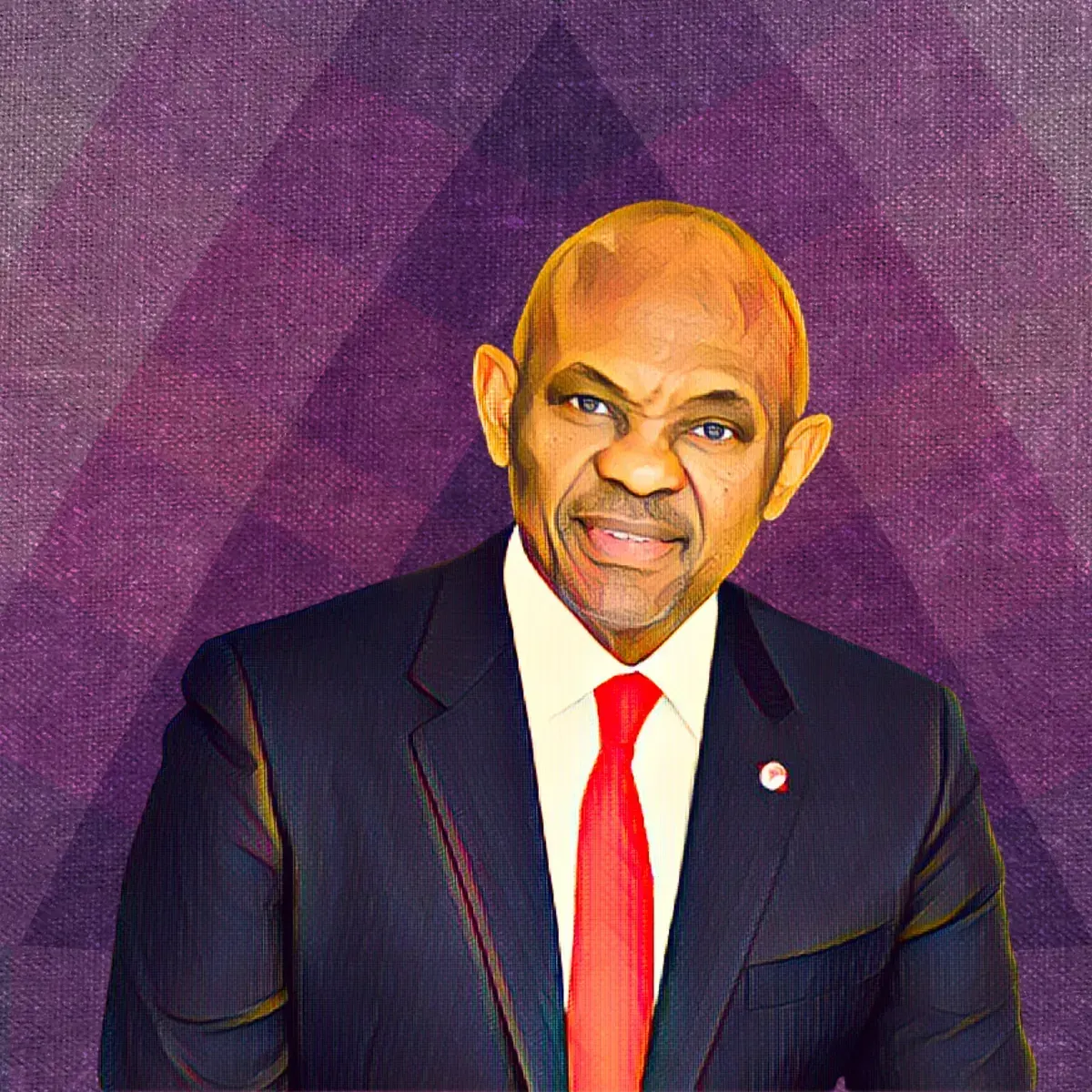
Elumelu, the billionaire businessman who chairs UBA and serves as executive chairman of Heirs Holdings, holds 6,312,174,790 shares in the bank through a combination of direct holdings and positions via Heirs Holdings. At Friday's closing price of N55.00, that combined stake was worth N347.17 billion ($252.5 million). By Monday morning, with the share price sitting at N49.50, the same number of shares was worth N312.45 billion ($227.2 million).
The arithmetic of the drop: N34.72 billion in paper losses, equivalent to approximately $25.25 million at the current exchange rate of N1,375 to the dollar. That is the single-morning cost of being UBA's largest individual shareholder on a day the market decided to register its displeasure loudly.
Paper losses at this scale are not permanent in either direction. They move with the share price, and the share price will move again. But in the immediate term, the numbers reflect how markets price the removal of an expected cash return from a stock whose shareholder base includes a significant proportion of income-oriented investors who held specifically for the dividend.
The CBN factor
The surface explanation for the withheld dividend is capital conservation following UBA's N395 billion rights issue completed in 2025, and the need to reinforce equity ratios after a year in which profit fell 47% from the FX-inflated 2024 base.
But a source at the Central Bank of Nigeria who spoke to Billionaires.Africa on the condition of anonymity offered a more pointed explanation. The CBN, the source said, insisted that UBA pay no dividend because of a N600 billion insider loan linked to one of the bank's most prominent directors. The regulator's position, according to the source, was that the bank could not distribute funds to shareholders while that exposure remained unresolved. The CBN and UBA both declined to comment on the specific claim.
Insider lending has been a persistent regulatory concern in Nigerian banking. The country's banking laws set strict limits on the proportion of a bank's capital that can be lent to insiders, including directors, significant shareholders and their related interests. A N600 billion insider loan, if it exists at the scale described, would represent one of the largest regulatory issues of this kind ever disclosed in the sector. The claim could not be independently verified before publication.
What is verifiable is the outcome: no final dividend, a stock that fell 10% when the market opened on Monday, and a regulator that has not publicly explained the decision.
What the 2025 results showed
UBA's FY2025 report, filed with the NGX in April 2026 and audited by Ernst and Young, showed a bank doing two things simultaneously: growing its franchise and absorbing the cost of a changed external environment.
Total assets expanded 9.4% to N33.17 trillion. Customer deposits rose 11% to N23.95 trillion. Net interest income grew 4% to N1.62 trillion. The bank's 24-country footprint, 43 million customers and 10,821 employees were all unchanged in direction if not in scale.
The profit decline from N766.6 billion in 2024 to N404.7 billion in 2025 was driven primarily by a N323 billion swing in net trading and FX income. In 2024, naira devaluation had generated N181.8 billion in revaluation gains on the bank's foreign currency assets. In 2025, with the naira more stable, that line turned into a N140.6 billion loss. The income that looked like earnings in 2024 was always going to disappear in 2025. Investors understood this intellectually. They still sold the stock when the dividend confirmed it.
What history suggests happens next
UBA has been in tighter situations than this and come back. The bank navigated the 2008 global financial crisis, a CBN regulatory intervention in 2009 that saw its then-CEO removed and replaced as part of a sector-wide clean-up, multiple naira devaluation cycles and the COVID-19 collapse in economic activity. Each time, the stock recovered. Each time, the dividend eventually returned.
The N395 billion rights issue completed in 2025 was oversubscribed by 25%, which tells you that the market still believes in the bank's long-term trajectory even when it is punishing the stock in the short term. A stable naira in 2026, lower impairment charges as the loan book recovers, and the operating leverage of a 24-country network that has been expensive to build but is increasingly productive: these are the structural arguments for a recovery that UBA's own management would make, and the bank's history suggests they would eventually be right.
The intelligence satisfies curiosity. The paid briefings satisfy strategy.
Every Monday, Elite subscribers receive an Investor Memo breaking down the deal, the structure and the positioning behind the week's most consequential African wealth story - the kind of analysis that doesn't appear anywhere else.
Twice a month, a Wealth Intelligence brief profiles a single billionaire's holdings, cash flows and expansion pipeline in detail no public source matches.
→ Executive ($25/mo): Daily newsletter + Deep-Dive Reports
→ Elite ($75/mo): Everything above + Investor Memos + Wealth Intelligence + Quarterly Analyst Briefings
Subscribe now