


Table of Contents
United Bank for Africa posted a group profit after tax of N404.7 billion ($259 million) for the year ended December 31, 2025, a 47% decline from the N766.6 billion it earned in 2024, as the foreign exchange trading gains that sharply inflated its prior-year earnings failed to repeat and impairment charges on loans climbed steeply.
The results, filed with the Nigerian Exchange in April 2026 and audited by Ernst and Young, show a bank that grew its balance sheet and deposit base in 2025 while absorbing a painful reversal in trading income and a significantly higher credit loss bill than the year before.
Net interest income, the bank's core lending revenue, rose 4% to N1.618 trillion from N1.552 trillion in 2024, and total assets expanded 9.4% to N33.173 trillion. Customer deposits climbed 11% to N23.949 trillion. None of that growth was enough to offset 2 specific line items that together erased roughly N440 billion from the bottom line relative to 2024.
What drove the decline
The biggest single factor was the swing in net trading and foreign exchange income. In 2024, when the naira was still in the middle of its sharp devaluation cycle, UBA and other Nigerian banks with large foreign currency assets booked massive FX revaluation gains. UBA's net trading and FX line generated a gain of N181.8 billion in 2024. In 2025, with the naira more stable, that line swung to a loss of N140.6 billion. That one reversal represented a negative swing of approximately N323 billion year on year.
The second drag was impairment charges. The provision for credit losses on loans climbed 53% to N331.1 billion from N217 billion in 2024, reflecting deterioration in parts of the loan book and the bank's decision to build reserves against a more uncertain macroeconomic environment driven by fuel subsidy removal, inflation and global commodity disruption.
Together those 2 items account for most of the N362 billion gap between 2024 and 2025 profits.
The rights issue and the capital push
While profits fell, UBA's equity base grew substantially. The bank completed a rights issue during 2025 that raised N395 billion gross, with N6.1 billion in issuance expenses, expanding share capital from N17.1 billion to N22.1 billion and share premium from N98.7 billion to N482.6 billion. Total equity attributable to owners of the parent rose 24% to N4.122 trillion, and the group's total equity including non-controlling interests reached N4.253 trillion.
The rights issue was driven by the Central Bank of Nigeria's recapitalisation mandate requiring commercial banks to meet higher minimum capital thresholds. UBA, like most Nigerian tier-1 banks, needed to demonstrate capital adequacy well above the CBN's N500 billion floor for international banks by the March 2026 deadline. The successful completion of the raise, even as profits declined, reinforced the bank's ability to grow its balance sheet and support its pan-African lending portfolio.
Dividend cut to N0.25
Shareholders will receive a total dividend of N0.25 per share for 2025, down sharply from N5.00 per share in 2024. The board did not propose a final dividend from the 2025 results, meaning the only payout is the N0.25 interim dividend already paid during the year. The dividend payout ratio fell to 6.21% from 30.3%, and the yield dropped to 0.6% from 14.7%.
The reasoning is straightforward: lower profits, higher capital requirements and the completion of a major rights issue that already returned cash to the bank from shareholders left little room for distributions in the other direction. The decision to conserve capital rather than distribute it is consistent with the bank's posture heading into 2026.
Tony Elumelu's stake
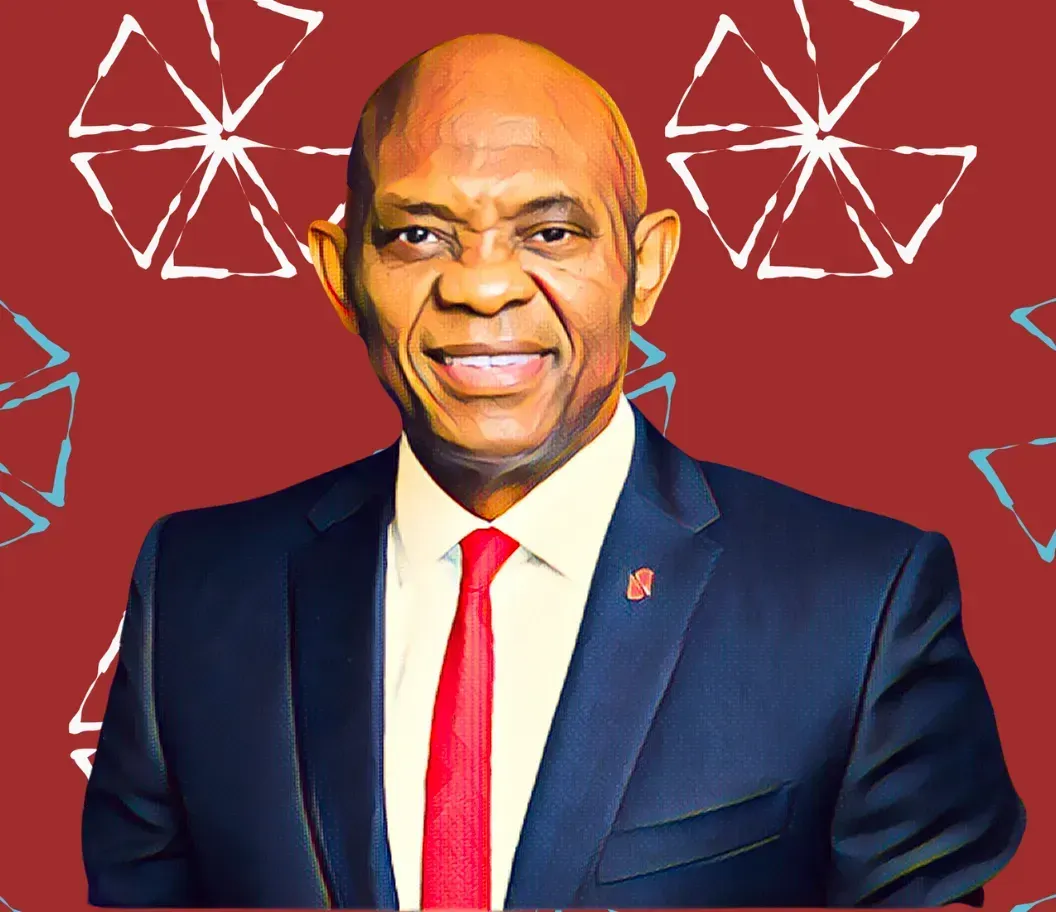
UBA's chairman Tony Elumelu, the billionaire founder of Heirs Holdings and Transcorp Hotels, holds a combined direct and indirect stake of approximately 14.3% of the bank. His direct shareholding is 1.518 billion shares, with a further 4.795 billion shares held indirectly through HH Capital Limited (5.13% of total shares) and Heirs Holdings Limited (5.09%). As of year-end 2025, UBA shares closed at N41.65, putting the combined value of Elumelu's direct and indirect holding at approximately N263 billion ($168 million).
Elumelu attended all 8 board meetings during 2025, the maximum possible, consistent with his pattern of close engagement with the group's governance. No other director holds a comparable stake.
Fraud and operations
The bank reported 26,400 fraud incidents during 2025 involving a total exposure of N4.556 billion. Actual losses amounted to N621.57 million, a 14% loss rate, meaning the bank's detection and prevention systems contained most of the fraud before it crystallised. Electronic fraud accounted for 26,375 of the 26,400 incidents. Fraudulent transfers, though smaller in number at 14 cases, had a 90% actual loss rate, suggesting they are harder to detect and reverse once initiated.
The bank resolved 2.194 million customer complaints during 2025, down from 2.09 million resolved in 2024 despite receiving far fewer incoming complaints: 2.118 million in 2025 versus 3.211 million in 2024. Unresolved complaints carried forward fell to 9,331 from 1.12 million a year earlier, a significant improvement in resolution efficiency.
Outlook and leadership changes
UBA operates across 24 countries with over 43 million customers and 10,821 employees globally. The bank's Nigeria operations employed 6,734 people at year-end, with an exact 50/50 gender split between male and female staff.
4 executive directors reached the end of their tenure on December 31, 2025: Deputy Managing Director Muyiwa Akinyemi, Alex Alozie (ED, Abuja and North Central), Sola Yomi-Ajayi (ED/CEO, UBA Africa 1) and Abiola Bawuah (ED, Lagos 2 and West Bank). 3 new executive directors were appointed effective January 1, 2026: Emmanuel Lamptey for digital banking, Tosin Adewuyi for corporate banking, and Chidi Okpala for personal and business banking, pending CBN approval.
The 2025 results strip away the currency windfall that made UBA look exceptionally profitable in 2024, and what remains is a bank with solid deposit growth, a strengthened capital position and a profitability base that will need to be rebuilt through lending growth and fee income rather than exchange rate movements. The 47% profit decline is large by any measure, but the context of the FX reversal makes 2024 the outlier and 2025 the more accurate baseline from which to judge the group's underlying performance.
The intelligence satisfies curiosity. The paid briefings satisfy strategy.
Every Monday, Elite subscribers receive an Investor Memo breaking down the deal, the structure and the positioning behind the week's most consequential African wealth story - the kind of analysis that doesn't appear anywhere else.
Twice a month, a Wealth Intelligence brief profiles a single billionaire's holdings, cash flows and expansion pipeline in detail no public source matches.
→ Executive ($25/mo): Daily newsletter + Deep-Dive Reports
→ Elite ($75/mo): Everything above + Investor Memos + Wealth Intelligence + Quarterly Analyst Briefings
Subscribe now