


Table of Contents
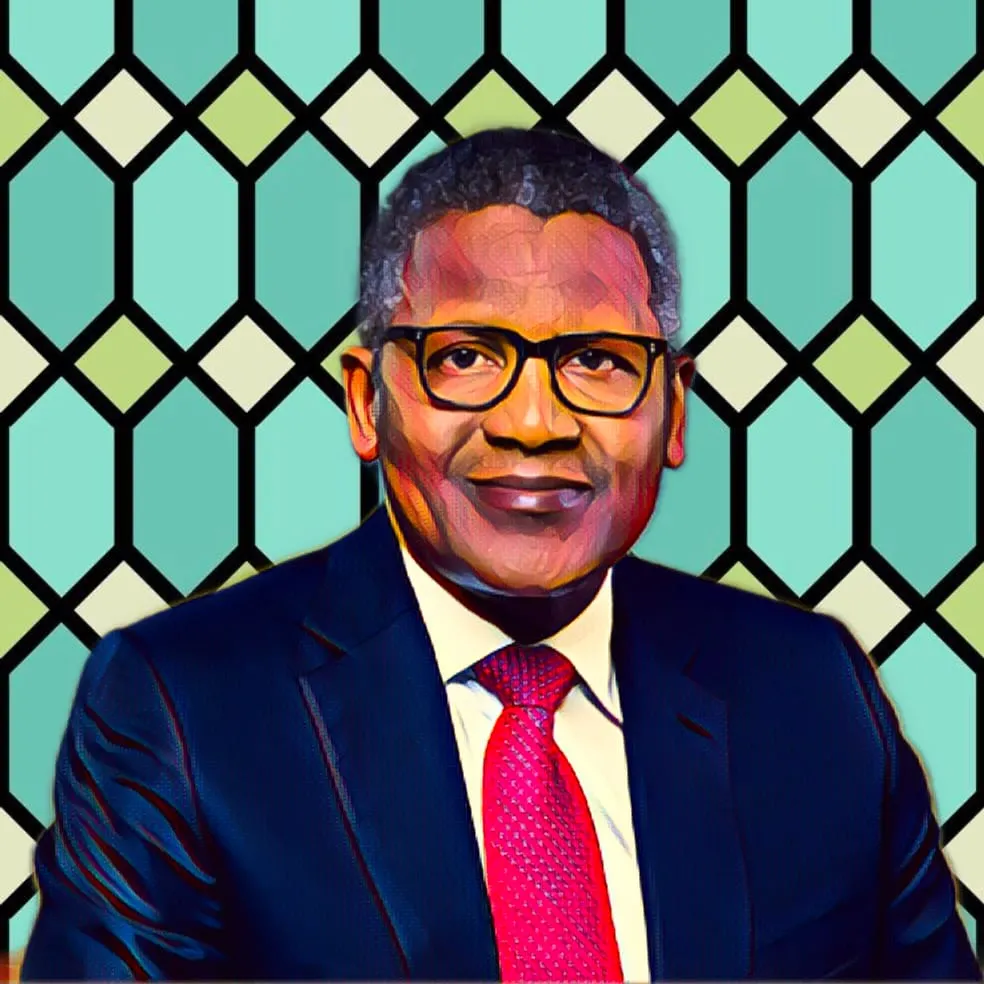
Forbes has placed Aliko Dangote's net worth at $30.3 billion for the first time in its history of tracking the Nigerian industrialist, a milestone that has taken years longer to arrive on Forbes than on Bloomberg and one that speaks directly to the deep methodological differences between the world's two most authoritative wealth-tracking organisations.
As of April 28, 2026, Dangote's Forbes real-time profile shows $30.3 billion. On the same day, Bloomberg's Billionaires Index, which updates every business day after the New York market close, has him at $33.2 billion. The $2.9 billion gap between the two figures is meaningful but represents the narrowest difference between them in years. As recently as November 2025, Bloomberg had Dangote at $30.6 billion while Forbes had him at $26.2 billion. That was a $4.4 billion chasm. It has since compressed by more than a third.
The compression is not accidental. It is a direct consequence of what the Dangote Petroleum Refinery has become.
What Forbes was conservative about
Understanding the gap requires understanding how each organisation approaches the task of valuing a man whose fortune is split between publicly traded Nigerian equities and a privately held $20 billion oil refinery that spent more than a decade under construction before it produced a single barrel of commercial crude.
Bloomberg's methodology for Dangote is unusually transparent and publicly available on its billionaire profile page. It values his 86% stake in Dangote Cement and his smaller positions in Dangote Sugar, Nascon Allied Industries and United Bank for Africa at current Nigerian Exchange closing prices, adjusted daily. His 92.3% interest in the refinery is carried at $20 billion, the cost of construction, a figure that Bloomberg uses as a baseline rather than a market value. His fertiliser plant is valued using a net present value calculation performed by an independent analyst, assuming 50% utilisation. His 6 Lagos properties are valued using the capitalisation method, with rental income figures provided directly by Dangote Group spokesman Anthony Chiejina and capitalisation rates from CBRE Broll Nigeria. Cash holdings are drawn from figures confirmed by Dangote Group in 2024. The whole picture is updated each business day.
Forbes, by contrast, publishes an annual list in spring and maintains a real-time tracker that updates less granularly. It has historically applied more conservative estimates to private and unlisted assets, and for most of the refinery's existence, that conservatism had a reasonable basis. Valuing a construction project at its cost before it produces revenue is a debatable choice. A facility that has spent years overrunning its timeline and absorbing capital without generating cashflow is worth something less than its completion cost on any fair market basis. Forbes reflected that discount, consistently and substantially, for years.
The Forbes annual Africa list published in March 2026 put Dangote at $28.5 billion, still below $30 billion at that point. The real-time tracker has since moved to $30.3 billion as of today. Something changed between March and late April.
What changed
The refinery crossed from construction project to operational export platform, and the evidence became too strong to discount.
The Dangote Petroleum Refinery reached full nameplate capacity of 650,000 barrels per day in February 2026. In March 2026, Nigeria exported approximately 44,000 barrels of petrol per day, slightly exceeding imports and becoming a net exporter of refined fuel for the first time in decades. In the same month, the refinery dispatched 12 cargoes of refined petroleum products totalling 456,000 tonnes to Ivory Coast, Cameroon, Tanzania, Ghana and Togo. It has since been supplying jet fuel to European buyers at a moment when the ongoing US-Iran conflict has disrupted shipping through the Strait of Hormuz, cutting off a significant portion of the continent's aviation fuel supply from Middle Eastern sources.
A refinery that is selling petrol to West African nations and jet fuel to Europe is no longer a speculative asset. It is a revenue-generating industrial facility with demonstrable export reach and strategic market positioning. The case for applying a heavy discount to its valuation has weakened substantially, and both Forbes and Bloomberg are moving in the same direction in response.
Bloomberg started moving earlier, having already embedded the refinery at construction cost for years. Forbes is now catching up as the operational evidence accumulates. The convergence of the 2 trackers at figures above $30 billion represents, for the first time, a consensus that Dangote's core assets have a combined value that places him firmly in the top tier of global billionaires, not just African ones.
The planned IPO will be the real test
Dangote has announced plans to list 5% to 10% of the refinery on multiple African stock exchanges in a pan-African IPO targeting a June or July 2026 debut. The implied valuation for that transaction is $40 billion to $50 billion for the refinery as a standalone entity. If that IPO proceeds at those terms, it will establish a public market price for an asset that Bloomberg currently carries at $20 billion and Forbes has been valuing even more conservatively.
At $40 billion and his 92.3% stake, Dangote's refinery position alone would be worth $36.9 billion. At $50 billion, $46.2 billion. Either figure would make the combined estimates from Forbes and Bloomberg look conservative simultaneously, for the first time in the refinery's existence. The trackers that have spent years disagreeing on how to value the asset would both be behind the market's own answer.
The journey to this milestone
Dangote first appeared on the Forbes Billionaires List in 2008 at $3.3 billion. His wealth fell to $2.1 billion by 2010 before the listing of Dangote Cement drove it to $13.8 billion in 2011. He became the first African to reach $20 billion on Forbes in June 2013. He briefly touched $25 billion in February 2014 before naira weakness and a cement sector slowdown dragged him back to $14.7 billion by end-2015.
The refinery, which absorbed 11 years and $20 billion of his attention and capital, has now become the asset that defines both the size of his fortune and the pace at which the world's most respected wealth authorities are willing to recognise it. Forbes at $30.3 billion and Bloomberg at $33.2 billion agree, for the first time in years, on a number that places Africa's richest man comfortably above the $30 billion threshold. The methodological debate is not over. But it is, for now, less consequential than it has been at any point in recent memory.
The intelligence satisfies curiosity. The paid briefings satisfy strategy.
Every Monday, Elite subscribers receive an Investor Memo breaking down the deal, the structure and the positioning behind the week's most consequential African wealth story - the kind of analysis that doesn't appear anywhere else.
Twice a month, a Wealth Intelligence brief profiles a single billionaire's holdings, cash flows and expansion pipeline in detail no public source matches.
→ Executive ($25/mo): Daily newsletter + Deep-Dive Reports
→ Elite ($75/mo): Everything above + Investor Memos + Wealth Intelligence + Quarterly Analyst Briefings
Subscribe now