

Table of Contents
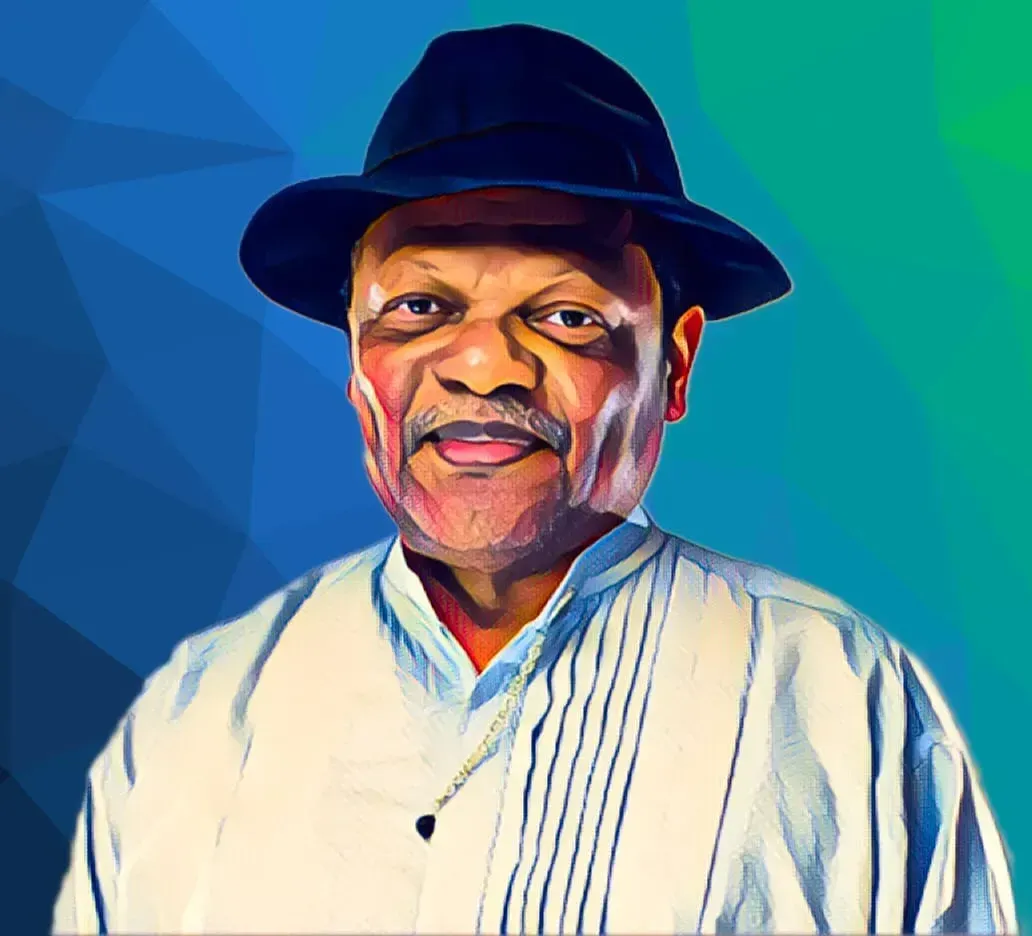
Atedo Peterside, the founder of Stanbic IBTC Bank and president of the ANAP Foundation, says Nigeria is heading for a legitimacy crisis if the African Democratic Congress is blocked from the 2027 presidential election, warning that a one-party contest could produce consequences too serious to predict.
"I would say the upcoming presidential election is a two-horse race between the APC and the ADC," Peterside said during an interview on Arise Television. "If INEC and the courts allow ADC to run. If they don't, then we have a major problem, a crisis."
He added: "If this government and INEC make the mistake of going into a general election with only one major party, I don't want to predict what will happen to the nation."
The comments came a day after the Supreme Court voided a Court of Appeal ruling that had asked factions in the ADC's leadership dispute to maintain the status quo. A five-member panel directed the David Mark-led ADC faction to return to the Federal High Court for a fresh hearing, a decision that injected fresh uncertainty into the opposition's path to 2027.
Peterside read the ruling with skepticism. He said he does not trust Nigeria's judiciary to deliver impartial justice, pointing to a system where only the privileged receive prompt hearings. He recounted a case involving his own father that dragged from the High Court to the Supreme Court over more than two decades. "All I can tell you is that only some Nigerians get prompt hearing from our judiciary. The rest of us, if we brought a similar case as the fellow from ADC who came to court, you'd be lucky to get a hearing in even six months."
On the opposition landscape more broadly, Peterside was blunt about the PDP. With former Vice President Atiku Abubakar and David Mark both having left the party and joined the ADC alongside Peter Obi and Rabiu Musa Kwankwaso, he argued the PDP no longer carries its former political weight. "Whatever PDP had has probably transmuted into ADC," he said. "That's my own estimation."
He also flagged an asymmetry in voter registration patterns that he said could shape the contest. Mobilization in northern states such as Kano, Kaduna and Adamawa is running ahead of registration in the south, he noted, particularly among educated young people who have the tools to register online but are not doing so in comparable numbers.
Peterside, who said he left the Social Democratic Party once it became clear it would not become a major opposition platform, described competitive elections as the pressure valve that keeps democratic systems stable. "You must give people a sense that change is possible through the ballot," he said. "Once that belief disappears, the consequences for stability can be severe."
Nigeria's 2027 presidential election is scheduled for February of that year. President Bola Tinubu has publicly denied any ambition to reduce the country to a one-party state. But the ADC's leadership crisis, coming at the precise moment the opposition was consolidating around a single platform, has sharpened anxieties across the political spectrum about whether the contest will be genuinely open.
The intelligence satisfies curiosity. The paid briefings satisfy strategy.
Every Monday, Elite subscribers receive an Investor Memo breaking down the deal, the structure and the positioning behind the week's most consequential African wealth story - the kind of analysis that doesn't appear anywhere else.
Twice a month, a Wealth Intelligence brief profiles a single billionaire's holdings, cash flows and expansion pipeline in detail no public source matches.
→ Executive ($25/mo): Daily newsletter + Deep-Dive Reports
→ Elite ($75/mo): Everything above + Investor Memos + Wealth Intelligence + Quarterly Analyst Briefings
Subscribe now