

Table of Contents
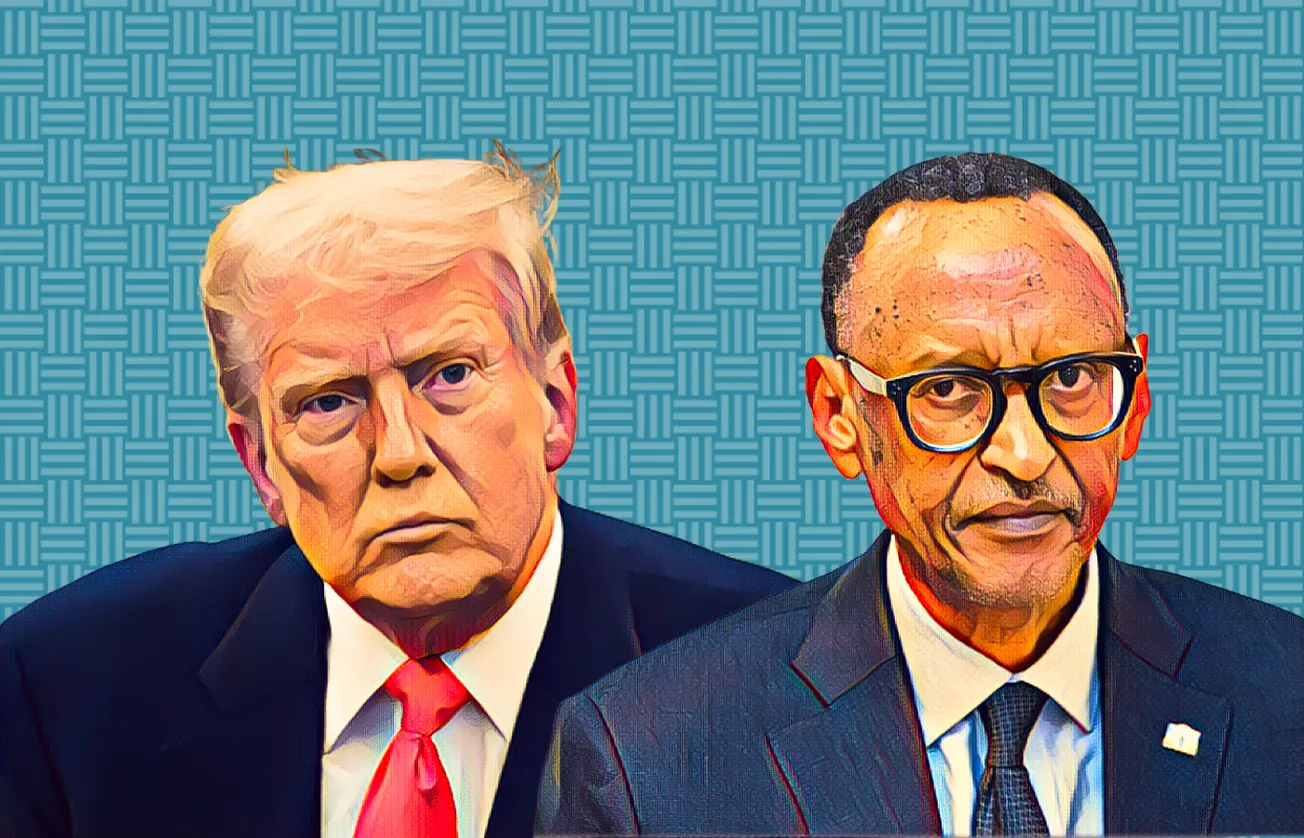
Paul Kagame walked onto the stage at the Kigali Convention Centre on Wednesday and did not waste time being diplomatic. In front of 2,800 business leaders, investors and heads of state gathered for the 2026 Africa CEO Forum, the Rwandan president delivered what became the defining statement of the summit's opening day: Africa is rich in everything except leverage, and it needs to stop acting like it is not.
"It is a situation where the powers that be are holding a whip in their hands, using a stick to beat up whoever they want to beat up," he said. "They are not even hiding it. It's out in the open." The reference to the Trump administration was unmistakable. So was the audience response. The remarks drew widespread applause and laughter across the hall.
He went further. "These powers you see that come here lecturing people on democracy and human rights, they are doing it with one arm and with the other, they are just taking away everything that people own." Then, more quietly: "We can't just be people who are waiting to be ripped off by somebody who is shrewd enough and has the power to come. We must be able to say no."
The context sitting behind those words is specific. The United States imposed sanctions on Rwanda earlier this year over Kigali's alleged support for the M23 rebel group in eastern Democratic Republic of Congo, where Rwanda is accused by the UN and by western governments of backing an armed movement that has captured significant territory and which critics describe as a vehicle for plundering Congolese mineral wealth. Rwanda says its forces are in the DRC to protect Rwandan Hutus from extremist groups and denies direct control of M23. The US-Rwanda relationship has deteriorated sharply, with bilateral trade negotiations stalled and diplomatic communications tense.
Kagame acknowledged the sanctions directly when CNN anchor Eleni Giokos, who was moderating the fireside chat, asked how he was responding to US pressure. "I never capitulated in a war situation," he said. Asked about Trump's social media posts directed at African governments, Kagame smiled. "I've become immunised to shocks."
His broader argument was not only about Rwanda. He framed it as a continental diagnosis. Africa holds roughly 60 percent of the world's solar potential. The continent has the critical minerals needed for battery manufacturing and the green energy transition, the same minerals that the United States, China and the European Union are now competing aggressively to secure. It has a rapidly expanding population that will soon represent the world's largest middle class. Yet Africa continues to occupy a structurally disadvantaged position in the global economy, losing the value of its resources cheaply while more powerful actors set the terms.
"Why is Africa always at a disadvantage?" he asked. "Different powers are fighting over that," he said of critical minerals. "But Africa, which has a lot of that, is silent or losing most of it cheaply."
The answer he offered was not a complaint but a call to action. African leaders and private sector executives, he said, needed to stop treating disadvantage as a permanent condition and start building the kind of collective scale that generates real bargaining power. He described Africa's entrepreneurs admiringly as "hustlers" who advance despite the obstacles that public institutions create and called for closer coordination between governments and the private sector. "The private sector is actually ahead of the public sector," he said. "But we would serve much better by bringing the two closer together."
His remarks arrived in a room already primed to hear them. The 2026 Africa CEO Forum, co-organised by Jeune Afrique Media Group and the International Finance Corporation, was framed around the theme "Scale or Fail: Why Africa Must Embrace Shared Ownership." The IFC committed $14.2 billion across Africa in 2025 and catalysed a further $6.2 billion from co-investors. Its managing director, Makhtar Diop, used his own platform at the forum to describe the model the continent needs. "Africa does not need the world to invest for it. Africa needs the world to invest with it," he said.
Nigerian President Bola Tinubu, speaking at a presidential panel alongside Gabon's Brice Clotaire Oligui Nguema on the forum's second day, arrived at the same place from a different angle. "We don't want scavengers. We don't want extractors," he said. "We want people to add value." He specifically cited the Dangote Petroleum Refinery as his clearest example of African-led industrial transformation and defended his government's decision to supply the facility with crude in naira, eliminating the foreign exchange burden that had slowed the project. "Nigeria won't be able to survive with over 200 million people in peace without a refinery," he said.
The forum drew presidents from Kenya, Nigeria, Mauritania, Mozambique, Guinea and Gabon alongside the Rwandan host. More than 75 countries were represented across the 2,800 attendees.
Kagame ended where he began. "There is a lot we know and there is a lot we talk about. But we need to do a lot more." He said the continent's future would not be determined by the rise or decline of outside powers but by whether Africans themselves decided to convert their enormous natural and demographic advantages into political and economic leverage. "It is up to us, not people from anywhere else, to raise ourselves to the level where we should be."
The intelligence satisfies curiosity. The paid briefings satisfy strategy.
Every Monday, Elite subscribers receive an Investor Memo breaking down the deal, the structure and the positioning behind the week's most consequential African wealth story - the kind of analysis that doesn't appear anywhere else.
Twice a month, a Wealth Intelligence brief profiles a single billionaire's holdings, cash flows and expansion pipeline in detail no public source matches.
→ Executive ($25/mo): Daily newsletter + Deep-Dive Reports
→ Elite ($75/mo): Everything above + Investor Memos + Wealth Intelligence + Quarterly Analyst Briefings
Subscribe now