

Table of Contents
In 1993, a 24-year-old man from Brazzaville started importing tires. The company was called Delta Marine. Annual revenue sat at 1.8 billion FCFA. Nobody outside his immediate circle knew his name, and there was no particular reason they should.
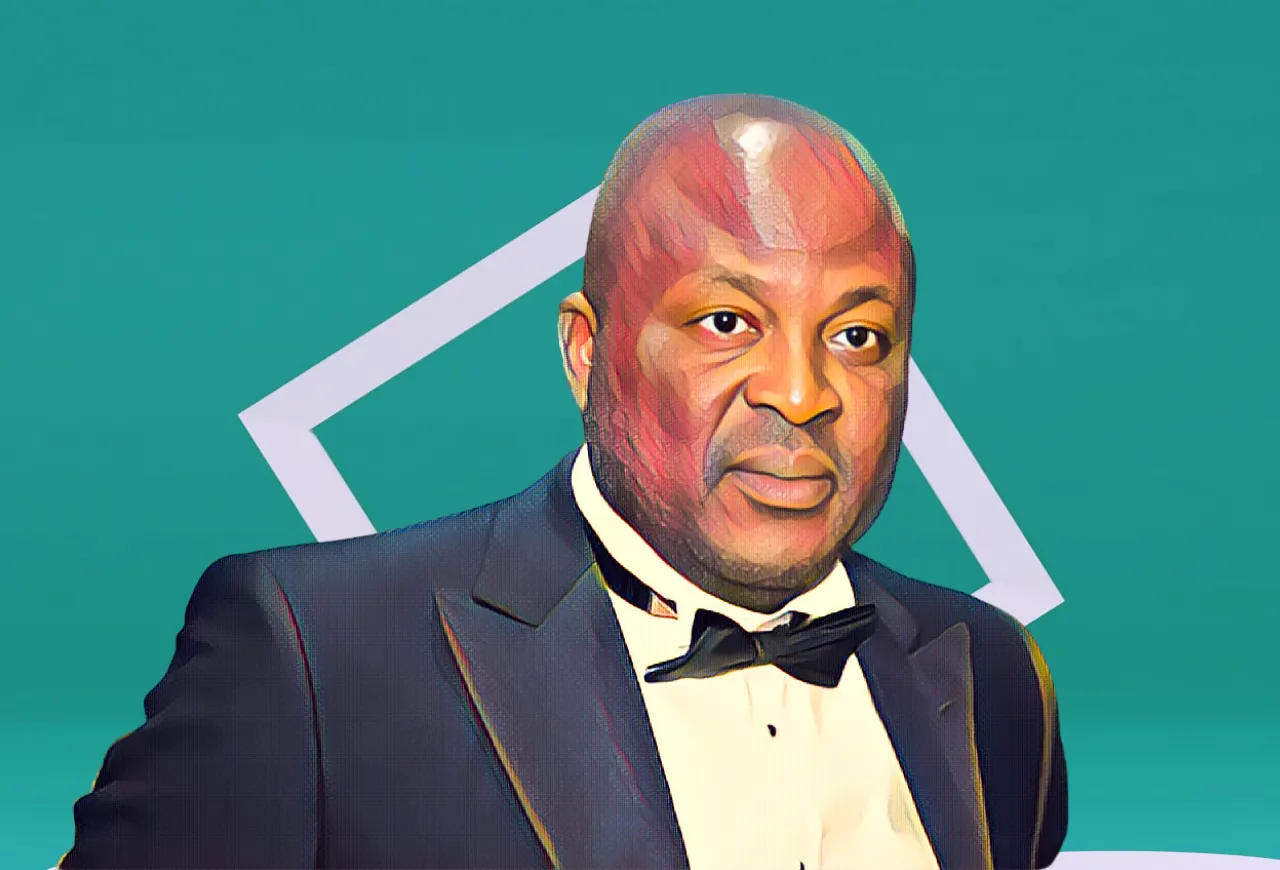
Three decades later, Claude Wilfrid Etoka, known to almost everyone in the Central African oil world as Willy Etoka, controls one of the most powerful energy trading platforms on the continent, a network of companies spanning oil trading, palm oil production, margarine manufacturing, maritime services and logistics, with an estimated personal net worth of $500 million and a list of international counterparties that includes Glencore, one of the most powerful commodity traders on earth.
The journey from rubber to crude is not a straight line. It is a story of calculated pivots, strategic relationships, and a set of political connections that have accelerated his rise in ways that remain deeply contested.
From tires to crude
Etoka was born on May 30, 1969, in Brazzaville, the capital of the Republic of Congo, a small Central African nation that punches well above its weight in hydrocarbon production. The country has been producing oil since the 1970s and the petroleum sector has been the economic center of gravity of the country throughout his lifetime.
After Delta Marine, Etoka spent the late 1990s and early 2000s building out his understanding of the import-export business and the logistical chains connecting Central Africa to European and Asian suppliers. The foundation was not glamorous. Trading tires, then other goods, in a market as small as the Republic of Congo, is a grinding, marginal business. What it gave Etoka was a commercial education in how products move through Brazzaville's port, how relationships with customs authorities and shipping agents work, and how credit flows through informal supply chains in markets where formal banking infrastructure is thin.
In 2003, he made his move. He founded SARPD Oil, the African Corporation of Petroleum Exploration and Distribution, initially incorporated in Mauritius and later expanded through a British Virgin Islands holding structure. The company focused on trading petroleum products in Central Africa and on international transshipment. Etoka set up marketing operations in Morocco under Casablanca Finance City regulations and built a trading floor in Geneva, positioning SARPD between the European financial system and the Central African physical market.
The timing was not accidental. The mid-2000s saw a generational shift in African oil trading as a new class of indigenous African traders began breaking through in markets that had been dominated for decades by Glencore, Trafigura, Vitol, Mercuria and Oryx Energy. Etoka was part of that cohort. By 2015, Jeune Afrique featured him among Africa's "Golden Boys," a generation of well-connected traders reshaping the sector. SARPD had grown to control, by various accounts, between 10 and 60 percent of Congo's fuel import market. The Times of London called it a "rising star in African oil trading." Within a decade of founding, the company ranked among the fifth-largest oil players in Africa by trading volume.
The Geneva-Rabat-Brazzaville axis
Etoka structured his business across three geographies. Geneva provided the financial and contractual infrastructure for large commodity transactions. Casablanca and Rabat gave SARPD a regulated North African platform and a regional springboard. Brazzaville was where the product actually moved and where the political relationships that made it all possible resided.
In 2011, he moved the center of his operations to Morocco. "The Morocco is today a model for Congo and for Africa," he said in an interview with Les Depeches de Brazzaville. He described Morocco's offshore platforms and special economic zones as a geopolitical hub sitting at the interface between Europe, Africa and other continents, and said he saw SARPD as an ambassador for Congolese business in Morocco.
In 2013, he expanded into a completely different sector. Etoka entered the capital of Eco-Oil Energy SA, a Congolese company producing palm oil, becoming the country's first significant palm oil industrial producer in over two decades. He built a palm oil and margarine factory in Mokeko, near Ouesso in the Sangha region, with an investment of 50 billion FCFA, approximately 76 million euros. The plant, inaugurated in August 2015, produces 7,000 bottles of palm oil and two tons of margarine per hour. The WEC Group, his maritime holding company incorporated in Cyprus, sits above Eco-Oil Energy, with the entire ownership chain running from Brazzaville through Geneva and back to Cyprus.
The political dimension
Etoka's rise cannot be separated from his proximity to the political leadership of the Republic of Congo. He is described in multiple investigative reports as a trustee of the family of President Denis Sassou-Nguesso, the man who has ruled Congo, in two separate presidential terms, for more than four decades.
That relationship has been commercially consequential in both directions. SARPD's access to Congolese oil marketing agreements, its role in a 2015 long-term oil deal with Congo structured in partnership with Glencore, and its position as a key intermediary in the country's petroleum product supply chain all sit against the backdrop of Etoka's government connections. The 2015 Glencore-SARPD-Congo deal was specifically criticized by transparency groups as a disguised debt instrument not properly inscribed into Congo's national budget.
BNP Paribas, the French banking group, closed Etoka's accounts, citing his known close links to the Congolese presidency and what the bank described as the improbable level of profitability of his companies relative to the scale of his documented business operations. Documents from the Panama Papers, processed by Mossack Fonseca, revealed corporate connections between Etoka's network and entities linked to the Sassou-Nguesso family.
Etoka has not directly addressed these specific allegations in the public record. He received the 6th Edition prize at the Batisseurs de l'Economie Africaine (Builder of the African Economy) awards held in Abidjan, recognition for what the organisers described as a substantial contribution to African economic and social development.
The maritime and food layers
Beyond oil, Etoka has built out WEC Marine, the Cyprus-incorporated offshore services company with an annual turnover of approximately $1 billion, serving the maritime and offshore energy sector in Central Africa. He was also named director of Congo Investments, a private entity mandated by the Congolese government to privatise public assets, with Etoka reportedly receiving a 30 percent ownership stake in all public assets sold through the vehicle.
In October 2015, he acquired five McDonald's franchises on the US West Coast, a move that signaled a deliberate attempt to build brand-name commercial presence in markets far removed from his Brazzaville roots. In the same period, he was president of Congo Capital Enterprises, an entity that attracted controversy in France when one of its vice presidents, Innocent Dimi, released a statement at a Front National press event presenting "potential business opportunities representing three billion" in investment for African and Asian international investors. Etoka publicly distanced himself from the statement, saying Dimi had acted on personal initiative and that CCE had no intention of interfering in French politics.
What he built and what it cost
By any conventional measure, Claude Wilfrid Etoka's journey is remarkable. A man from Brazzaville with no inherited capital, no family connections to the oil industry, and no structural advantage beyond his own commercial instincts, built within thirty years a trading empire with a Geneva floor, a Casablanca platform, a Congolese palm oil factory, maritime operations, and counterparty relationships with some of the most powerful commodity companies in the world.
The questions that follow his name are structural to the Central African business environment rather than specific to him alone. In a country where the president controls oil revenue and where access to supply agreements flows from proximity to political power, building a large oil trading business without engaging with that political structure is, in practice, nearly impossible. Whether Etoka merely navigated those conditions or actively benefited from them in ways that went beyond legitimate business practice is the argument that investigators, transparency organizations and Congolese civil society have been making for years, without a definitive legal resolution.
What is not in dispute is what he built. The boy who imported tires in 1993 now runs one of Central Africa's most substantial private commercial platforms. He is 56 years old and still building.
The intelligence satisfies curiosity. The paid briefings satisfy strategy.
Every Monday, Elite subscribers receive an Investor Memo breaking down the deal, the structure and the positioning behind the week's most consequential African wealth story - the kind of analysis that doesn't appear anywhere else.
Twice a month, a Wealth Intelligence brief profiles a single billionaire's holdings, cash flows and expansion pipeline in detail no public source matches.
→ Executive ($25/mo): Daily newsletter + Deep-Dive Reports
→ Elite ($75/mo): Everything above + Investor Memos + Wealth Intelligence + Quarterly Analyst Briefings
Subscribe now