

Table of Contents
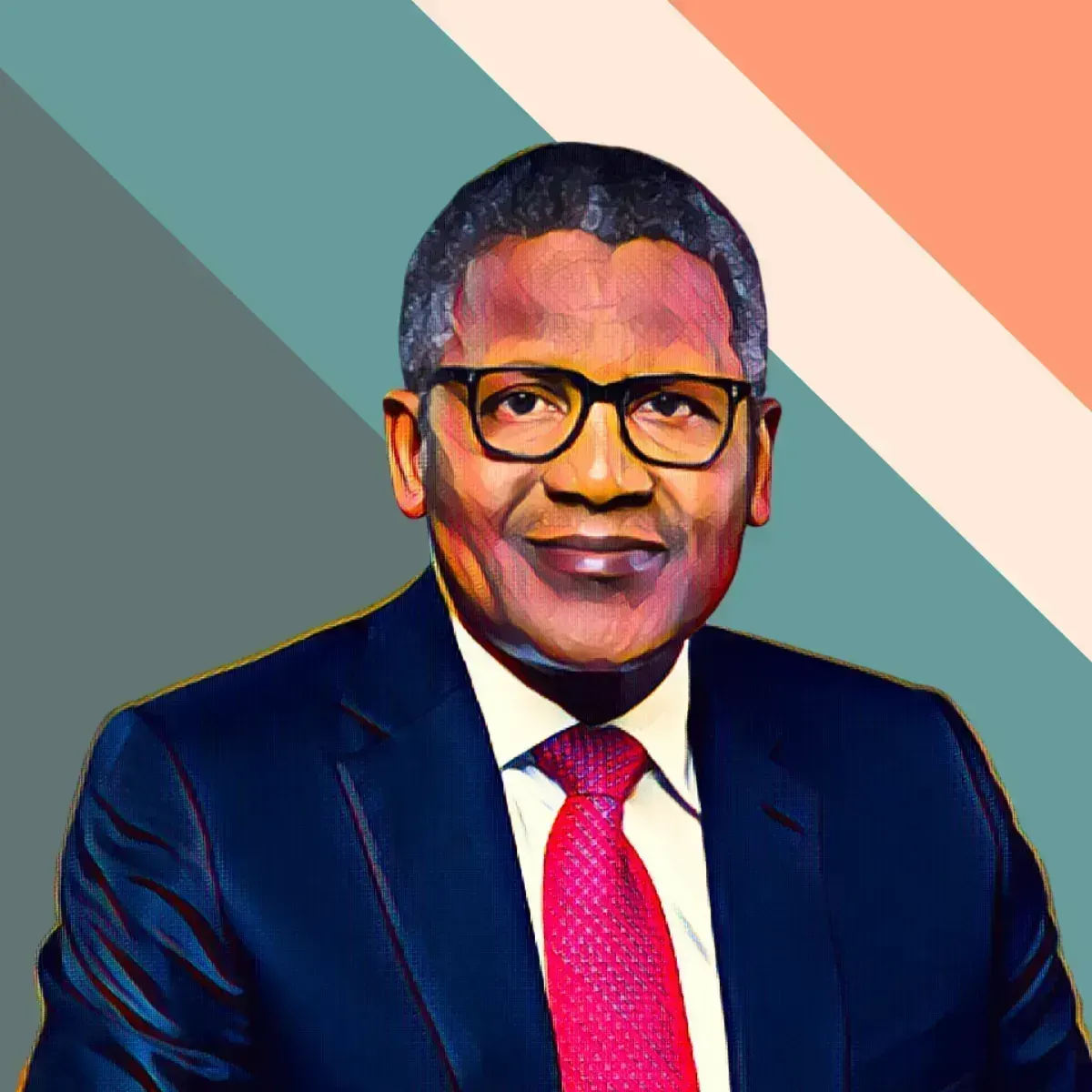
Aliko Dangote had never seen crude oil in his life when he decided to build Africa's largest refinery. He now says he is glad he did not fully understand what he was getting into.
Speaking in an interview with Nicolai Tangen, chief executive officer of Norway's Norges Bank Investment Management, Africa's richest man opened up about the 13-year battle behind the $20 billion Dangote Petroleum Refinery, a project he launched in 2013 and that today operates at 650,000 barrels per day on the Lagos shoreline. The conversation, shared publicly in May 2026, offers the most candid account yet of what it took to bring the facility to life.
"If I had known the full scale from the beginning, I might have chickened out," Dangote said. He compared the experience to swimming across an ocean and realizing halfway through that turning back is not an option. "You have no option but to move forward."
The obstacles began before a single piece of equipment was installed. Land acquisition alone delayed the project for five years, with some sites facing delays of more than three years while others remained inaccessible for over a year. Dangote was direct about who he holds responsible for those delays. "All this would have been blocked by what you call the mafia in oil business to make sure that we don't come and address these issues," he said. He elaborated in a separate public forum, where he put the stakes in even starker terms. "The mafia in oil, they are stronger than the mafia in drugs. I can tell you that. Yes, it's a fact," he said. "The local and foreign mafia tried several times to sabotage the refinery from coming to fruition."
The resistance was not only physical. Dangote said that during the COVID-19 pandemic, some international banks actively looked for opportunities to push the project into loan default so that it would collapse. The refinery kept building. Approximately 67,000 workers participated in constructing the facility, making it one of Africa's largest industrial workforce mobilizations. The infrastructure required went far beyond a refinery: a private port had to be built from scratch, roads laid, a water treatment plant constructed and a power station developed to run the complex.
Dangote traced the decision to build back to a reality that Nigerians lived with for generations. "In Nigeria, we had fuel queues for more than 50 years. People queued for days during Christmas just to buy petrol in an oil-producing country," he said. He said that fuel subsidy payments alone reached nearly $10 billion annually, a sum that enriched a small group of traders, shippers and local beneficiaries who saw the refinery as a direct threat to their livelihoods.
The refinery ran at 99.12% average capacity utilization in April 2026, according to Nigeria's downstream petroleum regulator. It currently purchases 21 crude cargoes per month domestically and has made Nigeria a net exporter of refined fuel. Dangote said the expansion to 1.4 million barrels per day is now 30 months away.
He offered a broader lesson for entrepreneurs who had absorbed the outcome without understanding the process behind it. "We built during the most difficult times, which is COVID. We built in a very difficult environment, which is Nigeria. And we were able to deliver," he said. His message was simple and deliberate: thinking small does not produce transformation. "When you think small, you don't grow at all."
The refinery's water department alone occupies more than 30 hectares. The detail is not incidental. It is a reminder of how far beyond fuel processing the project extended, and how much of it had to be built before a single barrel could be refined.
The intelligence satisfies curiosity. The paid briefings satisfy strategy.
Every Monday, Elite subscribers receive an Investor Memo breaking down the deal, the structure and the positioning behind the week's most consequential African wealth story - the kind of analysis that doesn't appear anywhere else.
Twice a month, a Wealth Intelligence brief profiles a single billionaire's holdings, cash flows and expansion pipeline in detail no public source matches.
→ Executive ($25/mo): Daily newsletter + Deep-Dive Reports
→ Elite ($75/mo): Everything above + Investor Memos + Wealth Intelligence + Quarterly Analyst Briefings
Subscribe now