

Table of Contents
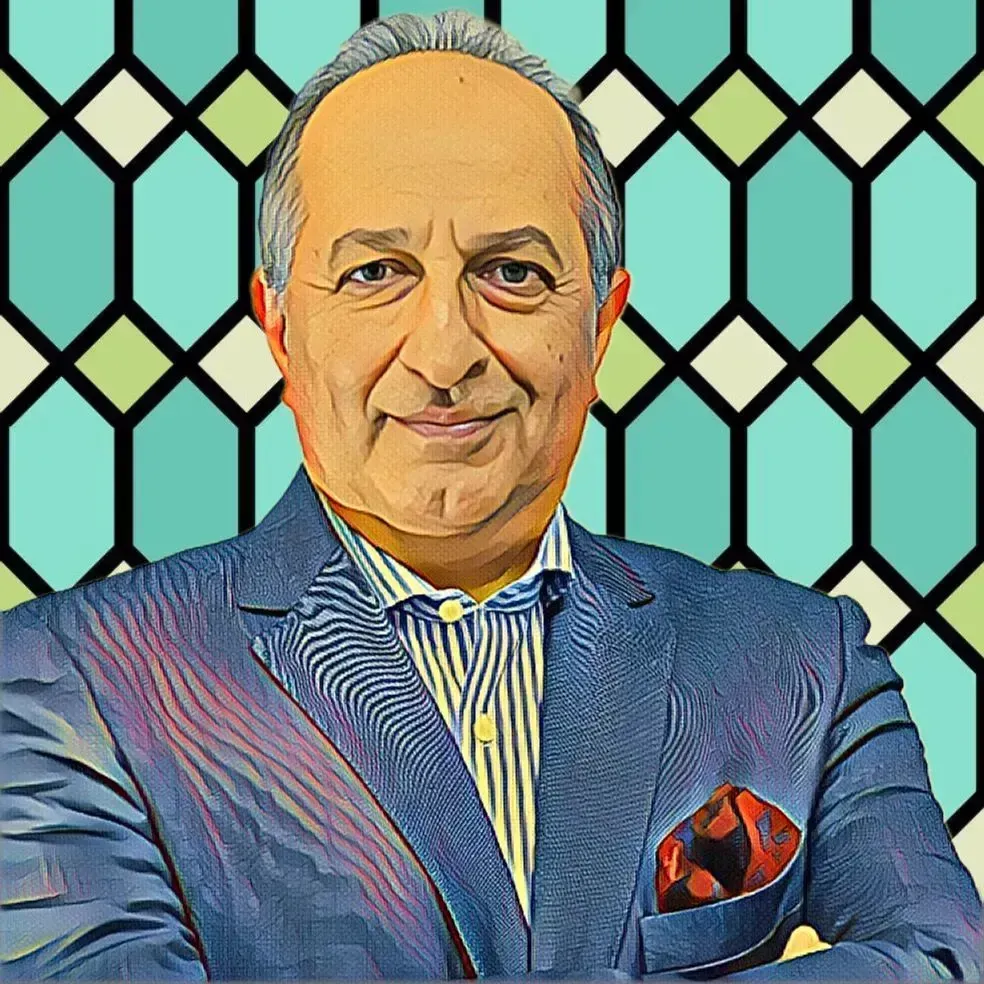
When Farouk Essop Ismail's father arrived in Botswana from Gujarat, India, sometime in the 1960s, he did not arrive with capital or connections. He arrived in a wave of South Asian migration that washed across southern Africa in the colonial and post-colonial decades, dropping families onto the plains of Botswana, into the cane fields near Durban, into the trading towns along the Limpopo. Most of these migrants ended up labouring on the sugar cane fields near Durban. Chopdat senior had tried his luck inland, working his way up until he was the proud owner of his own shop. The shop was called Wayside Supermarket. It was in Lobatse, a border town in southeastern Botswana, approximately 60 kilometers south of Gaborone. When Chopdat senior died, his three sons inherited the shop, the debts and the obligation not to let him down.
The eldest of those sons is Farouk. He had dropped the Chopdat surname and gone by Farouk Ismail. What he had not dropped was the commercial foothold his father had scratched out on the Lobatse main road, even as that foothold was beginning to crumble. The end of apartheid had opened South Africa's retail market to his Zimbabwean customers, who had previously crossed into Botswana to buy cheap electronics and appliances because South Africa was closed to them. Now they went there instead. The business Farouk had inherited was in decline, and the Chopdat brothers, by their own account, were running it further into the ground. His youngest brother Abu, years later, would tell a journalist: "You know, it's just a gamble we took with Ram. No one could have predicted that the gamble would pay off quite so spectacularly."
The Ram in that sentence is Ramachandran Ottapathu, the Kerala-born chartered accountant who arrived from Mazars audit firm to fix Wayside's books in 1992 and who became, eventually, the CEO of the largest grocery retailer in southern Africa outside South Africa. But the gamble Abu described was not Ram's. It was Farouk's. The accountant proposed difficult things: removing family members from the cash desk, diversifying the product range, extending trading hours, pivoting from electronics to groceries. Farouk agreed to all of it. He gave Ram free rein to turn the Wayside Supermarket around, he said, because they were desperate to keep it afloat. What his father had built was more than a business. It was a legacy. And Farouk was not going to be the son who lost it.
The decision that made everything possible
The commercial history of Choppies is told most often as Ram's story, and not without justification. He is the one who ran the operations, made the expansion calls, negotiated the distribution contracts, and sat in the CEO chair through the periods of extraordinary growth and institutional crisis that defined the company's trajectory from 1992 to 2019 and again from 2019 onward. But the Choppies story begins before Ram arrived, with a father's shop and a son who understood that the most important decision a business owner can make is choosing whom to trust with the business.
Farouk Ismail is the founder of Wayside Supermarket, which became Choppies Enterprises. The chain takes its name from the Chopdat family, also known as the "Choppies Boys of Lobatse." By the time Ottapathu joined the business, the product mix was already pivoting from the electronics and appliances model that had served Zimbabwean cross-border shoppers to a grocery and fresh produce model designed for the Botswana consumer market. The second store opened in 1993. By 1998, Ram and Farouk opened a store in the capital Gaborone. By the time Friendly Grocer, their Gaborone franchise operation, gave way to the Choppies brand consolidation in 2003, the company Farouk's father had left behind was unrecognizable from what it had been at his death.
In 2004, Botswana devalued its currency, collapsing several local businesses and creating acquisition opportunities for anyone with working capital and nerve. Farouk and Ram bought distressed stores at prices that reflected the market's panic rather than the assets' underlying value. When Score Supermarket, operated by South African chain Pick n Pay, decided to exit Botswana entirely, they opened Choppies stores wherever Score had been, absorbing an established customer base in established locations at the moment of maximum competitive vulnerability. By 2009 they had repaid their debts. By 2012, when Choppies listed on the Botswana Stock Exchange in the largest IPO in the exchange's history, raising BWP350 million in an offering oversubscribed up to 400 percent, the company Farouk had nearly lost in the mid-1990s was worth more than his father could have imagined on the day he opened the first shop.
The stake, the property empire and the $38 million position
Farouk Ismail and Ramachandran Ottapathu each hold a 34.2 percent stake in Choppies Enterprises, making them the two largest individual shareholders and the co-controlling interest in a company that generates more than $700 million in annual revenue. The equal division of the equity is itself a statement about the founding relationship: Farouk did not treat his early ownership advantage as a reason to hold more than his operating partner. The partnership was built on parity, and the equity structure reflects that.
His stake in Choppies, combined with his position in the Far Property Company, was valued at $38.74 million as of the most recent BSE-based calculation. The Far Property Company, whose name carries the initials of both founders, Farouk and Ram, was established in 2010 as a dedicated property investment and asset management vehicle. It now holds a portfolio of approximately 206 properties across Botswana, South Africa and Zambia, including warehouses, shopping centers housing Choppies outlets, and commercial real estate, with a total market capitalization that has consistently ranked it among the mid-tier listed property companies on the BSE. Ismail's stake in Far Property is 29.01 percent, making him the largest single shareholder ahead of Ottapathu's 28.02 percent position.
The commercial logic of Far Property is inseparable from the commercial logic of Choppies. The retailer and the landlord are deeply interlinked: Choppies stores frequently anchor Far Property centers, generating foot traffic that sustains the surrounding tenants and justifying the commercial real estate values at which the portfolio is carried. The Choppies-Far Property relationship is, in essence, a vertically integrated property-retail business organized across two listed entities with separate governance structures but shared founding ownership. Farouk sits at the center of both.
He also holds an interest in Keriotic Investments, the South African private investment firm co-associated with himself and Ottapathu that serves as the vehicle for their collaborative retail and real estate positions in the South African market, extending the partnership established at Wayside into the larger and more competitive Johannesburg commercial environment.
The 2019 crisis and the shareholder who held the line
The most consequential test of the Farouk Ismail-Ramachandran Ottapathu partnership came not during the years of growth but during the accounting crisis of 2018 and 2019 that nearly ended Choppies as a listed company and led to Ottapathu's suspension as CEO.
When accounting irregularities were identified in 2018, prompting the replacement of KPMG with PwC and months of delayed financial reporting, shares were suspended on both the BSE and JSE. The board, chaired at that time by former Botswana President Festus Mogae, moved to suspend Ottapathu in May 2019. When the extraordinary general meeting that followed produced a shareholder vote on the question of Ottapathu's reinstatement, Farouk stood with Ram. The two co-founders together held a majority of the share register. The board members opposing Ottapathu were removed. Ram returned as CEO and executive director. The partnership that had begun with a Gujarat-born entrepreneur handing operational control of his father's failing shop to a Kerala accountant held firm when it mattered most.
Ismail has served as deputy chairman of Choppies since 2019, occupying the governance role that reflects his status as the company's largest single founding shareholder and its longest-serving institutional voice. He is not the operator. He has never been the operator. His role has always been the one he played in 1992: to identify the right person for the work, give them the authority to do it, and hold the equity position through the cycles.
The quiet man and the $38 million it bought him
The contrast between the two Choppies founders is one of the most instructive available in African retail. Ottapathu is the subject of profiles, the speaker at youth events, the man quoted in earnings calls and business conferences, the one who told reporters he arrived with BWP200 and wants to own a bank. Farouk Ismail maintains a near-total public silence. The Mail & Guardian described him, in its long-form investigation of the Choppies story, as a man who dropped his family surname and goes by Farouk Ismail, without further public elaboration on his personal life, philosophy or ambitions. His brother Abu, by contrast, sat in the Lobatse store manager's office and offered candid reflections on the family's journey. Farouk did not.
That discretion is not incidental to the story. It reflects a specific commercial philosophy: the man who holds the founding equity stake, who controls the strategic direction through the shareholder register rather than the executive suite, who maintains the relationship with the operating partner that keeps the whole structure coherent, does not need to be visible. His net worth, verifiable through BSE-listed equity positions, stands at a confirmed $38.74 million, a figure that represents only the public markets component of a portfolio that also includes the unlisted businesses and property holdings associated with the Ismail-Ottapathu partnership beyond the two listed entities.
Choppies H1 2025 revenue rose 19.4 percent to $346.2 million, and the company is expanding hardware, financial services and food manufacturing through the Kamoso acquisition into markets it has identified as more profitable than the ones it exited in recent years. Shareholders' equity surged 63.1 percent in the same period. The company Farouk's father left behind, which was waiting for liquidation when an accountant from Kerala walked through the door in 1992, now employs more than 11,000 people, operates across four countries, and is recovering from its worst institutional crisis with a financial profile that suggests its founders will continue to collect dividends from it for the foreseeable future. Farouk made one essential judgment call in 1992. He has been collecting the returns from it ever since.
The intelligence satisfies curiosity. The paid briefings satisfy strategy.
Every Monday, Elite subscribers receive an Investor Memo breaking down the deal, the structure and the positioning behind the week's most consequential African wealth story - the kind of analysis that doesn't appear anywhere else.
Twice a month, a Wealth Intelligence brief profiles a single billionaire's holdings, cash flows and expansion pipeline in detail no public source matches.
→ Executive ($25/mo): Daily newsletter + Deep-Dive Reports
→ Elite ($75/mo): Everything above + Investor Memos + Wealth Intelligence + Quarterly Analyst Briefings
Subscribe now