

Table of Contents
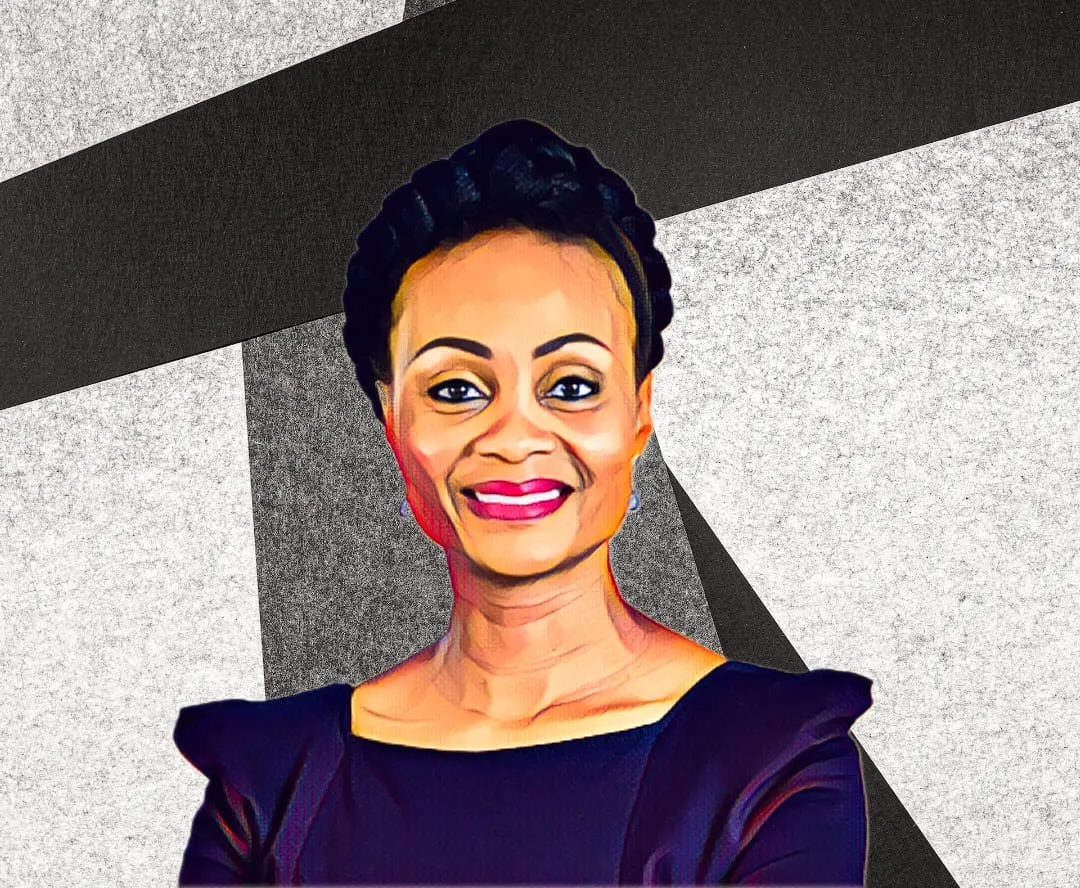
She was born in Baku, in what was then Soviet Azerbaijan, in April 1973, the eldest daughter of a young Angolan student named Jose Eduardo dos Santos who was studying petroleum engineering on a Soviet scholarship. He would return home, join the independence movement, survive a civil war and rule Angola for 38 consecutive years. She would grow up mostly in London, study electrical engineering at King's College, and become the wealthiest woman Africa had ever produced.
That is the version of the story Isabel dos Santos prefers. It is not the only version.
The other version begins in the same place but tells a different story about how a young woman from a ruling family in one of the world's most resource-rich countries converts proximity to power into a $2 billion fortune while millions of her compatriots live on less than two dollars a day. The ICIJ, working with more than 100 journalists across multiple continents, spent eight months documenting that second version through what became known as the Luanda Leaks in January 2020. The documents obtained, more than 700,000 files leaked by the Platform to Protect Whistle-blowers in Africa, described in granular detail how dos Santos and her late husband, Congolese art collector Sindika Dokolo, funnelled hundreds of millions of dollars through offshore shell companies registered in Malta, the British Virgin Islands, the Netherlands, Cyprus and elsewhere, using those structures to acquire stakes in Angola's most valuable state assets at prices and terms that no independent investor would have been offered.
Courts in Angola, Portugal, the United Kingdom, France and the United States have since spent years dismantling what she built. What remains is a legal war she is fighting from a 31st-floor apartment overlooking Dubai Marina, where she posts videos of herself dancing poolside and dining at extravagant restaurants, maintaining a social media presence that has become, to investigators and civil society organisations tracking her, something close to defiance as a lifestyle.
How the empire was built
The mechanism, as documented by the ICIJ and confirmed by Angolan prosecutors, was straightforward in concept and extraordinarily complex in execution. Presidential proximity was converted into commercial advantage, then disguised through layers of corporate structure opaque enough that Western banks, auditors and legal firms could service her without being required to ask too many uncomfortable questions. PricewaterhouseCoopers provided services to her companies for years before ending those contracts and opening an internal investigation in 2020.
Her first major entry point was Angola's diamond sector. Through Sodiam, the state diamond company, her structures received extraordinarily favourable terms on diamond trading agreements, effectively capturing a portion of Angola's most valuable commodity exports at below-market arrangements. Her entry into telecoms came when the government awarded her a founding stake in Unitel, which would become Angola's largest mobile operator, serving more than 14 million subscribers. The structure that held that stake, Vidatel, was ostensibly a private company. The capital used to seed it, investigators alleged, was not.
The pattern repeated. A stake in Banco BIC, a Portuguese bank. A 42.5 percent stake in EuroBic, another Portuguese lender. An effective 26.7 percent stake in NOS, Portugal's largest telecoms group, built through a chain of holding companies. A 67 percent controlling stake in Efacec, the Portuguese electrical engineering and industrial conglomerate, acquired for approximately 200 million euros in 2015. Stakes in ZAP, the satellite television operator serving Angola and Portugal. Candando, Angola's first modern supermarket chain. Nova Cimangola, a cement company. Stakes in BFA bank in Angola. By 2013, Forbes had declared her Africa's richest woman with a net worth of $3.5 billion.
In June 2016, 80 days before his own term ended, her father appointed her to chair Sonangol, Angola's state oil company and the source of the vast majority of the country's government revenue. She was removed 80 days after President Joao Lourenco took office in 2017. Her successor at Sonangol, Carlos Saturnino, subsequently alerted prosecutors to irregular money transfers made during her tenure. That alert became the opening of a formal investigation and the beginning of the end of everything she had accumulated.
The complete asset seizure breakdown
What followed was a systematic legal dismantlement across five jurisdictions, the most extensive asset recovery action ever mounted against an African businessperson on multiple continents simultaneously.
IN ANGOLA:
December 2019: The Luanda Provincial Court ordered the freezing of her Angolan bank accounts and her stake in Unitel, Angola's largest mobile telecoms company, held through her Vidatel vehicle. Total value of frozen Angolan assets at this stage: approximately $1 billion.
2022: Angola nationalised the 25 percent Unitel stake held by Vidatel and a separate 25 percent stake held by General Leopoldino Fragoso do Nascimento through a vehicle called Geni, making Unitel wholly state-owned. One of the most valuable assets in her portfolio was gone permanently.
December 2022: Angola's Supreme Court issued a second comprehensive seizure order covering all money she held in all banking institutions across any jurisdiction, and additionally ordering the seizure of the following specific assets: All her shares in Embalvidro, an Angolan packaging company. 100 percent of her shares in Unitel T+, the Cape Verde telecoms subsidiary. 100 percent of her shares in Unitel STP, the Sao Tome and Principe telecoms subsidiary. 70 percent of her shares in MStar, a Mozambican telecoms company. 70 percent of her shares in Upstar Comunicacoes, a second Mozambican telecoms entity.
January 2024: Angolan prosecutors formally charged her with 12 crimes, accusing her of defrauding Angola of $219 million during her Sonangol tenure through unduly paid salaries, loss-making asset sales, tax fraud and fraudulent payments to her own shell companies. Her documented monthly salary as Sonangol chair was $50,448, approximately $19,000 more than any predecessor.
IN PORTUGAL:
February 2020: Portuguese prosecutors froze her personal bank accounts and those of companies she directly owned in Portugal, following a mutual legal assistance request from Angola. The freeze covered approximately $550 million in Portuguese-held assets. Specific assets caught in the freeze:
Her 67 percent controlling stake in Efacec, the electrical engineering and industrial conglomerate she acquired for 200 million euros in 2015. Her companies owed 13 Portuguese banks approximately 570 million euros, the majority related to Efacec financing from lenders including Caixa Geral de Depositos. Efacec was subsequently nationalised by the Portuguese state in 2020. The company was in negative net worth at the time of nationalisation, meaning no recovery flowed to Angola.
Her 42.5 percent stake in EuroBic, a Portuguese bank. She sold this to Spanish lender ABANCA for approximately 127.5 million euros. The proceeds were immediately seized under existing court orders. Angolan civil society organisations subsequently demanded to know what happened to those funds, noting the EuroBic stake had been acquired through a Maltese shell company funded with misappropriated Angolan state resources.
Her effective 26.7 percent stake in NOS, Portugal's largest telecoms group, held indirectly through ZOPT, which she controlled through Kento Holding Limited and Unitel International Holdings BV. The Lisbon Central Criminal Investigation Court ordered the seizure of 26.075 percent of NOS capital in April 2020. The position remains entangled in unresolved Portuguese proceedings involving her co-shareholder Sonaecom.
Her private equity and venture capital firm Fidequity and associated smaller investment vehicles handling her Portuguese portfolio.
Her stake in Banco BIC Portugal, which she sold before the full freeze could be enforced.
IN THE UNITED KINGDOM:
December 2023: Judge Robert Bright of the London Commercial Court ruled in favour of Unitel, now wholly state-owned, and issued a worldwide freeze order covering up to £580 million, approximately $733 million, representing interest on arrears and damages from loans made by Unitel to her Dutch vehicle Unitel International Holdings BV between 2012 and 2013 that were never repaid. The worldwide designation meant the order reached theoretically to any asset in any jurisdiction, including Dubai.
September 2024: The UK Court of Appeal unanimously rejected her challenge, upholding the worldwide freeze.
November 2024: The UK government sanctioned her under the Global Anti-Corruption Sanctions Regulations, formally designating her a "notorious kleptocrat," freezing her UK assets and banning her from UK travel. Foreign Secretary David Lammy stated she had embezzled at least £350 million through her positions at Sonangol and Unitel. Two associates were sanctioned simultaneously.
IN FRANCE:
2021: A French court ruled she was personally liable to pay $340 million to PT Ventures, a Portuguese company owned by Sonangol, the Angolan state oil company.
IN THE UNITED STATES:
2021: The US government imposed sanctions on dos Santos for involvement in "significant corruption," barring her from entering the country and cutting her off from the US dollar financial system.
What remains
The honest answer is that nobody outside her immediate circle knows precisely what survives. Her corporate structure was always built for opacity, through dozens of entities in secrecy jurisdictions designed specifically to make tracing beneficial ownership difficult.
What is confirmed lost or disposed of: Unitel Angola, Efacec, EuroBic, Embalvidro, Unitel T+, Unitel STP, MStar, Upstar, and her formal access to dividend income from any entity caught by the five-jurisdiction freeze network.
What remains unresolved: the NOS stake in Portugal, the ZAP satellite television stake, residual interests in corporate structures in jurisdictions that have not cooperated with recovery requests, and property holdings whose full extent has not been publicly documented.
What she still demonstrably holds: Dubai real estate including the 31st-floor Marina apartment co-owned with her mother, additional units connected to Dokolo's estate at the Bulgari Resort and Residences, personal effects, and some portion of Dokolo's 3,000-piece contemporary African art collection.
Forbes removed her from its billionaire list in 2020, estimating $1.6 billion of her assets were frozen in Angola and Portugal at that stage. The subsequent UK freeze of $733 million pushed the frozen total well above $2 billion. She has not appeared on any credible wealth list since.
Dubai, poolside, defiant
She arrived in Dubai no later than November 2022. Bellingcat geolocated her there systematically from that point using metadata, background architecture and restaurant identifiers from her own Instagram posts. She was not hiding. The UAE has no extradition treaty with Angola or Portugal. Interpol's president until 2025 was from the UAE. She had run the calculation correctly.
ICIJ's Dubai Unlocked investigation, published in May 2024, connected her and her mother to multiple waterfront properties through leaked land registry data. She and her mother co-own a two-bedroom apartment in the Sadaf building, purchased in 2009 for approximately $163,000. Her mother owns a separate unit in the same building bought for $735,000 in 2017. A Bulgari Resort unit purchased in 2017 for $2.1 million had been listed as her and Dokolo's residential address on corporate documents of a Maltese shell company used to obtain a Sonangol contract. Bellingcat confirmed her presence at the Bulgari complex through geolocated Instagram posts showing her dancing poolside.
She has described the UK sanctions as politically motivated and lacking due process. She told the BBC she had not been found guilty of corruption in any court in any country, which is technically accurate. She says she created more than 200,000 jobs in Angola. She accuses President Lourenco's government of fabricating evidence and distorting her late father's legacy.
Her husband Sindika Dokolo died in a diving accident in Dubai in October 2020. She did not attend her father's funeral in 2022, having calculated that returning to Angola would likely result in her arrest. She has three children whose details she keeps private. She is 53 years old.
The four Angolan civil society organisations that wrote to authorities in Portugal and Angola in 2024 demanding a full public accounting of every seized asset, every recovery and every unresolved question are still waiting for a comprehensive answer.
The intelligence satisfies curiosity. The paid briefings satisfy strategy.
Every Monday, Elite subscribers receive an Investor Memo breaking down the deal, the structure and the positioning behind the week's most consequential African wealth story — the kind of analysis that doesn't appear anywhere else.
Twice a month, a Wealth Intelligence brief profiles a single billionaire's holdings, cash flows and expansion pipeline in detail no public source matches.
→ Executive ($25/mo): Daily newsletter + Deep-Dive Reports
→ Elite ($75/mo): Everything above + Investor Memos + Wealth Intelligence + Quarterly Analyst Briefings
Subscribe now