

Table of Contents
Talaat Moustafa Group will nearly double its hotel portfolio over the next decade, taking it from about 20 properties to between 35 and 40, as Egypt's largest listed developer pushes further into hospitality and entertainment.
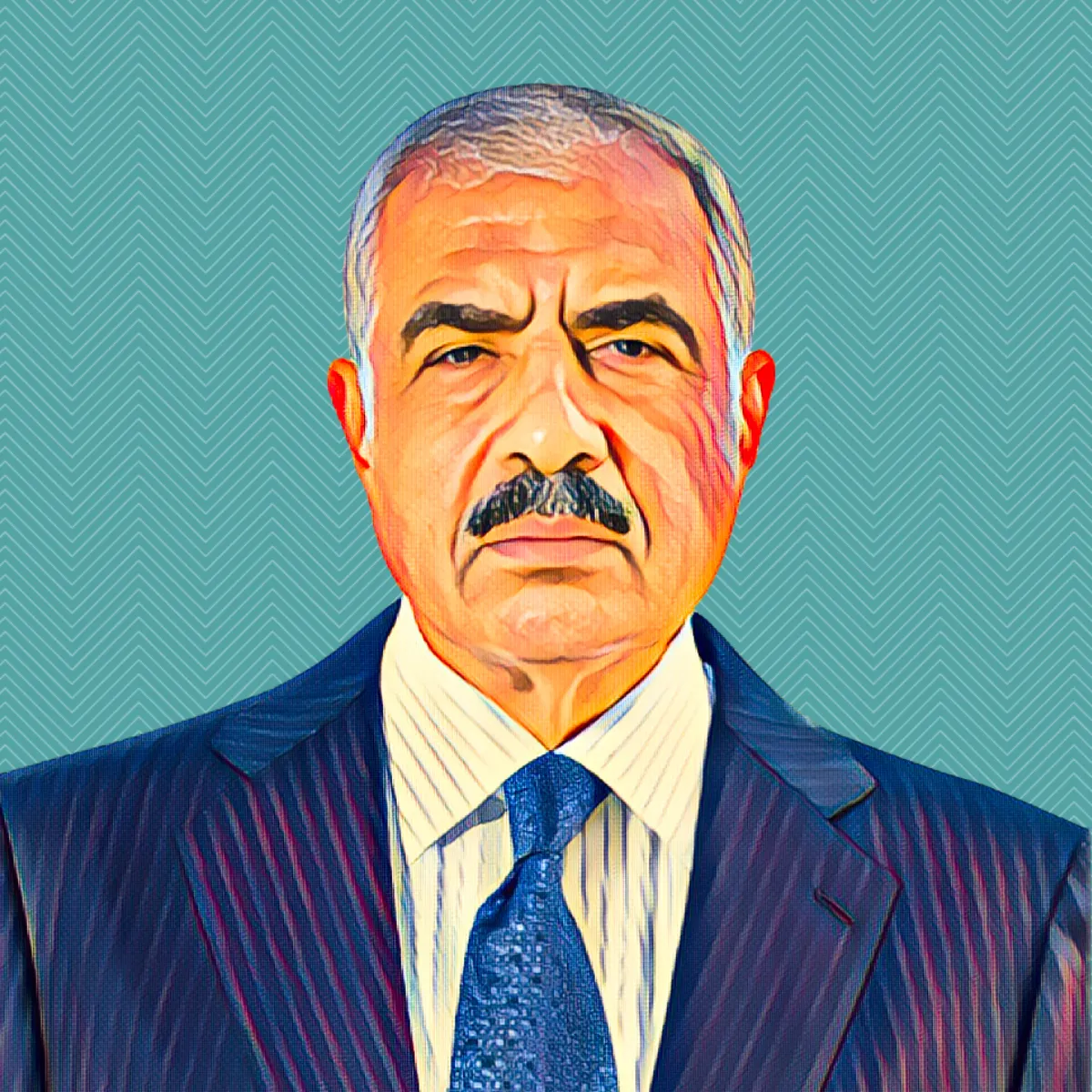
Chief Executive Hisham Talaat Moustafa laid out the plan in an interview on Al Arabiya Business, framing it as part of a strategy to diversify revenue and tie the group's real estate, hotel and leisure businesses closer together. He gave no timeline for individual openings.
Hospitality has already become a heavyweight inside the group. Hotel revenue rose 21% in the first quarter to about $90 million (4.3 billion Egyptian pounds), with occupancy climbing to 63% from 60% a year earlier and average room rates up 15% to roughly $285 (13,677 pounds) a night. Recurring income now accounts for 53% of consolidated revenue.
The buying has been aggressive. ICON, the group's hospitality arm, acquired a 39% stake with full management control in Legacy Hospitality, the company holding seven historic state-owned Egyptian hotels, in a transaction valued at up to $800 million. The stake is set to rise to 51%. A Saudi entity linked to the Public Investment Fund joined the consortium.
TMG has since lined up the brands to run them. It signed Mandarin Oriental to manage the Winter Palace in Luxor and the Old Cataract in Aswan, two of the most storied properties in the country, and brought in Four Seasons and Steigenberger for hotels on Elephantine Island. Construction is under way on a Four Seasons in Luxor, another in Madinaty, a Marsa Alam resort and a mixed-use development beside the Grand Egyptian Museum.
Entertainment is the next pillar. Moustafa said the group is preparing a major entertainment project with Gulf investors, with details to follow. He called entertainment one of the region's most promising industries and argued that technological change keeps opening room for new products and experiences.
The logic runs back to the residential business. TMG expects the population living inside its developments to approach three million within 12 years, a scale that turns leisure infrastructure from an amenity into a captive market. Building integrated cities has already pulled the company into transport, education, sports, healthcare and hospitality.
The core business is throwing off cash to fund it. First-quarter net profit rose 24% to about $115 million (5.5 billion pounds) on revenue up 39% to roughly $273 million (13.1 billion pounds). Contracted sales hit about $1 billion (49.1 billion pounds). Cash and equivalents stood at roughly $1.8 billion (86.7 billion pounds) at the end of March against total debt of 14.8 billion pounds.
The Spine, a knowledge city inside Madinaty, generated about $625 million (30 billion pounds) in sales within 15 days of launch. Moustafa points to it as the template for what comes next, a project built around advanced technology and shifting customer expectations. He warned that developers who stop refreshing their products lose their position.
Regional expansion is running alongside. Banan City, a 10 million square metre community in Riyadh's Al-Fursan district built with the Al-Muhaidib Group and Saudi Arabia's National Housing Company, booked about $69 million (3.3 billion pounds) in first-quarter sales. Two Omani projects, Yamal and Joud, added roughly 900 million pounds between them. Asked where he would invest if starting again, Moustafa named Egypt and Saudi Arabia as the region's most attractive long-term property markets.
He described a management style built on repetition rather than instinct. Every investment goes through market studies, financial analysis and risk assessment before reaching specialised teams and the board, he said, insisting decisions are not made on personal judgment. He spends two days a week walking construction sites, comparing projections against what has actually been built.
Succession is being handled the same way. The group is grooming executives between 30 and 45 by widening their responsibilities in stages, an effort to secure leadership continuity in a company still closely identified with one family.
That family built it. Engineer Talaat Moustafa founded the business with his sons in the early 1970s, pioneering gated communities in Egypt through Al Rabwa and Mayfair before scaling into Al Rehab, Madinaty, Celia and Noor City. The holding company listed on the Egyptian Exchange in 2007. Hisham has been chief executive since 2017, his brother Tarek is chairman, and the brothers together hold roughly a third of the stock. The land bank now exceeds 125 million square metres across Egypt, Saudi Arabia, Iraq and Oman.
Moustafa said the measure of a project is not the number of towers or hotels built but what it leaves behind in the communities around it.
The intelligence satisfies curiosity. The paid briefings satisfy strategy.
Every Monday, Elite subscribers receive an Investor Memo breaking down the deal, the structure and the positioning behind the week's most consequential African wealth story — the kind of analysis that doesn't appear anywhere else.
Twice a month, a Wealth Intelligence brief profiles a single billionaire's holdings, cash flows and expansion pipeline in detail no public source matches.
→ Executive ($25/mo): Daily newsletter + Deep-Dive Reports
→ Elite ($75/mo): Everything above + Investor Memos + Wealth Intelligence + Quarterly Analyst Briefings
Subscribe now