

Table of Contents
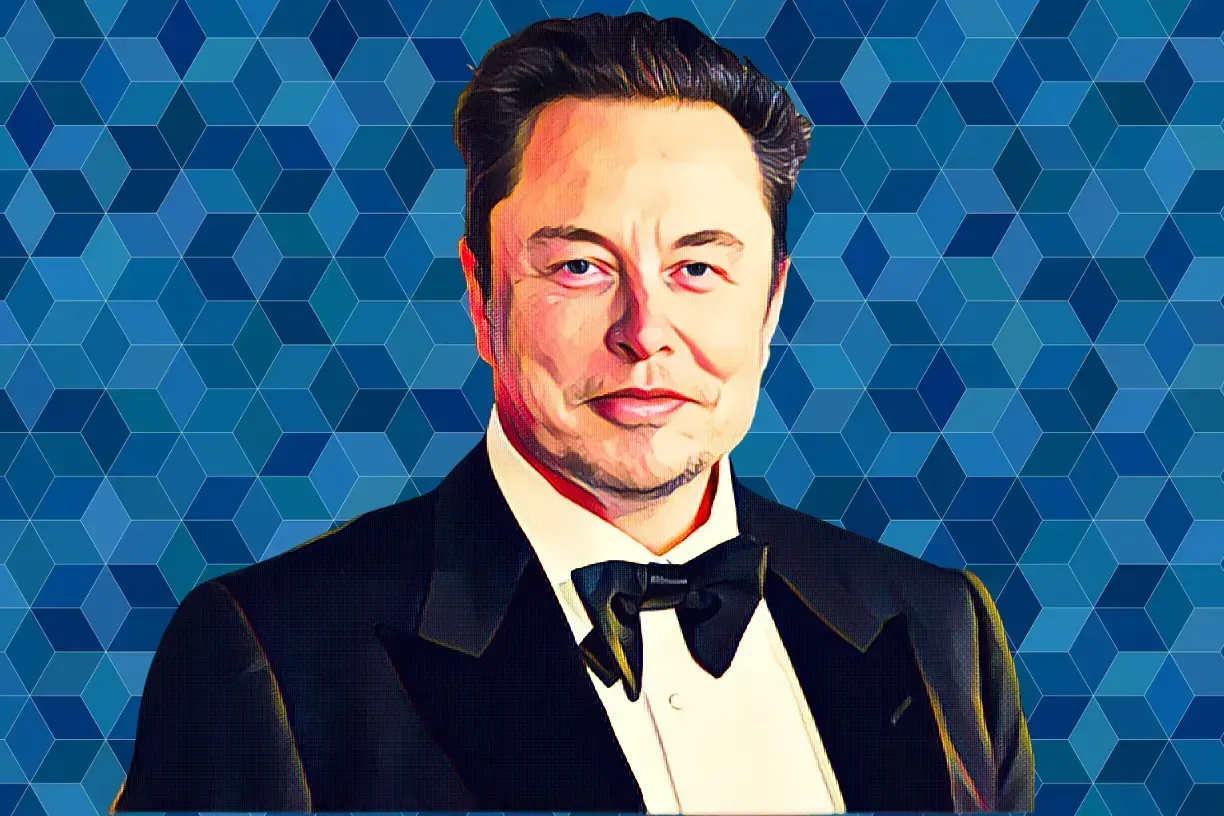
Elon Musk is weighing a merger between SpaceX and Tesla that would create the largest corporate combination in history, valued at $3.4 trillion. There is just one problem: the resulting company would be losing money on day one, and the math required to ever make investors whole is, by one analyst's description, "really out of this world."
Reports surfaced May 27 that the two companies are actively discussing a tie-up, citing a Tesla employee and others familiar with the talks. Speculation had already been running for weeks before that. Wedbush Securities analyst Dan Ives placed the odds of a merger at 80 percent, saying the game plan was already in place for fusing operations at Musk's two biggest holdings. Long-time Tesla investor Ross Gerber noted that Musk had already folded his AI company xAI into SpaceX, and argued the next move would advance his vision of running one large company along the lines of a tech-era Berkshire Hathaway. As of this weekend, betting platform Kalshi showed 52 percent odds that a mega-deal happens by May of next year.
The two companies' valuations are roughly matched: Tesla sits at $1.65 trillion, while SpaceX is widely expected to debut its IPO, slated for mid-June, at around $1.75 trillion. Under the most likely scenario, SpaceX would act as the acquirer. To buy Tesla at its current market cap without paying a takeover premium, SpaceX would need to issue new shares equivalent to 94 percent of its current count, nearly doubling its share count from 4.1 billion to 8 billion. The combined entity would emerge with a $3.4 trillion valuation, ranking it fifth among the world's most valuable publicly traded companies, behind Apple and Alphabet at $4.6 trillion each, Nvidia at $5.2 trillion, and Saudi Aramco at $6.7 trillion, while edging past Amazon at $2.9 trillion and Microsoft at $3.2 trillion.
The problem is the profits, or rather the total absence of them. Tesla posted $3.9 billion in GAAP net earnings over the past four quarters, down sharply from $15 billion in 2023 and $7 billion in 2024. Even that figure overstates the underlying business. Roughly $1.6 billion of it came from sales of regulatory credits, a revenue stream Musk himself has acknowledged will likely disappear, plus proceeds from trimming Tesla's Bitcoin holdings. Strip those out and Tesla's core earnings run closer to $2.3 billion.
SpaceX is in worse shape. The company reported a loss of $4.94 billion last year, a reversal from a thin $791 million profit in 2024. Its Starlink satellite internet division is profitable, but the space launch operations and, more acutely, its AI buildout are deep in the red. AI alone imposed nearly $9 billion in operating losses over the past five quarters. Put the two companies together on a pro-forma basis and the combined GAAP earnings come out at around negative $1 billion per year.
The cash flow picture is even more alarming. SpaceX's own IPO filing, the S-1, acknowledges that capital expenditure to build out its AI data center footprint will far exceed operating cash generation for an extended period. Its free cash flow deficit hit $14 billion last year. Tesla, meanwhile, has begun a spending surge: it expects to deploy at least $22.5 billion in capital expenditure in the final nine months of 2026 alone, with analysts projecting further increases as the company scales AI infrastructure for self-driving vehicles, Optimus humanoid robots and its Terafab manufacturing project. Both companies need tens of billions in outside capital to fund their ambitions. A merger would not solve that problem; it would double it.
David Trainer, CEO of investment research firm New Constructs, has been among the most direct in laying out what would be required for SpaceX shareholders to earn a cost-of-capital return at the company's expected $1.75 trillion IPO valuation. His analysis puts the target at $248 billion in net income and $1.1 trillion in revenues by 2035. The revenue figure is one and a half times larger than Amazon's trailing annual top line. The profit target is $90 billion above what Alphabet, the S&P's biggest earner, made over the past four quarters. Add Tesla to the equation and those targets roughly double.
"It's a kind of suspended disbelief, squared," Trainer told Fortune.
There is logic behind the deal structure even if the economics are brutal. Without SpaceX as an acquirer in the wings, Tesla is increasingly vulnerable to a significant selloff. Its valuation has held up despite rapidly shrinking profits, in part because investors have long anticipated exactly this kind of rescue from Musk. Using SpaceX's IPO-inflated shares as currency to absorb Tesla would effectively let Tesla shareholders cash out at a rich price. The burden would then transfer to SpaceX's new public shareholders, who would be paying around 420 times earnings for Tesla's contribution to the combined company.
SpaceX and Tesla already have significant business ties. Tesla invested $2 billion in xAI before that company was acquired by SpaceX in February, sells cybertruck vehicles to the rocket company, and has provided over $700 million in battery storage systems to SpaceX data centers over the past two years.
Whether the deal happens or not, the SpaceX IPO is expected around mid-June.
The intelligence satisfies curiosity. The paid briefings satisfy strategy.
Every Monday, Elite subscribers receive an Investor Memo breaking down the deal, the structure and the positioning behind the week's most consequential African wealth story - the kind of analysis that doesn't appear anywhere else.
Twice a month, a Wealth Intelligence brief profiles a single billionaire's holdings, cash flows and expansion pipeline in detail no public source matches.
→ Executive ($25/mo): Daily newsletter + Deep-Dive Reports
→ Elite ($75/mo): Everything above + Investor Memos + Wealth Intelligence + Quarterly Analyst Briefings
Subscribe now