

Table of Contents
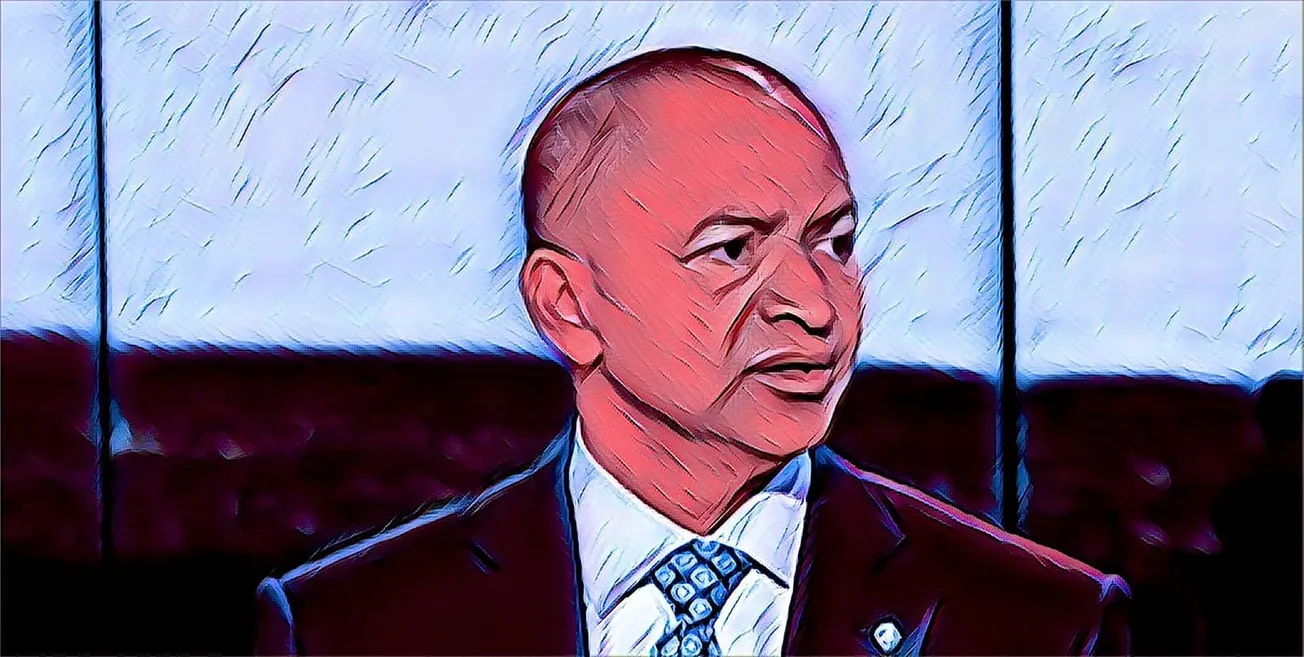
Moise Katumbi Chapwe was born on December 28, 1964, in Lubumbashi, in the heart of one of the most mineral-rich regions on earth. His father, Salvatore Soriano, was a Jewish-Italian trader who had come to Katanga and settled near Kashobwe, a small town close to the Zambian border, where he built a fish business supplying protein to the miners and workers who kept the copper belt moving. His mother, Virginie Mwende, was Congolese. Katumbi grew up between two worlds and has spent much of his adult life being questioned about which one he truly belongs to.
He did not go to university. Business pulled harder. After secondary school, Katumbi joined his father's fishing operation and learned the trade from the ground up, managing supply chains in a part of Africa where roads were bad, fuel was scarce and the government was permanently unreliable. It was not glamorous work but it was formative. He understood margins, logistics, people and the particular discipline of doing business in a country where nothing comes easy.
That experience planted the seeds of what would become one of the most substantial private fortunes in sub-Saharan Africa.
The mining chapter
Through the 1990s, Katumbi began moving money from fishing into harder terrain. He co-founded the Mining Company of Katanga, known as MCK, a subcontracting firm that provided services to the large mining houses operating across the province. Katanga sits atop the world's richest concentrations of copper and cobalt, and any company positioned to service the mines could generate serious revenue. MCK did exactly that, employing around 2,000 people and operating heavy civil engineering equipment across multiple sites. By the time Katumbi was elected governor of Katanga Province in 2007, he told associates that his company had a capital base of approximately $400 million.
He also built a transport business that served both the mines and the wider Katanga economy, moving goods across one of the least connected regions in the world. He added agriculture and farms in the province. He held real estate in Lubumbashi, the DRC's second largest city. The empire was diversified by necessity as much as design, because in the Congo, political risk is too high to stake everything on one sector.
The football investment
In 1997, Katumbi bought Tout Puissant Mazembe, the Lubumbashi-based football club that was then a modest provincial outfit with regional pride but no real structure. He turned it into something else entirely. He professionalized the operation, brought in players from Zimbabwe, Zambia and across Africa, built a proper coaching infrastructure and grew the annual budget from a few hundred thousand dollars to approximately $10 million. The club won the CAF Champions League five times under his stewardship, including back-to-back titles in 2009 and 2010, and reached the FIFA Club World Cup final in 2010, the first African club to ever play in that match. They lost to Inter Milan 3-0, but the symbolism was enormous.
TP Mazembe is more than a sporting asset. It is the most visible expression of Katumbi's identity in the DRC. The club's supporters, the "100 pour cent," paint their faces black and white and follow Katumbi with a loyalty that has no direct equivalent in Congolese public life. The team is his platform, his brand and his political base all at once.
The political years and the Kabila break
Katumbi's political career began in earnest in 2007 when he was elected governor of Katanga. He was a genuinely popular administrator. He targeted corruption at the Kasumbalesa customs post, which was hemorrhaging millions of dollars in mining revenues through smuggling and fraud. He suspended unprocessed ore exports, a move he had no legal authority to make but that reflected his willingness to act boldly when he saw a problem. He invested in roads, schools and agricultural development. The Economist, at the height of his governorship, described him as probably the second most powerful man in the DRC after President Joseph Kabila.
That relationship collapsed in 2015. Katumbi tried to persuade Kabila not to seek a third term in office, which would have required him to violate the constitution. When Kabila refused and made clear he intended to stay in power regardless, Katumbi broke publicly with him and declared his intention to run for president.
What followed was a sustained campaign of political persecution that Katumbi and his supporters say was orchestrated from the top. In 2016 he was convicted in absentia on charges of real estate fraud, a verdict he denied and that his backers dismissed as invented. He fled the DRC to Belgium that same year and was barred from returning. While in exile, the government accused him of hiring American mercenaries to destabilise the country, a charge that was never substantiated but that kept him legally vulnerable and politically isolated from the ground.
The MCK battle
While the political drama played out, his business interests inside the DRC fell into crisis. MCK, which had been linked to a logistics partnership with the French group Necotrans, was sucked into Necotrans' bankruptcy proceedings in 2016. In the chaos, a man named Pascal Beveraggi effectively took control of the company's assets and reregistered the operation as NB Mining Africa, claiming to be acting within the law. Katumbi's employees were locked out of their own offices.
He fought back through French and Congolese courts simultaneously. It took four years. A Paris Court of Appeal ruling in February 2020 restored his rights, and in September 2020 his workers physically retook the MCK premises in Lubumbashi, filming themselves reopening the doors. MCK also pursued a $258 million wrongful termination lawsuit against China MMG's Kinsevere copper mine, accusing the company of pulling a service contract improperly. That case wound through the Congolese courts with allegations from NGOs that external pressure was being applied on judges to favour MMG.
The presidential bids
Katumbi attempted to run for president in 2018 but was effectively blocked. He could not return to the country, his candidacy was mired in legal obstacles thrown up by the Kabila government, and Felix Tshisekedi ultimately won the disputed election in a deal widely believed to have been arranged with Kabila rather than freely chosen by voters.
He ran again in 2023. This time he was back on Congolese soil, back at the head of his Ensemble pour la République party, back at the campaign rallies where supporters cheered with genuine fervour. He finished second with 18.32 percent of the vote, behind Tshisekedi who was declared the winner with 73 percent in a result that independent observers heavily criticized for procedural irregularities and credibility concerns.
Katumbi contested the result. His party rejected the outcome. But the machinery of state was against him, and the international community, unwilling to destabilise a country already contending with an eastern insurgency and a humanitarian crisis of enormous scale, did not push hard for a recount or rerun.
The controversies
Katumbi's career has attracted serious scrutiny alongside genuine admiration. Critics have long pointed to the overlapping interests between his role as governor and his private business holdings. Between 2012 and 2014, mining giant Tenke Fungurume Mining made payments totalling nearly $2 million to TP Mazembe, filed under voluntary social payments. Katumbi denied any impropriety. His half-brother Katebe Katoto, also known as Raphael Soriano, built his own fortune through supply contracts with Gecamines, the state mining giant, raising questions about the family's relationship with state resources that predated Katumbi's political career. Zambian authorities froze both men's assets at one point in the early 2000s over allegations of embezzlement that were never fully resolved in public.
His supporters frame his controversies as the inevitable cost of being the most powerful man outside the Kinshasa establishment in a country where the political class fights dirty and the judiciary is instrumentalised as a weapon against opponents. His critics say a man who claims to represent the Congolese people should be held to account for the full record of how his wealth was assembled.
The empire today
Katumbi remains the wealthiest private individual in the DRC by most credible assessments, though his exact net worth is impossible to confirm given the opacity of his business holdings. His mining services, transport, agricultural, real estate and media interests remain based primarily in Haut-Katanga. TP Mazembe continues to compete, though the club's continental dominance has faded from its peak years. He remains chairman of the club. He leads the main organised opposition to Tshisekedi's government and has positioned himself as the candidate of economic development and institutional reform.
He has said he will run for president again. In a country that has never had a peaceful transfer of power to a genuine opposition candidate, that ambition has so far found no resolution. But Katumbi has been building, fighting and losing and rebuilding since he stood behind a fish counter near the Zambian border in his twenties. That, if nothing else, speaks to a man who does not stop.
The intelligence satisfies curiosity. The paid briefings satisfy strategy.
Every Monday, Elite subscribers receive an Investor Memo breaking down the deal, the structure and the positioning behind the week's most consequential African wealth story - the kind of analysis that doesn't appear anywhere else.
Twice a month, a Wealth Intelligence brief profiles a single billionaire's holdings, cash flows and expansion pipeline in detail no public source matches.
→ Executive ($25/mo): Daily newsletter + Deep-Dive Reports
→ Elite ($75/mo): Everything above + Investor Memos + Wealth Intelligence + Quarterly Analyst Briefings
Subscribe now