

Table of Contents
The Peugeot 504 was for decades the car that defined Nigerian roads. Civil servants drove them, taxi operators trusted them and families across the country accumulated memories in their back seats. The Kaduna assembly plant that built them, Peugeot Automobile Nigeria, was for a generation the most visible symbol of Nigeria's industrial ambitions. Then it went quiet, buried under debt and political neglect, and the Peugeot brand faded from the roads it had once dominated.
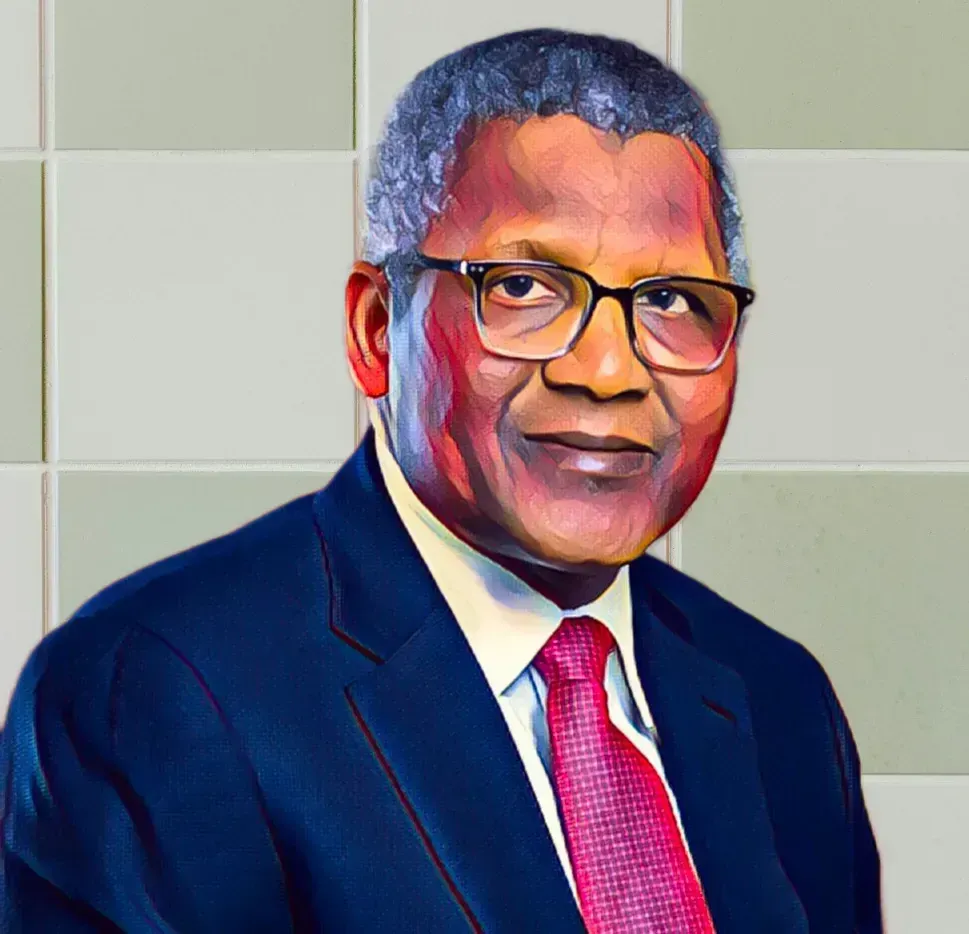
Aliko Dangote brought it back.
The story of how Africa's richest man acquired the Peugeot licence for Nigeria begins not with a single bold move but with a series of careful steps that began in 2016, when Dangote Industries joined a consortium alongside the Kaduna State Government and the Bank of Industry to acquire a majority stake in the original PAN Nigeria facility. That plant had been taken over by the Asset Management Corporation of Nigeria in 2012 after accumulating roughly N30 billion in debts owed to Nigerian banks. Dangote saw not a failed factory but an underutilised asset in a country of 200 million people with almost no domestic vehicle assembly capacity.
Rather than simply restarting the old PAN operation, Dangote and his team pursued a separate and more ambitious path. Negotiations with PSA Groupe, the French automobile manufacturer behind Peugeot, produced not a revival of the old joint venture but an entirely new entity: Dangote Peugeot Automobiles Nigeria Limited, known as DPAN, incorporated under a fresh licence granted directly by PSA Groupe and later formalised through a partnership with Stellantis, the multinational automotive giant formed from the merger of PSA and Fiat Chrysler.
The new arrangement gave DPAN the legal right to assemble and market Peugeot vehicles in Nigeria, an important distinction from simply being a distributor of imported vehicles. In 2017, Dangote secured the formal licence. Over the following five years, his team constructed the Greenfield Ultima Assembly Plant at kilometre 25 of the Kaduna-Abuja expressway in Chikum local government area, a modern facility built from scratch rather than repurposed from the original 1970s PAN site.
DPAN officially commenced assembly operations in January 2022, beginning with the Peugeot 301 sedan, a compact car well suited to Nigerian road and affordability conditions. The plant was designed with a capacity of 120 vehicles per day across two shifts. Since the initial 301 launch, DPAN has expanded its lineup significantly. The Landtrek pickup, the 3008 and 5008 SUVs, and the 508 saloon are now part of the production range. The assembly of the Peugeot 3008 GT variant, equipped with a 1.6-litre turbocharged engine, was a particularly notable milestone: the first Peugeot 3008 to be assembled on the African continent outside Ghana, where Silver Star Auto had begun production in 2022.
The DPAN ownership structure reflects the ecosystem Dangote built around the project. Dangote Industries holds a majority stake. Stellantis holds approximately 10 percent, giving Peugeot's parent company skin in the game and supply chain alignment with the Nigerian operation. The Kano and Kaduna state governments hold minority positions, ensuring political buy-in from the two northern states most directly connected to Nigeria's automobile assembly history. The Bank of Industry has also been a financial partner in the venture.
DPAN was capitalised at approximately N3.5 billion in equity with about $5 million in working capital at inception, with provisions for additional capital raises as production scales. The company's stated ambition is to increase local content in the vehicles it assembles, moving progressively from semi-knocked-down kits toward more locally sourced components over time.
The revival of Peugeot assembly in Nigeria through DPAN is a story that goes beyond the commercial. For the generation of Nigerians who grew up with the 504 and the 505, and who watched the Kaduna plant fall silent, the return of Peugeot vehicles assembled in Nigeria carries meaning that balance sheets cannot fully capture. Dangote, who built his fortune in cement and sugar before expanding into refining and now automobiles, has described the automotive investment as part of a long-standing commitment to local manufacturing that began long before the refinery became the most discussed project in his portfolio.
Today, as Peugeot SUVs roll off the Kaduna assembly line and onto Nigerian roads, the industrial arc that began with a government-sponsored joint venture in 1972 has completed a complicated full circle.
The intelligence satisfies curiosity. The paid briefings satisfy strategy.
Every Monday, Elite subscribers receive an Investor Memo breaking down the deal, the structure and the positioning behind the week's most consequential African wealth story — the kind of analysis that doesn't appear anywhere else.
Twice a month, a Wealth Intelligence brief profiles a single billionaire's holdings, cash flows and expansion pipeline in detail no public source matches.
→ Executive ($25/mo): Daily newsletter + Deep-Dive Reports
→ Elite ($75/mo): Everything above + Investor Memos + Wealth Intelligence + Quarterly Analyst Briefings
Subscribe now