


Table of Contents
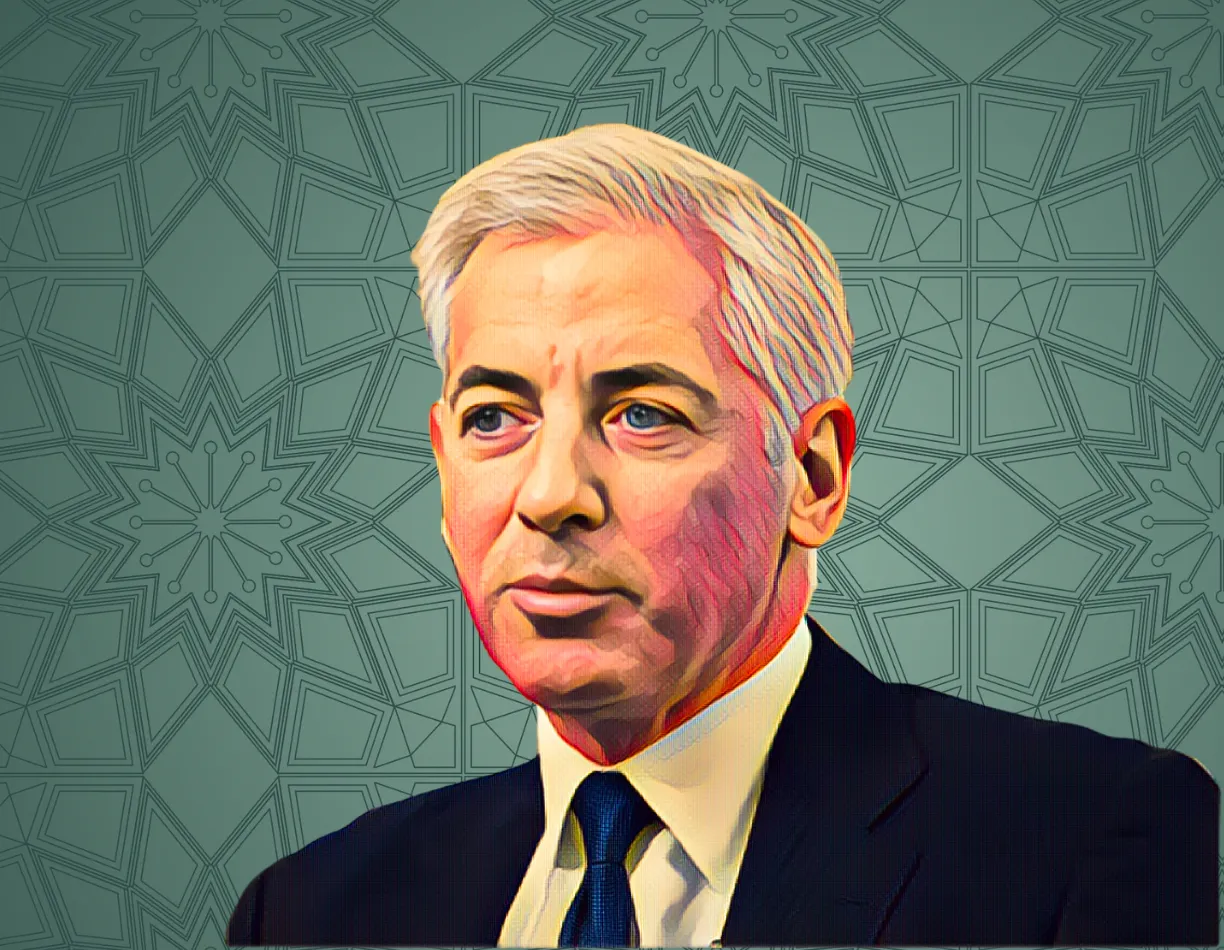
French billionaire Pierre-Edouard Sterin appeared before France's Senate on Thursday and made an argument that most parents would find astonishing: he wants to disinherit his five children, he wants to give all of his money to charity, and he wants French lawmakers to change the law so he can actually do it.
"I would like to give my entire estate to philanthropic causes," Sterin told senators during a public hearing, adding: "I'm in favor of being able to do whatever one wants to do with one's patrimony."
The problem, under French law, is that he largely cannot. France's civil code enshrines a legal concept known as la réserve héréditaire, a protected inheritance share that guarantees children a fixed minimum portion of any parent's estate regardless of what a will says. With five children, Sterin is legally obligated to leave at least three-quarters of his assets to his offspring. Only one quarter is freely disposable. He is worth an estimated 1.3 billion euros ($1.4 billion), meaning his children are legally entitled to inherit roughly 975 million euros under the current framework. That is the constraint he is asking senators to remove.
Sterin, 52, is the co-founder of Smartbox, the gift experience company that he built into a European market leader before selling it, which was the primary source of his fortune. He subsequently founded Otium Capital, an investment fund, and the Fondation du Bien Commun, his philanthropic vehicle. He has been notably open about his parenting philosophy in past interviews, telling the French financial weekly Challenges that his children would not inherit anything. "It's a real freedom to start with nothing," he said. He has now taken that private conviction into the public arena by appearing before a Senate inquiry.
The hearing was not principally about inheritance law. Sterin appeared before a Senate investigative commission examining the private financing of public policies, established under the chairmanship of Senator Colombe Brossel. The commission has been scrutinising Sterin's Périclès project, a private initiative he launched in 2024 aimed at reinforcing right-wing political and cultural influence in France. He had previously refused on two separate occasions in 2025 to appear before a lower-house parliamentary inquiry examining electoral organisation in France. His appearance before the Senate commission on Thursday, conducted via video conference, was his first engagement with French parliamentary oversight.
Sterin is one of France's most controversial billionaires. He is close to traditionalist Catholicism and describes himself as deeply conservative. His Otium Capital fund's chief executive François Durvye is, according to multiple French media reports, a member of Marine Le Pen's inner circle. In 2025, Sterin co-organised the Summit of Freedoms alongside right-wing media entrepreneur Vincent Bolloré, a gathering that brought together conservative politicians and media figures. A New York Times investigation published in March 2026 described him as the billionaire funding France's far right.
His inheritance argument, however, cuts across the standard political divisions on the topic. The principle of testamentary freedom, the right to direct one's own assets after death, is supported across the political spectrum, and the specific proposal to give wealthy individuals the freedom to direct their estates to philanthropy rather than compelled family inheritance is not inherently partisan. The United States and the United Kingdom, among other countries, allow individuals to give their entire estates to charity if they choose. France's civil code has resisted that model since Napoleon codified family inheritance protections in the early nineteenth century.
The French Senate is not currently considering any legislation to reform la réserve héréditaire, and Sterin's plea on Thursday was framed as a personal position rather than a formal legislative proposal. Whether his intervention will generate serious parliamentary interest in reforming an inheritance regime that is older than modern France remains to be seen.
What is clear is that Sterin has now put his name, his fortune and his Senate testimony behind a position that is legally impossible for him to carry out under current French law: that his five children should receive nothing and that every euro of his 1.3 billion euro fortune should go to causes he has chosen rather than to the family he has raised.
The intelligence satisfies curiosity. The paid briefings satisfy strategy.
Every Monday, Elite subscribers receive an Investor Memo breaking down the deal, the structure and the positioning behind the week's most consequential African wealth story - the kind of analysis that doesn't appear anywhere else.
Twice a month, a Wealth Intelligence brief profiles a single billionaire's holdings, cash flows and expansion pipeline in detail no public source matches.
→ Executive ($25/mo): Daily newsletter + Deep-Dive Reports
→ Elite ($75/mo): Everything above + Investor Memos + Wealth Intelligence + Quarterly Analyst Briefings
Subscribe now