

Table of Contents
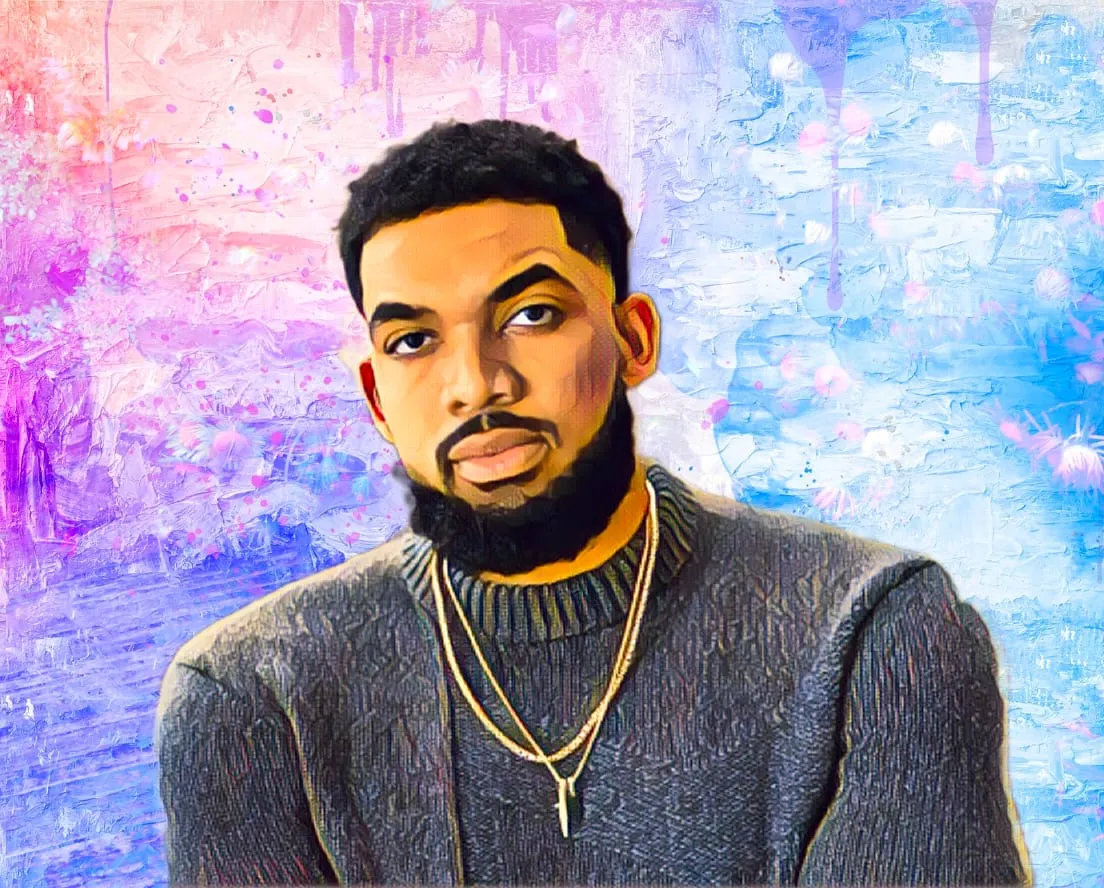
The ring he put on Jordyn Woods's finger at the top of the Empire State Building on Christmas Day 2025 was a 10-carat emerald-cut diamond. He had spent the afternoon before the proposal dropping 11 points and 14 rebounds to help the Knicks beat the Cleveland Cavaliers in a fourth-quarter comeback at Madison Square Garden. By the time the photographs hit Instagram, the captions Marry Christmas with a Christmas tree and ring emoji, New York had adopted the moment as its own. Which is, in miniature, exactly what the city has done with Karl-Anthony Towns himself: taken a player built over nine quiet, productive years in Minneapolis, rewrapped him in the most media-saturated market in professional basketball, and turned him into something his talent always deserved but his previous address could never deliver.
The paradox at the centre of his story is a familiar one in professional sports, but Towns lives it more acutely than most. He is one of the most statistically complete big men in NBA history, a seven-footer who shoots like a guard, passes like a point guard and has the footwork to create his own shot in ways that most centres simply cannot. He spent nine seasons demonstrating all of this in Minnesota, compiling five All-Star appearances, four maximum contracts and a body of work that kept analysts reaching for the word underrated in ways that started to feel inadequate. Then in September 2024, the Timberwolves traded him to the New York Knicks for Julius Randle and Donte DiVincenzo, and suddenly everything that had always been true about him started being amplified at a volume that Minneapolis could never generate.
He is currently earning $53.1 million this season from the Knicks, the highest salary on the roster, as part of a four-year, $220.4 million supermax extension signed in July 2022. He is 30 years old. His net worth is estimated at $100 million. The largest single-season payday of his career, $57.7 million, is still ahead of him in 2026-27.
Where the Money Comes From and Where It Goes
Towns was born on November 15, 1995, in Edison, New Jersey, to Karl Towns Sr., a Monmouth University basketball alumnus who became a coach, and Jacqueline Cruz-Towns, a Dominican woman who gave her son a bilingual, bicultural foundation that has shaped his commercial profile as decisively as any agent or brand strategist. He graduated high school a year early, played one season at Kentucky helping the Wildcats win a national championship, and was drafted first overall by the Minnesota Timberwolves in 2015. He signed his four-year, $25.7 million rookie deal, led the team to 31 wins as a rookie and became the fifth unanimous Rookie of the Year in NBA history.
What followed across nine seasons in Minneapolis was a career of genuine statistical excellence and commercial frustration in roughly equal measure. His five-year, $158.25 million supermax extension signed in September 2018 was the largest contract in Timberwolves history at the time. His July 2022 extension, four years at $220.4 million, broke that record and kept him in Minnesota through the 2027-28 season. He delivered on the investment: by 2024 he had taken the Timberwolves to the Western Conference Finals for the first time in franchise history, only to see them lose to the Dallas Mavericks.
Two months later, Minnesota traded him to New York. It is tempting to read the trade as a franchise moving on from a player who had not quite delivered a championship. The more accurate reading is that Towns had outgrown the commercial container that Minneapolis provided, and the Timberwolves correctly identified that his peak value, both competitive and commercial, was available to a team willing to pay for it.
His current contract structure is worth understanding precisely. The 2025-26 season pays him $53.1 million. The 2026-27 season pays him $57.7 million, the career high. The 2027-28 season includes a player option, meaning Towns will decide at that point whether to re-enter the market or complete the deal. Total career NBA salary earnings have now crossed $404.9 million, making him one of the highest-paid players in league history by cumulative contract value.
The Brand Portfolio He Built While Nobody Was Watching
Nike signed Towns in August 2015, immediately upon his draft selection, and the relationship has persisted for a decade across what is now one of the most commercially significant endorsement arrangements in his portfolio. The Nike deal has not produced a signature shoe, which is a notable absence given his stature in the game, but it has kept him inside the brand's most active NBA athlete marketing infrastructure across a decade of campaigns. His dual identity as a Dominican-American, fully bilingual in English and Spanish, gives him a demographic reach across the US Hispanic market and international basketball audiences that most NBA endorsement partners cannot match from a single player.
Gatorade has been the most consistently deployed endorsement relationship in his career. The brand has built multiple campaign cycles around him, including the "Burn It to Earn It" and "Make Defeat Your Fuel" series, activating him across digital, television and in-venue platforms throughout his time in both Minneapolis and New York. The relationship reflects what Gatorade looks for in its NBA athletes: a player with sustained elite performance credentials, a clean public image and a fanbase with demographic breadth.
Beats by Dre added the audio and lifestyle dimension to his portfolio, associating him with one of the most commercially valuable consumer electronics brands in the athlete endorsement space. 2K Sports has tied him to the NBA2K gaming franchise since his rookie year, a relationship that gives him sustained presence in the gaming and streaming audience that tracks professional basketball through screens as much as arenas. State Farm, Peloton, T-Mobile, Fanatics, Secretlab, Panini, Jack Link's Beef Jerky and Kit Kat have all deployed him at various points. The Kit Kat deal warrants specific attention because it was built around the wordplay of his KAT initials against the Big KAT bar, generating genuine cultural traction with a young demographic in a way that a straightforward athlete campaign rarely achieves. He spent five hours filming three commercials for the brand in a single day, reportedly consuming enough product to fill two Costco-sized boxes. The campaign ran during NBA playoff windows and gave him a pop-culture visibility outside the basketball audience that most big men never access.
His combined annual endorsement income has been estimated at between $3 million and $30 million across various sources, a range that reflects the opacity of professional athlete endorsement contracts. What is clear is that the New York relocation has reset the ceiling on every commercial relationship he holds. New York activations are worth more, generate more media coverage and attract more brand interest than equivalent activations in Minneapolis by a measurable margin.
What He Has Done With the Money
Towns's real estate investments are deliberately held as long-term wealth preservation assets rather than speculative plays. During his Minnesota years, he purchased a 17,251-square-foot estate in Medina, a suburb west of Minneapolis, for a reported $4.5 million. The property had previously been owned by a former auto dealer and represented a statement of permanence in a city he committed to for nearly a decade. Following the trade to New York, he and Woods purchased a $14 million, seven-bedroom home in Los Angeles in September 2024. The property sits on more than two acres of land, directly adjacent to Kylie Jenner's compound, a function of Woods's close friendship with Jenner that turned a real estate transaction into a cultural footnote. The Los Angeles purchase is explicitly not a function of his playing location. It is a wealth preservation asset in one of the most supply-constrained luxury real estate markets in the United States, chosen for appreciation potential and personal meaning rather than proximity to an arena.
The Dominican Republic investment is the one holding in Towns's portfolio that has no return on equity any spreadsheet can quantify, and it is the most revealing. In 2024, he announced funding for a youth basketball facility near the city of Santiago, his mother's homeland. The investment came four years after Jacqueline Cruz-Towns died in April 2020 from COVID-19 complications at the age of 58, in the weeks immediately before the NBA's bubble season began. Her death was one of the most publicly processed losses of that particular year: Towns spoke about her openly, channelled his grief into some of the most emotionally raw public statements any athlete made during the pandemic period, and then directed his resources toward the place she came from. "Simply put, they gave my mother life," he told Time Magazine. "It's only right I give them mine." He has represented the Dominican Republic national basketball team since debuting for the senior squad at 16 years old at the 2012 FIBA Americas Championship, one of the youngest players to ever do so.
The Knicks Effect and What Comes Next
The KAT Foundation, his formal philanthropic vehicle, operates around healthcare, education and youth development, with its most significant deployment coming during the COVID-19 pandemic when Towns donated $100,000 to feed families in need in Louisville, Kentucky, in his mother's memory. The foundation reflects the same value system as the Dominican Republic investment: directed at the structural conditions that made Black and Dominican communities disproportionately vulnerable to the pandemic, rather than at visible, easy-to-photograph charitable gestures.
Woods herself is a significant commercial force in the relationship, not merely a famous partner. Her Heir Body Care skincare line, entertainment credits across film and television, and social media platform of more than 12 million Instagram followers give the pairing a combined commercial footprint that functions as a mutual amplification system. She attended every Knicks playoff game during the 2026 postseason, making her courtside presence at Madison Square Garden a recurring image in the sports media cycle. Their visibility in New York's cultural life, at Yankees games, charity galas, film premieres and high-profile social events, has embedded Towns in the city's consciousness in a way that his basketball alone could not fully achieve.
The trade to New York did for Towns's commercial profile what nine years in Minneapolis could not. Madison Square Garden is the most media-saturated arena in professional basketball, and the celebrity courtside ecosystem, Timothée Chalamet, Spike Lee, Mariska Hargitay and dozens of others on any given playoff night, creates a sponsorship activation environment that exists nowhere else in the league. His status as the Knicks' highest-paid player, operating alongside Jalen Brunson on a team that has reached the Eastern Conference finals for the first time in 24 years, has placed him in commercial conversations that his decade in Minneapolis never unlocked.
He is 30 years old, under contract through at least 2027-28, with his largest salary year still ahead of him. The Empire State Building proposal was a beginning, not a summit.
The intelligence satisfies curiosity. The paid briefings satisfy strategy.
Every Monday, Elite subscribers receive an Investor Memo breaking down the deal, the structure and the positioning behind the week's most consequential African wealth story - the kind of analysis that doesn't appear anywhere else.
Twice a month, a Wealth Intelligence brief profiles a single billionaire's holdings, cash flows and expansion pipeline in detail no public source matches.
→ Executive ($25/mo): Daily newsletter + Deep-Dive Reports
→ Elite ($75/mo): Everything above + Investor Memos + Wealth Intelligence + Quarterly Analyst Briefings
Subscribe now