

Table of Contents
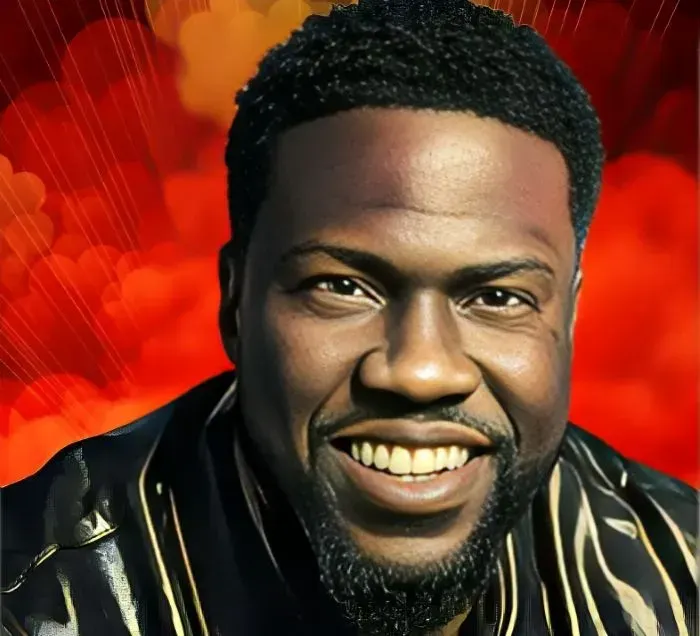
Kevin Hart built Hartbeat to be the Tyler Perry of comedy. A fully integrated media company, rooted in his name and propelled by his global reach, that could generate profitable content independent of any single studio or streaming platform. At its 2022 peak, following a $100 million investment from private equity firm Abry Partners, the company was valued at approximately $650 million. Three years later, that valuation is a distant memory and the company is fighting on multiple fronts simultaneously.
A detailed Bloomberg investigation published in May 2026, and subsequently confirmed by multiple outlets, painted a picture of sustained institutional decline at Hartbeat: multiple rounds of layoffs, revolving-door leadership, stalled productions and a legal battle with former employees that exposed the depth of the internal rot. Hart's response to the reporting has been to defend the restructuring as necessary and intentional, not existential. The gap between those two characterisations is where the real story lives.
The collapse unfolded in stages. In late 2024, days before Thanksgiving, Hartbeat cut approximately 20 employees, roughly 25 percent of its then 80-person workforce, targeting departments across multiple divisions. December 2025 brought another round, gutting the scripted television team, the marketing division, social media, brand partnerships and the podcast department. By the start of 2026, Hartbeat was a materially smaller and structurally different company than the one that received the Abry investment.
The podcast division became the legal flashpoint. Two senior podcast executives, Eric Eddings and Lesley Gwam, were fired on January 30, 2026, one day after Hartbeat claims it discovered they had put together a pitch deck for a competing podcast venture while still on its payroll. Hartbeat sued them for breach of contract and trade-secret theft, seeking an injunction to prevent them from working in the industry. A judge denied part of the injunction request, ruling the company's allegations were vague, ambiguous and overly broad. Eddings and Gwam filed their own legal response, arguing they began preparing to launch their own company only after the division they had spent years building was being scaled back and their futures at Hartbeat were effectively finished. The judge will ultimately determine which account holds up. Both sides are dug in.
The Bloomberg reporting also highlighted internal tensions around senior executive Jeff Clanagan, who allegedly pushed staff to support outside ventures tied to his own business interests, including artificial intelligence projects that generated friction within the company. Multiple CEO departures have occurred since the Abry investment, leaving a leadership vacuum that Hart himself briefly tried to fill when he stepped back into the CEO role in January 2025. Bloomberg's sources said he was rarely in the office and left a Zoom meeting with remaining staff after the December layoffs without taking questions.
The January 2026 deal with Authentic Brands Group accelerated the perception of retreat. Hart licensed his name, image and likeness to the company that manages brands linked to Shaquille O'Neal and David Beckham, using the cash proceeds to buy out his private equity investor. Employees interpreted the move as Hart shifting his commercial identity from a media company operator to a brand licensing business, a fundamentally different model that implies a much smaller and more focused operational structure going forward.
Productions that had been in development have been shelved or indefinitely paused. A Barbershop television adaptation stopped moving forward. Lil Kev Season 2 was cancelled. Planned podcasts never launched. The company that promised to generate a self-sustaining content pipeline has produced very little that does not directly require Hart's personal involvement.
The bitter irony is that Hart himself is having one of the more commercially successful periods of his individual career. He received the Mark Twain Prize for American Humor at the Kennedy Center in 2024. He hosted the BET Awards in 2025. He received a Golden Globe nomination for his Netflix stand-up special Acting My Age. Netflix has scheduled his film 72 Hours for a July 2026 premiere. The platform on which he built Hartbeat is performing. The institution he built around it is not.
The intelligence satisfies curiosity. The paid briefings satisfy strategy.
Every Monday, Elite subscribers receive an Investor Memo breaking down the deal, the structure and the positioning behind the week's most consequential African wealth story - the kind of analysis that doesn't appear anywhere else.
Twice a month, a Wealth Intelligence brief profiles a single billionaire's holdings, cash flows and expansion pipeline in detail no public source matches.
→ Executive ($25/mo): Daily newsletter + Deep-Dive Reports
→ Elite ($75/mo): Everything above + Investor Memos + Wealth Intelligence + Quarterly Analyst Briefings
Subscribe now