

Table of Contents
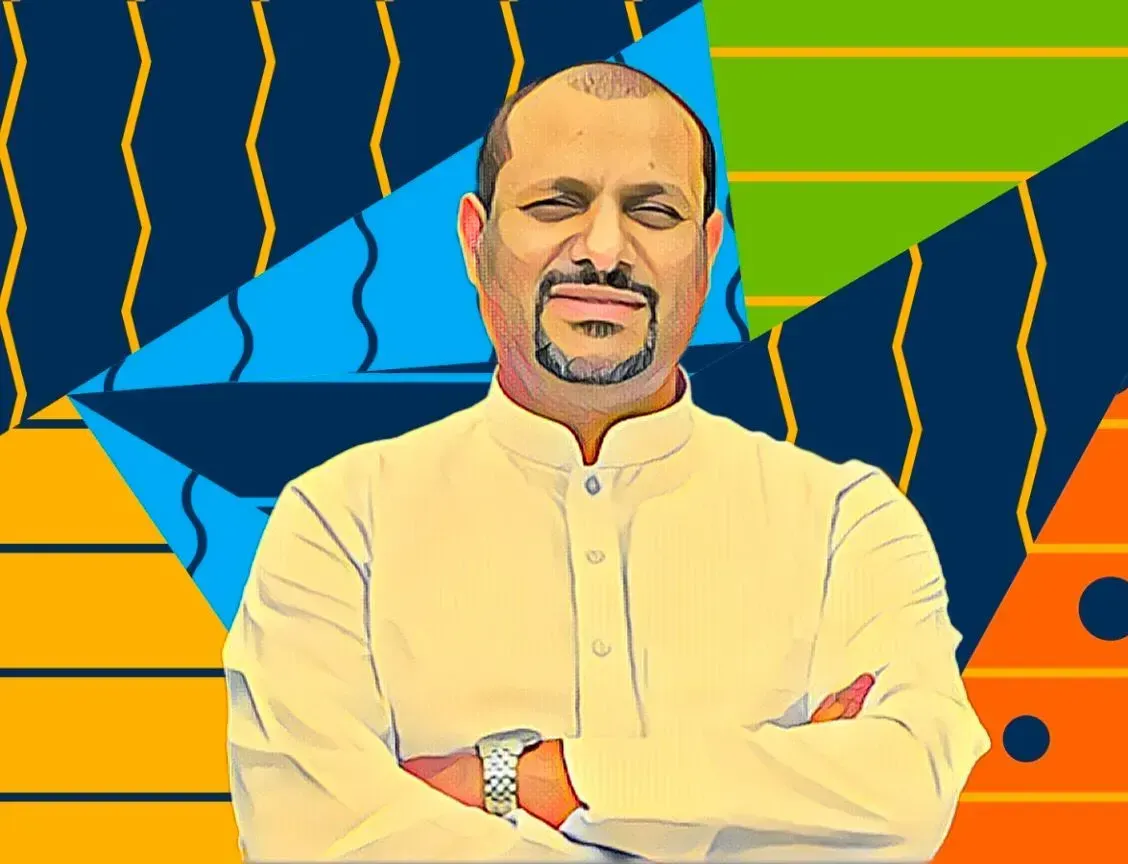
In April 1994, Sikander Lalani was fifty years old, running a roofing sheet factory in Kigali that he had spent sixteen years building. Within weeks he had abandoned it and crossed into Tanzania with what he could carry.
He did not go back. By the end of that year he was in Uganda, the country he had been born in half a century earlier, setting up a workshop at Lubowa on the road south out of Kampala, making the same product he had been making in Rwanda. He was starting from nothing for the second time in his life, and the first time had been by choice.
Three decades on, that workshop has become Roofings Group, the largest manufacturer of steel construction materials in Uganda, running three plants, employing more than 3,000 people and shipping into Kenya, Rwanda, Burundi, South Sudan and the Democratic Republic of Congo. Billionaires.Africa estimates group revenue at about $255 million a year, based on its reported tax contribution and export volumes. The company is private and publishes no accounts.
The doctor who quit
Lalani was born in 1944 at Nsambya Hospital in Kampala, into the Indian merchant community that ran much of East African commerce under British rule.
He went into medicine, and went a long way into it. He took his degree at University College London, qualified as a histopathologist, and became a Member of the Royal College of Pathologists. Histopathology is the study of diseased tissue under a microscope, the discipline that tells a surgeon whether a growth is malignant. It is exacting work, and it takes years to qualify.
He practised it for two, at University College Hospital in London during the 1960s, and then stopped.
Nothing in the record suggests he was pushed. He has said he came to the conclusion that medicine was not what he was meant to do. He was in his late twenties, in Britain, with a specialist qualification that would have supported him comfortably for forty years, and he walked away from it.
He went to Rwanda instead.
Philips radios and Goodyear tyres
The first business was a shop. Lalani opened a retail electronics store in Kigali in the 1970s, selling Philips products in a market where consumer electronics were scarce and expensive. Retail led to distribution, and he picked up the Goodyear tyre agency for Rwanda, supplying transporters and fleet operators rather than households.
Neither business was going to make him rich. Both taught him the thing that would. He learned who the importers were, what the landed cost of a container was, and how long it took to move anything from a port to a landlocked capital. Rwanda has no coastline. Everything arrives by road from Mombasa or Dar es Salaam, and everything costs more because of it.
That is the arithmetic that pushes a trader toward manufacturing, and in 1976 someone made the case directly. His Japanese electronics suppliers suggested he stop importing roofing materials and start making them.
He approached the Rwanda Development Bank, which backed the application, and secured a loan of $1 million from the World Bank. It was a substantial sum for a private manufacturing venture in Rwanda in the late 1970s, and it went to a former pathologist with no industrial experience.
The factory opened in Kigali in 1978. It made metallic roofing sheets, the product that covers most buildings in East Africa and which Rwanda had until then imported. He ran it for sixteen years.
The year everything stopped
The genocide against the Tutsi began on 7 April 1994 and ran for roughly a hundred days. Estimates of the dead range around 800,000. Two million people fled the country.
Lalani's factory was in Kigali, where the killing started. He left for Tanzania.
He did not stay long. Tanzania in the mid-1990s was still emerging from decades of state-led economic policy, and its investment approval process moved slowly. Lalani grew frustrated with the delays and went to Uganda instead, a country then actively courting Asian businesspeople expelled by Idi Amin in 1972 and their descendants.
Uganda made it easy. The Uganda Investment Authority licensed his operation, and Roofings was established in 1994. The first factory at Lubowa was producing by November 1995.
He was fifty-one, and he began again with a workshop making simple roofing sheets.
Building the second time
What followed was slower and much larger than the Rwandan venture.
By 2008 Roofings was producing roughly 100,000 metric tonnes of steel a year. Roofings Polypipes was commissioned in 2012, adding PVC and HDPE pipes and PPR fittings, taking the group out of roofing alone and into plumbing, drainage and electrical conduit.
The largest commitment was Namanve. Roofings Rolling Mills was developed in phases at the Kampala Industrial and Business Park in Wakiso District from 2009, and it changed what the company was. Rolling mills produce the input rather than the finished good. A hot and cold rolling operation with galvanising and colour-coating lines means the group makes its own coil rather than buying it, which is the difference between a fabricator and a steelmaker.
The financing came from several directions at once. In February 2011 the International Finance Corporation, the private sector arm of the World Bank, put $25 million into the expansion, alongside a syndicated loan of $64 million from a consortium of six Ugandan commercial banks, an unusually large domestic syndication for a private manufacturer in that market.
It is worth noting who lent to him. The World Bank funded his first factory in Rwanda in the 1970s and its private sector arm funded his second country's expansion three decades later, on either side of a catastrophe that destroyed the first.
In October 2023 he signed a deal for a new cold rolling plant at Namanve intended to take production to 150,000 tonnes a year, described at the time as the first of its kind in Africa, with a stated value of $100 million.
What the group pays
Roofings operates through three units, Roofings Limited, Roofings Rolling Mills and Roofings Polypipes, across sites at Lubowa, Namanve and Lweza. The headquarters and two of the manufacturing companies sit on 39 acres at Lubowa. The range runs from galvanised iron sheets and wire products to round bars, TMX 500C reinforcement bar, hollow sections and HDPE pipes.
The figures the group publishes are about its contribution rather than its profits, which is common for a private company that files nothing.
It paid UGX 191 billion in tax in 2025, about $51.2 million. Set against the roughly UGX 29.37 trillion the Uganda Revenue Authority collected in the 2024/25 financial year, that is close to one shilling in every 154 the state takes in.
Its total value addition in 2024 came to UGX 336.6 billion, or $90.1 million, and it contributed UGX 9.3 billion, about $2.49 million, to social security. Exports of UGX 254.4 billion, roughly $68.1 million, represented 2.8% of everything Uganda sold into the East African Community.
That last figure explains his standing. A single privately held manufacturer accounting for close to 3% of a country's regional exports is not merely a large company. It is a piece of national infrastructure, and it is why a president attends the opening of a rolling mill.
The retreat from Kenya
The expansion has not been continuous. In December 2025 Lalani abruptly withdrew Roofings from the Kenyan market, one of the fastest-growing construction markets in the region and a destination the company had supplied for years.
The decision unsettled suppliers, traders and competitors who had counted on Roofings as a stabilising presence, and it raised concerns within Uganda about tighter supply and higher prices at home. Sources told Billionaires.Africa at the time that the exit followed mounting operational pressure, including high logistics costs and regulatory obstacles.
It was a rare public reversal from a man whose career has otherwise run in one direction, and it went unexplained.
The succession he planned for
Lalani turns eighty-two this year and has been deliberate about what happens next. He has said that many Ugandan business owners make the mistake of never training their children to take over, and that he set out not to repeat it.
His son Oliver Lalani was appointed an executive director in 2009, after a degree in economics and management at Royal Holloway, University of London, and oversees group operations. He and his wife, Winnie Abotile Lalani, have four children, and other family members hold executive positions.
The plan is not merely a family arrangement. Roofings employs thousands, supplies most of Uganda's formal construction sector and has borrowed heavily against long-lived assets. An unmanaged transition would be felt well beyond the family.
Back to Kigali
There is a postscript the company rarely draws attention to. Among the businesses in the group's structure is Roofings Manufacturing Limited, in Kigali.
Thirty years after he abandoned a factory in that city and fled to Tanzania, Lalani is manufacturing in Rwanda again. He rebuilt in a second country, funded it partly with money from the same institution that backed the first, and then went back to where he started.
At the launch of the Namanve rolling mills, he put the whole thing in a sentence. "I had a dream to build something I could be proud of," he said. "Decades later, I am a part of something we can all be proud of."
The dream had already been destroyed once, in a country he had to leave. He built the second one in the country he was born in, and it is now large enough that Uganda would notice if it stopped.
The intelligence satisfies curiosity. The paid briefings satisfy strategy.
Every Monday, Elite subscribers receive an Investor Memo breaking down the deal, the structure and the positioning behind the week's most consequential African wealth story - the kind of analysis that doesn't appear anywhere else.
Twice a month, a Wealth Intelligence brief profiles a single billionaire's holdings, cash flows and expansion pipeline in detail no public source matches.
→ Executive ($25/mo): Daily newsletter + Deep-Dive Reports
→ Elite ($75/mo): Everything above + Investor Memos + Wealth Intelligence + Quarterly Analyst Briefings
Subscribe now