


Table of Contents
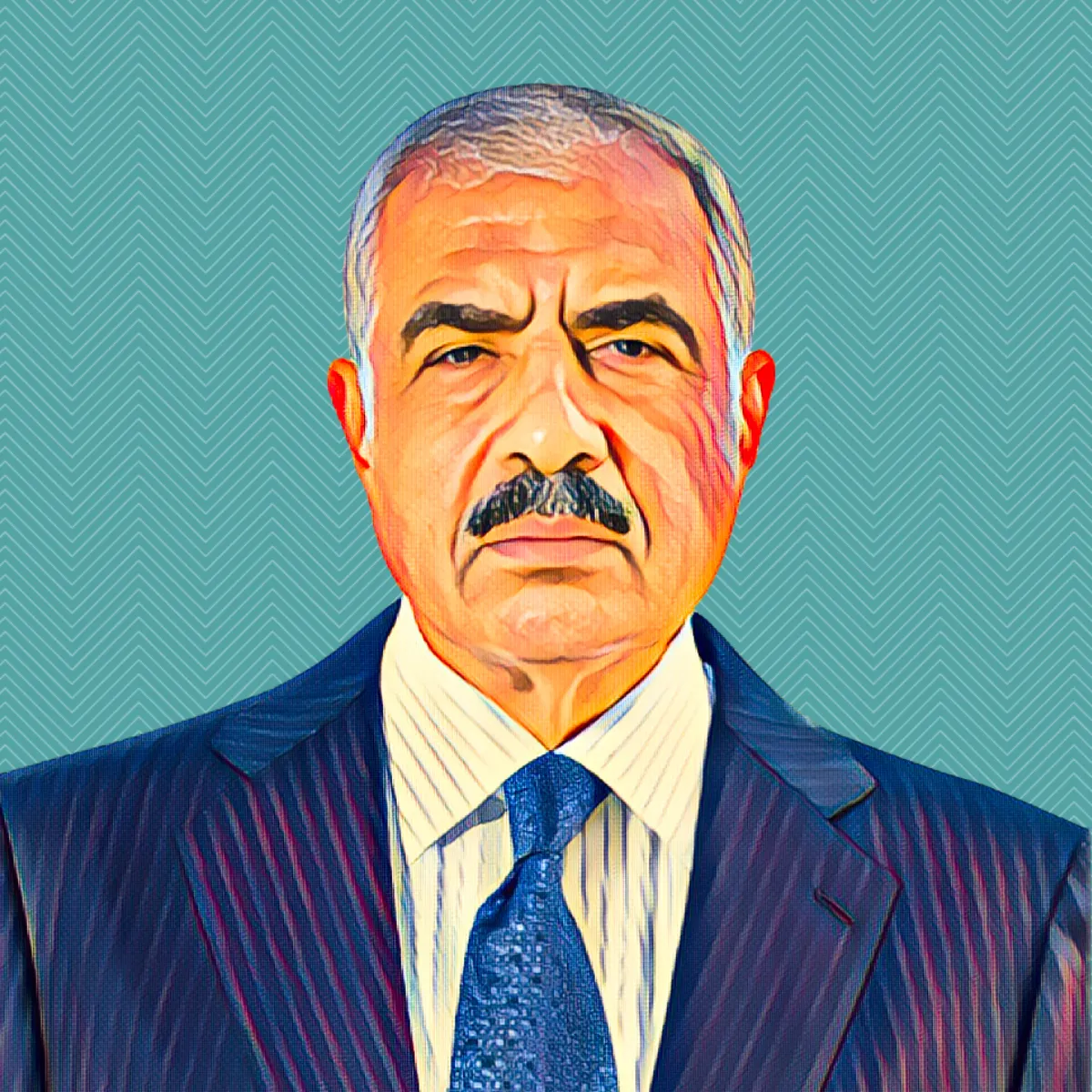
Othman Benjelloun has been running Bank of Africa for longer than most of his senior executives have been alive. He took control of the then-state-owned Banque Marocaine du Commerce Extérieur in 1995, when he was in his early sixties, and has not loosened his grip since. At 93 years old, he still holds the title of Chairman and Chief Executive Officer. He still chairs the strategy committee. He still holds a 27.4 percent personal stake in an institution that manages roughly $46 billion in assets and serves more than 6.6 million customers across nearly 2,000 branches in 32 countries. And he still, by all accounts, intends to keep going.
But the succession question, which has orbited the Bank of Africa story for more than a decade, has reached a new level of urgency in 2026. Africa Intelligence, the Paris-based intelligence newsletter that tracks political and business dynamics across the continent with particular depth in Francophone markets, reported on June 3 that Morocco's Royal Palace is now actively weighing what a post-Benjelloun era looks like for Bank of Africa, and that the succession cloud over the institution has grown considerably in recent months.
The palace's interest in the question is not ceremonial. Morocco's banking sector is a strategic national asset, and Bank of Africa is its most pan-African expression. The group's footprint across 32 countries, spanning retail banking in Benin, Madagascar, Côte d'Ivoire, Mali, Burkina Faso, Niger, Kenya, Senegal, Uganda, Tanzania, Rwanda, Togo, Ghana, the DRC and beyond, makes it one of the most geographically significant banking networks on the African continent. Any disruption to its leadership continuity carries systemic risk that extends well beyond Casablanca.
Othman Benjelloun was born in 1932 in Fez, Morocco. He trained as an engineer at the École Polytechnique Fédérale de Lausanne in Switzerland before returning to Morocco and pivoting into business. In the 1960s and 1970s, he built his initial commercial base through strategic alliances with Volvo and General Motors, establishing vehicle distribution operations that gave him both capital and institutional credibility. He acquired Royale Marocaine d'Assurance, Morocco's leading insurer, and used the insurance company as his vehicle to acquire BMCE Bank when the Moroccan government privatised it in 1995.
The three decades that followed constitute one of the more remarkable personal business empires in modern African history. Benjelloun turned a mid-sized Moroccan commercial bank into a pan-African institution by acquiring the Bank of Africa network in 2010, a multinational banking group originating from Mali with affiliates across West and East Africa. The merger created what is now Bank of Africa Group, a Casablanca-listed institution that has posted steadily improving results. First-half 2025 net profit climbed 16 percent to 2.25 billion Moroccan dirhams (approximately $247.5 million), from 1.94 billion dirhams a year earlier. Full-year 2025 net income attributed to shareholders of the parent company reached 3.4 billion dirhams, up 29 percent, as consolidated net banking income rose 10 percent to 18.7 billion dirhams. Total assets stand at approximately 40.7 billion euros.
Forbes estimated Benjelloun's personal fortune at $1.9 billion as of October 2025, making him Morocco's second-wealthiest individual. He sold a Quebec, Canada real estate asset for $10.4 million that month, signalling some portfolio rationalisation even as the core banking empire continues to expand.
Beyond banking, his holding company O Capital Group controls a portfolio that extends to RMA, the insurance subsidiary, and Medi Telecom Orange, Morocco's mobile operator formerly known as Meditel, which operates under the Orange brand. The BMCE Bank Foundation, which he founded, operates community schools in rural Morocco and across Africa, focused on combating illiteracy and environmental protection.
The man who has been most visibly positioned as the institutional bridge in a post-Benjelloun era is Brahim Benjelloun-Touimi, the Group's Delegate General Manager and Board member, who joined Bank of Africa in 1990 and holds a PhD in Money, Finance and Banking from the Université Paris I Panthéon-Sorbonne. Benjelloun-Touimi has served as a member of the Strategy Task Force and the Chairman's Committee, the body responsible for steering group strategy, and was Chairman of BOA Group Luxembourg from 2015 to 2024. He is not a blood relative of Othman Benjelloun, but his three-decade tenure at the institution and his formal position within the group's top governance structure make him the most credible internal candidate to lead a transition if and when one is formalised.
Othman Benjelloun has two children, son Kamal Benjelloun and daughter Dounia Benjelloun. Neither has been publicly identified as an operational successor within the banking group's formal governance structure. His wife Leila Mezian Benjelloun, who was one of Morocco's most prominent arts patrons and a significant figure in the family's public life, died in July 2024 after a long illness.
Associates have consistently pushed back against the succession framing when it arises. "He forgets his age. He should not be reminded of it," one of Benjelloun's lieutenants told Jeune Afrique in 2022. That quote has aged into something closer to an institutional policy than a personal anecdote. The bank keeps performing. The strategy keeps expanding. The chairman keeps working.
But the Moroccan palace's interest in the succession question, as reported by Africa Intelligence, introduces a dimension that transcends the internal governance debate. In Morocco, where the monarchy plays an active and often decisive role in the strategic direction of major national economic institutions, royal attention to a question is not a passive observation. It is a signal. The post-Benjelloun era at Bank of Africa may not be imminent. At 93, with an institution posting double-digit profit growth, Othman Benjelloun shows no sign of stepping back. But the conversation in Rabat has started, and that conversation tends to move things.
The intelligence satisfies curiosity. The paid briefings satisfy strategy.
Every Monday, Elite subscribers receive an Investor Memo breaking down the deal, the structure and the positioning behind the week's most consequential African wealth story — the kind of analysis that doesn't appear anywhere else.
Twice a month, a Wealth Intelligence brief profiles a single billionaire's holdings, cash flows and expansion pipeline in detail no public source matches.
→ Executive ($25/mo): Daily newsletter + Deep-Dive Reports
→ Elite ($75/mo): Everything above + Investor Memos + Wealth Intelligence + Quarterly Analyst Briefings
Subscribe now