


Table of Contents
Finance Bank Malawi, the lender linked to Zambian business magnate Rajan Mahtani, is fighting the Malawian government in court over a compensation claim of nearly 1 trillion kwacha, about $284 million, after the Supreme Court ruled last year that the revocation of its banking licence two decades ago was unlawful.
The state mounted an aggressive challenge to the claim on Monday, subjecting the bank's witnesses to close to five hours of cross-examination before a High Court and Supreme Court assistant registrar in Blantyre. Government lawyers questioned both the size of the demand and the way it was calculated.
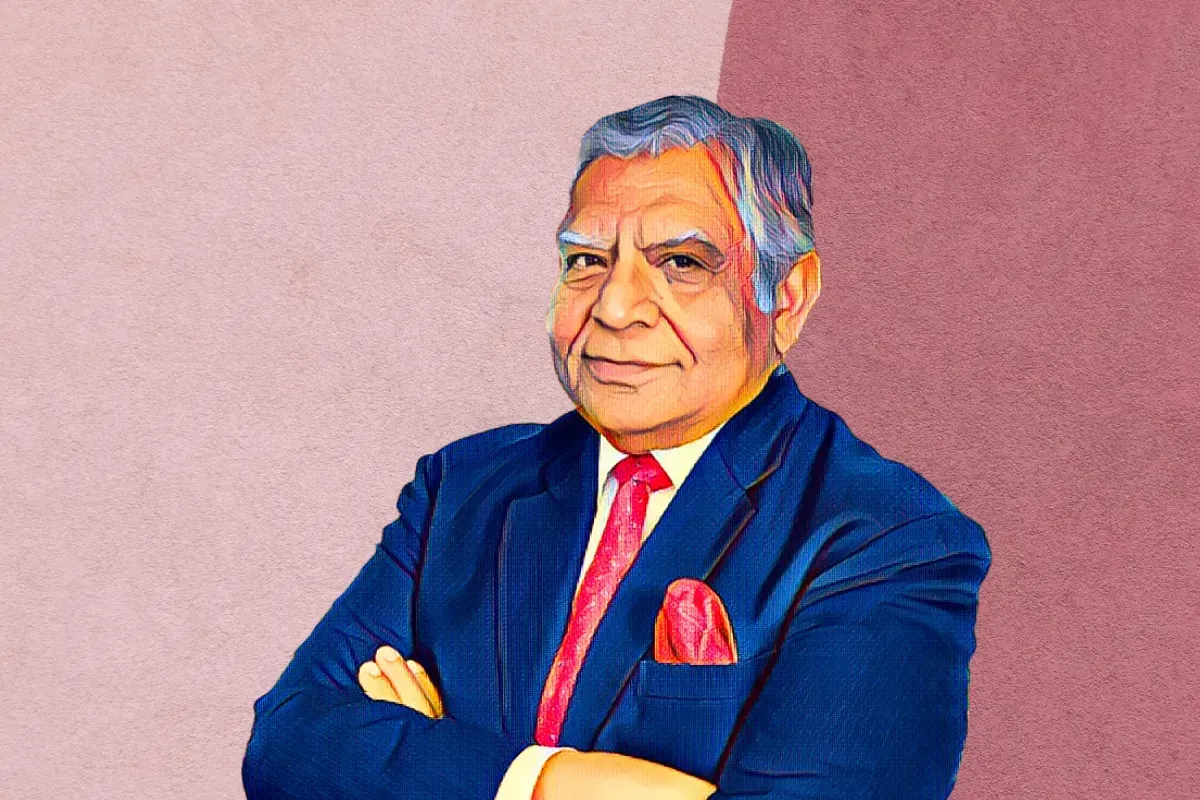
The connection to Mahtani runs through the heart of the case. He was chairman of Finance Bank Malawi when its licence was revoked in 2005, and it was his figures on the bank's collapsing deposits that the compensation assessment now examines. The bank's financial adviser giving evidence, Nkhuzo Kuwani, comes from the Mahtani Group of Companies of Zambia, placing Mahtani's own business group directly behind the claim.
Two components to the demand
Finance Bank is seeking $150 million for alleged violation of its constitutional rights and a further $134 million for loss of business, a combined figure the court heard now stands at close to 1 trillion kwacha. The bank's licence was revoked in 2005, and although it briefly resumed operations under central bank supervision, it closed permanently in January 2006 and has remained in liquidation since.
Attorney General Frank Mbeta led the state's case alongside lawyers for the Reserve Bank of Malawi. He pressed the bank's witnesses on why a claim was denominated in United States dollars when Finance Bank took deposits and issued loans in Malawi kwacha. Were loans issued in dollars, he asked, and were deposits received in dollars.
Mbeta urged the court to weigh the fact that the bank had sat in liquidation since 2006 yet was now seeking what he called almost a trillion kwacha. The figure, he told the court, is huge.
The bank defends its methodology
Kuwani, the Mahtani Group adviser, argued that the revoked licence had denied the bank the chance to keep operating and generating profits. There was a loss of opportunity, he told the court, and the bank was pricing that opportunity.
Reserve Bank senior counsel Patrice Nkhono questioned whether the bank could claim such losses while it still existed under liquidation and continued to hold assets whose value should count in any compensation assessment. Kuwani maintained that the current value of the bank's assets was irrelevant, because an operating bank would have created far greater value than one in liquidation.
Under re-examination by Finance Bank lawyer Modecai Msisha, the bank's liquidator Sokwani Chilembo explained that the claim was set in dollars because the investors behind the bank were foreign nationals who had invested in foreign currency, making the use of the dollar appropriate.
A dispute spanning more than two decades
The case traces back to a February 2026 Supreme Court judgment that found the Reserve Bank of Malawi had unlawfully revoked Finance Bank's licence. The regulator had acted over allegations of financial malpractice, including claims that ghost accounts were used to move foreign currency out of the country. The judgment ended a legal fight running more than 20 years and cleared the way for the bank to pursue damages.
Court records show the bank posted after-tax profits of 70 million kwacha in 2001, 159 million kwacha in 2002 and 121 million kwacha in 2005. In 2006, Mahtani, then the bank's chairman, said deposits had fallen sharply from 2.13 billion kwacha to 381 million kwacha between June and December 2005, while total assets dropped from 3.48 billion kwacha to 926 million kwacha.
The original dispute began in 2005 when the Reserve Bank moved against Finance Bank. In 2014 the High Court awarded the central bank 13 million kwacha and dismissed the bank's counterclaim for loss of business. Finance Bank first opened in 1995.
A familiar figure in African banking disputes
The Malawi case is one of several long-running legal battles tied to Mahtani, who has spent decades in and out of courtrooms across the region. He built Finance Bank Zambia in 1986 into the country's first indigenous private commercial bank, growing it to 73 branches and more than 1,000 employees before selling it to Bob Diamond's Atlas Mara in 2015 in a deal valued at about $210 million. He later pursued claims that he was never paid in full.
In Malawi, the central bank licensed a successor institution, New Finance Bank Malawi, in 2013, with Mahtani remaining a principal shareholder, a decision that at the time drew debate over consistency in the country's banking regulation. He owns the Mahtani Group of Companies and Finsbury Investments, with interests spanning banking, real estate, healthcare and cement, and various wealth trackers estimate his fortune at around $304 million, placing him among the four wealthiest people in Zambia.
The compensation assessment in Blantyre is continuing. The government has signalled it will scrutinise every element of a claim that could become one of the largest financial demands ever brought against the Malawian state.
The intelligence satisfies curiosity. The paid briefings satisfy strategy.
Every Monday, Elite subscribers receive an Investor Memo breaking down the deal, the structure and the positioning behind the week's most consequential African wealth story - the kind of analysis that doesn't appear anywhere else.
Twice a month, a Wealth Intelligence brief profiles a single billionaire's holdings, cash flows and expansion pipeline in detail no public source matches.
→ Executive ($25/mo): Daily newsletter + Deep-Dive Reports
→ Elite ($75/mo): Everything above + Investor Memos + Wealth Intelligence + Quarterly Analyst Briefings
Subscribe now