

Table of Contents
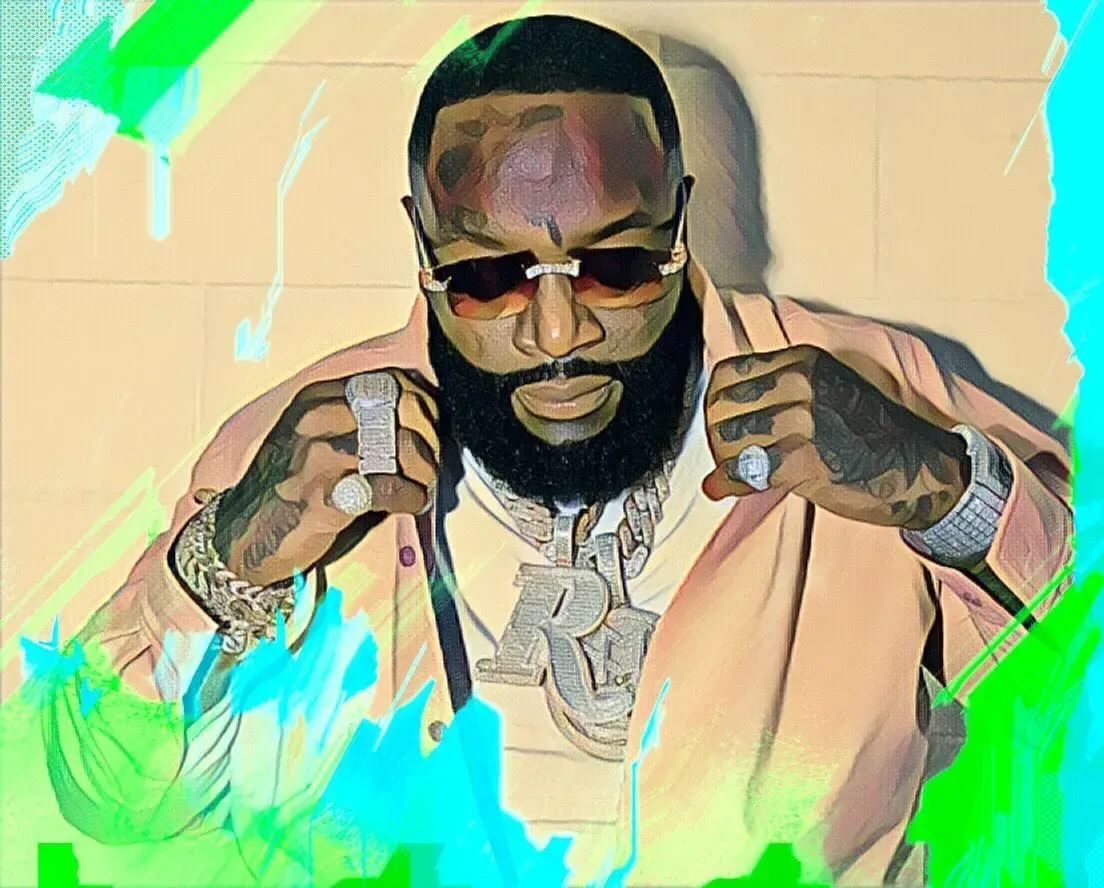
The most important 18 months in Rick Ross's life are not the ones his fans know best. They are not the months following the release of Hustlin in 2006, when Jay-Z offered him a multimillion-dollar deal with Def Jam and Port of Miami debuted at number one on the Billboard 200, selling 187,000 copies in its first week. They are the 18 months from December 1995 to June 1997, when William Leonard Roberts II was a correctional officer at the South Florida Reception Center in Doral, Florida, watching the consequences of other people's choices play out on a daily basis and deciding, with whatever certainty a 19-year-old can muster, that he was going to leave before those choices became his context permanently.
He left. And then he built something that his colleagues at the South Florida Reception Center could not have imagined and that his competitors in hip-hop spent the better part of two decades trying to replicate.
Ross is 50 years old now, with a net worth of approximately $150 million, a 235-acre estate in Georgia that served as a movie palace for Eddie Murphy, a $35 million waterfront mansion on Star Island in Miami, more than 25 Wingstop franchise locations and equity stakes in champagne and spirits brands that keep generating money whether he records a note or not. The correctional officer chapter became his most discussed biographical detail once the music made him famous. He has never run from it. He turned it into a founding myth and built a $150 million business empire using exactly the same discipline that institutional employment required of him, showing up, doing the work, refusing to stop.
The name, the lawsuit and the identity that launched everything
Born on January 28, 1976, in Clarksdale, Mississippi, and raised in Carol City, an impoverished neighbourhood in northern Miami-Dade County, Roberts came to hip-hop through a South Florida scene that was producing some of the most commercially adventurous music in the country. He graduated from Miami Carol City Senior High School in 1994, earned a football scholarship to Albany State University, a historically Black college in Albany, Georgia, and left before completing his degree to pursue music and, briefly, correctional work.
He took his performing name from "Freeway" Ricky Ross, a Los Angeles drug trafficker whose story had become legend in the street economy of the 1980s. The choice gave a young rapper from Carol City a name that carried instant cultural weight, and it gave him a persona large enough to contain the ambitions he was assembling behind it. When Freeway Ricky Ross found out, he sued for $10 million in 2010, arguing that the rapper had used his name and likeness without permission. A California federal court ruled in the rapper's favour in 2013, citing First Amendment protections. The case closed. The name stayed. By that point, Ross the rapper had become considerably more famous than the man whose identity he had borrowed, which is perhaps the sharpest possible illustration of what he did with the persona once he acquired it.
His debut single Hustlin in 2006 produced a major label bidding war, with offers from Diddy's Bad Boy Entertainment and Irv Gotti's Murder Inc. before he signed with Jay-Z's Def Jam Recordings. Port of Miami entered the Billboard 200 at number one. Three more number one albums followed: Trilla in 2008, Deeper Than Rap in 2009, and Teflon Don in 2010, which many critics consider his finest work. He has since released 11 studio albums in total and accumulated nine Grammy nominations. The music built the platform. What he did with the platform is the more interesting story.
Maybach Music Group: the label as leverage
In 2009, three years after Hustlin made him a household name, Ross founded Maybach Music Group, based in Miami. The label was named after the ultra-luxury German automotive brand, a deliberate signal about the commercial altitude at which he intended to operate. It became one of the most commercially significant rap labels of the subsequent decade, developing artists including Meek Mill, Wale, Omarion and Gunplay and building a roster that gave Ross leverage with distributors, streaming platforms and brand partners that a solo artist without a label stake could never have replicated.
The label model is the clearest early expression of how Ross thinks about ownership. He did not want to be a successful artist collecting royalties. He wanted to own the machine that made successful artists and collect backend participation in careers he helped build. Maybach Music Group gave him that position, structurally similar to what Jay-Z built with Roc-A-Fella Records and what Master P built with No Limit in the 1990s. The label's commercial output has made it one of the most recognised brands in hip-hop, independent of Ross's own recording activity.
Wings, Checkers and the franchise philosophy
The investment most often cited when discussing Ross's business acumen is the one that looks least glamorous on the surface. He opened his first Wingstop franchise location in Memphis, Tennessee, in 2011. He now owns between 25 and 30 Wingstop locations across the United States through Boss Wings Enterprises LLC, a company he co-owns with his mother and sister.
Wingstop is worth understanding in its own right. The company went public on the Nasdaq in 2015 and has been one of the most consistently strong performers in the fast food franchise sector. Average unit volumes per location run at approximately $1.25 million in annual revenue. At 25 to 30 locations, Ross's Wingstop portfolio generates an estimated $1 million to $1.2 million in annual after-tax income, a figure that is steady, recurring and entirely disconnected from whether he releases an album or goes on tour. In 2021, he gifted one Wingstop location to his son William Roberts III on the boy's 16th birthday, making the teenager one of the youngest franchise owners in the company's history. That decision, giving a 16-year-old not a car but an income-generating commercial asset, says everything about what Ross intends to pass down.
His Checkers and Rally's investment followed the same logic. Ross partnered with Checkers Drive-In Restaurants in 2016 and opened his first franchise location in Miami in early 2017, targeting Carol City and the surrounding neighbourhoods where he grew up. The move carried commercial and personal significance simultaneously: bringing a recognisable brand into the community that produced him, on terms that gave him ownership rather than simply a celebrity appearance fee.
The franchise philosophy he operates by is deliberately and repeatedly articulated. He is not interested in endorsement fees that stop when the campaign stops. He is interested in assets that keep generating income after the cheque clears.
Luc Belaire, McQueen and the spirits equity strategy
The beverage investments extend the franchise philosophy into a different category with different economics.
Ross has been associated with Luc Belaire Rosé since 2012, when he became the brand's ambassador and produced his own signature Rick Ross Edition bottle. The critical distinction is that his relationship with Belaire is not a standard endorsement arrangement. He holds equity in the brand, making him an owner of its commercial upside rather than a paid spokesman for someone else's asset. Luc Belaire, owned by Sovereign Brands and distributed through Bacardi, has grown into one of the most recognisable champagne brands in hip-hop culture, a status that his consistent product integration across music videos and social media has materially contributed to building. He benefits from that brand appreciation in a way that an ambassador without equity never would.
McQueen and the Violet Fog, a super-premium gin brand, represents his second confirmed spirits equity position. Combined with ambassador arrangements that have included Reebok, 1800 Tequila and Bumbu Rum at various points, his beverage and lifestyle brand portfolio generates income across multiple tiers simultaneously: equity appreciation, ambassador fees and the cultural amplification that comes from being the most visible figure in the luxury rap aesthetic.
The Promise Land and the Star Island puzzle
In 2023, Ross paid $35 million at closing for a 12,374-square-foot, six-bedroom waterfront mansion at 37 Star Island Drive in Miami Beach, one of the most exclusive residential addresses in America. The property has 100 feet of waterfront, a heated pool, a summer kitchen and a 40-foot dock with direct ocean access. He described it as "a major piece to the puzzle." His neighbour Sean Combs welcomed him to the island with a golf cart. The purchase confirmed his arrival as a genuine participant in the most competitive tier of the South Florida luxury market, not as a celebrity making a statement but as a serious capital allocator who understood the appreciation dynamics of a supply-constrained island with 30 homes and a waiting list for buyers.
The puzzle was already largely assembled in Fayetteville, Georgia. The Promise Land is a 235-acre estate containing a 45,000-square-foot mansion with 109 rooms, making it one of the largest private residences in the United States by square footage. It was used as the stand-in for Prince Akeem Joffer's royal palace in the 2021 film Coming 2 America, starring Eddie Murphy, giving the property a cultural visibility that no marketing budget could have purchased. The estate hosts the Rick Ross Car and Bike Show annually, an event that draws thousands of attendees and generates significant gate, sponsorship and media revenue.
He also purchased Meek Mill's former Atlanta estate for $4.2 million in cash in April 2023, adding a third Georgia property to a portfolio that reflects a deliberate concentration of real estate investment in the South, where land appreciation dynamics and tax environments are structurally more favourable than in the coastal luxury markets of New York or California.
The health scares, the books and the next chapter
Ross has faced serious health challenges that are relevant to any honest accounting of his life. He suffered two seizures in 2011 and was hospitalised in 2018 after being found unresponsive at his Miami home, a medical episode that prompted him to make significant changes to his lifestyle and health practices. He has spoken openly about losing more than 100 pounds since his heaviest period. The health journey has become a commercial narrative in its own right, informing his involvement in fitness brands and his public positioning as a man who has applied the same discipline to his body that he applied to his balance sheet.
In 2019, he published Hurricanes, a memoir co-written with Neil Martinez-Belkin that traced his rise from Carol City. A second book, The Perfect Day to Boss Up, published in 2021, became a New York Times bestseller, extending his brand credibility into self-help and motivational business writing and reaching an audience that his music had never accessed. In late 2025, he announced Set in Stone, an upcoming solo album, confirming that musical activity continues alongside the commercial expansion.
There is a thread that runs from the correctional officer's uniform through the Wingstop franchise agreements through the Star Island closing documents through the New York Times bestseller list. It is not about rapping. It is about understanding that wealth is built through ownership, compounded through discipline and protected through diversification. The man who spent 18 months watching what happened when people made the wrong choices understood something that his record sales prove but his balance sheet confirms: the right choice, made consistently over time, produces outcomes that no single lucky break could replicate.
He is 50 years old. He is not finished.
The intelligence satisfies curiosity. The paid briefings satisfy strategy.
Every Monday, Elite subscribers receive an Investor Memo breaking down the deal, the structure and the positioning behind the week's most consequential African wealth story — the kind of analysis that doesn't appear anywhere else.
Twice a month, a Wealth Intelligence brief profiles a single billionaire's holdings, cash flows and expansion pipeline in detail no public source matches.
→ Executive ($25/mo): Daily newsletter + Deep-Dive Reports
→ Elite ($75/mo): Everything above + Investor Memos + Wealth Intelligence + Quarterly Analyst Briefings
Subscribe now