

Table of Contents
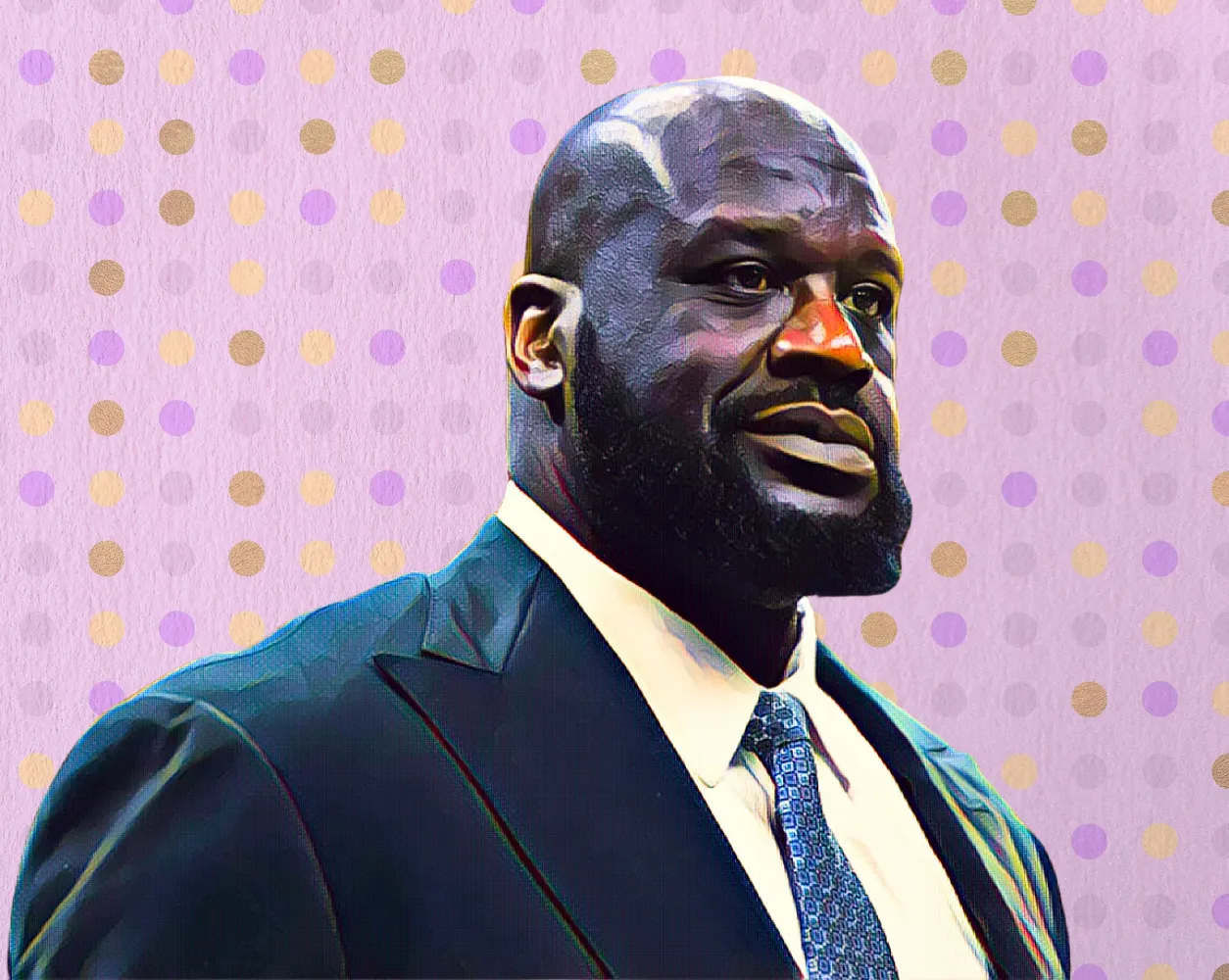
In 1999, a 27-year-old basketball player wrote a check for $250,000 to a startup most people had never heard of. The player was Shaquille O'Neal, then the most physically dominant athlete in American sports, and the startup was Google. The investment was the kind of thing that should have been a footnote in a jock's financial life, a lucky dart thrown at a dot-com dartboard. Instead it became the first clear signal that the biggest man in basketball intended to think like an owner, not just an earner.
The bet paid off on a scale that dwarfs anything he made on a court, and he made an extraordinary amount on the court. O'Neal banked roughly $292 million (about 409 billion naira) in NBA salary across 19 seasons, among the richest playing careers in league history. Yet he is worth a reported $500 million (about 700 billion naira) today, and the gap between those two numbers is the whole story. The fortune was not handed to him by basketball. It was built, brick by unglamorous brick, in the years after the game.
His investing rule is almost comically simple, and he repeats it often. He only puts money into things that affect everyday people. Not crypto schemes or vanity startups, but the chicken sandwiches, sneakers, insurance policies and pain-relief creams that ordinary Americans buy without thinking. That instinct, the refusal to chase anything he could not personally understand and sell, turned a retired center into one of the most successful athlete-businessmen alive.
O'Neal was born on March 6, 1972, in Newark, New Jersey, and grew up partly on Army bases as the stepson of a career soldier whose discipline he has credited for much of his drive. He became a national sensation at Louisiana State University, then entered the 1992 draft as the most hyped big man in a generation. The Orlando Magic took him first overall, and he delivered immediately, a 7-foot-1, 300-plus-pound force who reshaped how the sport was played and defended.
The accolades piled up across stops in Orlando, Los Angeles, Miami, Phoenix, Cleveland and Boston. He won four NBA championships, three with the Lakers and one with the Heat, claimed the 2000 Most Valuable Player award and made 15 All-Star teams. The salary followed the dominance. By the end of his career in 2011, O'Neal had earned roughly $292 million in wages alone, a figure that placed him among the highest-paid players the league had ever produced.
What made him unusual was not the money he earned but the attention he paid to it. O'Neal has spoken about early lessons in financial discipline, about advisers who pushed him to treat his fame as a platform rather than a paycheck. While many stars of his era spent their way through their earnings, he was already studying the businesses behind the products he was paid to sell, preparing for a second act that would make the first look like a warm-up.
O'Neal's endorsement career began the moment he turned professional. Reebok signed him in 1992 and built the Shaq Attaq sneaker around him, and the partnership announced a pitchman with rare warmth and comic timing. Over the decades he became the affable face of a remarkable range of household brands, including Icy Hot, Gold Bond, The General car insurance and Carnival Cruise Line, where he carries the title of chief fun officer.
The endorsements were never incidental income. O'Neal has earned well over $200 million from them across his career, a sum that rivals his playing salary and arrives without the physical toll. The reason brands pay him is the same reason his investments work. He sells to regular people because he genuinely seems like one, a giant who laughs at himself and pitches foot-odor powder with the same conviction he once brought to a dunk.
The deeper lesson he drew from those years was about leverage. A spokesman rents his credibility to a brand for a fee. An owner keeps the upside. Somewhere along the way O'Neal decided he would rather own the things he sold, and that decision reorganized his entire financial life around equity instead of appearance fees.
The clearest expression of that shift came with Authentic Brands Group, the licensing giant that controls a portfolio of consumer and entertainment names. O'Neal became an equity partner and board member, betting on a company built to buy struggling brands and squeeze new life from them. In 2021 ABG closed a roughly $2.4 billion deal to acquire Reebok from Adidas, putting O'Neal on the ownership side of the very sneaker brand that had paid him as a rookie.
The arc completed itself in 2024, when O'Neal took on the role of president of basketball at Reebok, charged with rebuilding the brand's presence in the sport. A man who had been a Reebok endorsement in 1992 now helped steer its strategy more than three decades later. The journey from billboard to boardroom is one almost no athlete completes, and it captures his entire philosophy in a single relationship. He stopped being the asset and became the owner.
If Authentic Brands is the sophisticated end of his portfolio, fast food is its beating heart. O'Neal once owned 155 Five Guys franchises, a stake amounting to more than 10 percent of the burger chain, one of the largest franchisee positions any celebrity has ever held. He later sold those locations, redeploying the capital into ventures he could shape more directly.
Chief among them is Big Chicken, the fried chicken concept he founded and continues to expand through company locations and franchising, a brand built on oversized sandwiches and his own outsized persona. He has framed the exit from Five Guys as a deliberate move toward businesses he controls outright rather than merely owns a slice of, trading a passive stake for the brand equity and naming rights that come with building something himself. He also joined the board of Papa John's in 2019 and bought nine of the pizza chain's restaurants in the Atlanta area, lending the troubled company his image at a moment it badly needed rehabilitation. Across the years his holdings have included roughly 40 24-Hour Fitness gyms, about 150 car washes, 17 Auntie Anne's pretzel outlets and an Atlanta Krispy Kreme franchise that became local legend. The pattern is consistent. O'Neal buys the unglamorous, high-volume businesses that serve ordinary neighborhoods, the same logic that governs his pitch work.
The Google check was not a fluke. O'Neal has a track record of getting into consumer companies early and riding them to acquisition. He took an equity stake in Vitamin Water before the brand exploded, then profited handsomely when Coca-Cola acquired its parent company in a multibillion-dollar deal. The wins share a signature. Each was a product he could see ordinary people reaching for, which is precisely the screen he applies to every opportunity.
The investments matter beyond their returns because of what they reveal about his discipline. O'Neal has said he avoids anything he cannot explain to his own family, a rule that kept him out of fashionable disasters and inside durable consumer winners. He has also been candid about the fear that drives the caution, repeating that the money will not last forever and treating each deal as protection against the day the fame fades. The strategy is not flashy. It is the financial equivalent of his game, built less on finesse than on overwhelming, repeatable fundamentals.
O'Neal's real estate tells the same story of shrewdness dressed as excess. His most famous property was the Isleworth mansion near Orlando, which he bought for $3.95 million in 1993 during his Magic years and expanded into a more than 30,000-square-foot compound on the shore of Lake Butler, complete with a roughly 6,000-square-foot indoor basketball court and a 95-foot pool. He sold it in 2021 for $11 million, a record for the gated community. Earlier in his career he had bought near every team he joined, including a Star Island home in Miami for roughly $18.8 million in 2004 and a Mulholland Estates house in Los Angeles for around $4 million.
He has since spread a smaller, more practical footprint across the country, often tied to his business interests. He bought a home in the Dallas-Fort Worth suburb of Carrollton in 2022 for about $1.22 million as he expanded Big Chicken into Texas, added a Mediterranean mansion in nearby Heath for around $2 million, and has made North Texas a base. His holdings have also included a 14.3-acre compound in McDonough, Georgia, bought in 2016 for roughly $1.15 million, and a Las Vegas mansion. The portfolio is large but rarely sentimental. He buys where the business is and sells when the number is right.
Beneath all the dealmaking, O'Neal's public identity has always been bound up with generosity. He launched the Shaquille O'Neal Foundation in 2019 to support underserved youth, partnering with organizations such as the Boys and Girls Clubs of America and Communities in Schools, and he funds it through events including a star-studded charity gala and digital fundraisers that have pulled in millions.
His giving predates the formal foundation by decades. Since 1997 his Shaq-a-Claus tradition has delivered toys and gifts to children across New Jersey, Florida, Georgia, Nevada and New York each holiday season. He has also served as a reserve law enforcement officer with multiple agencies and championed community safety programs, a civic streak that runs alongside the entertainer and the mogul. The charity, like everything else, is aimed squarely at everyday people.
O'Neal remains one of the most visible figures in American sports media as a longtime analyst on Inside the NBA, a role reported to pay him in the neighborhood of $15 million a year and one that keeps his face in living rooms long after his playing days ended. The franchise of the show itself has moved networks amid the league's shifting broadcast deals, but O'Neal's seat at the desk has only grown more valuable as his fame compounds.
The businessman is busier than the broadcaster. He is expanding Big Chicken, steering Reebok's basketball ambitions and continuing to hunt for the next everyday brand to own. The man who wrote a $250,000 check to Google in 1999 has spent a quarter century proving that the bet was not luck but method. He earned $292 million playing the game better than almost anyone. He is worth far more because he understood, earlier than his peers, that the real money was in owning the things the rest of us buy.
The intelligence satisfies curiosity. The paid briefings satisfy strategy.
Every Monday, Elite subscribers receive an Investor Memo breaking down the deal, the structure and the positioning behind the week's most consequential African wealth story - the kind of analysis that doesn't appear anywhere else.
Twice a month, a Wealth Intelligence brief profiles a single billionaire's holdings, cash flows and expansion pipeline in detail no public source matches.
→ Executive ($25/mo): Daily newsletter + Deep-Dive Reports
→ Elite ($75/mo): Everything above + Investor Memos + Wealth Intelligence + Quarterly Analyst Briefings
Subscribe now