

Table of Contents
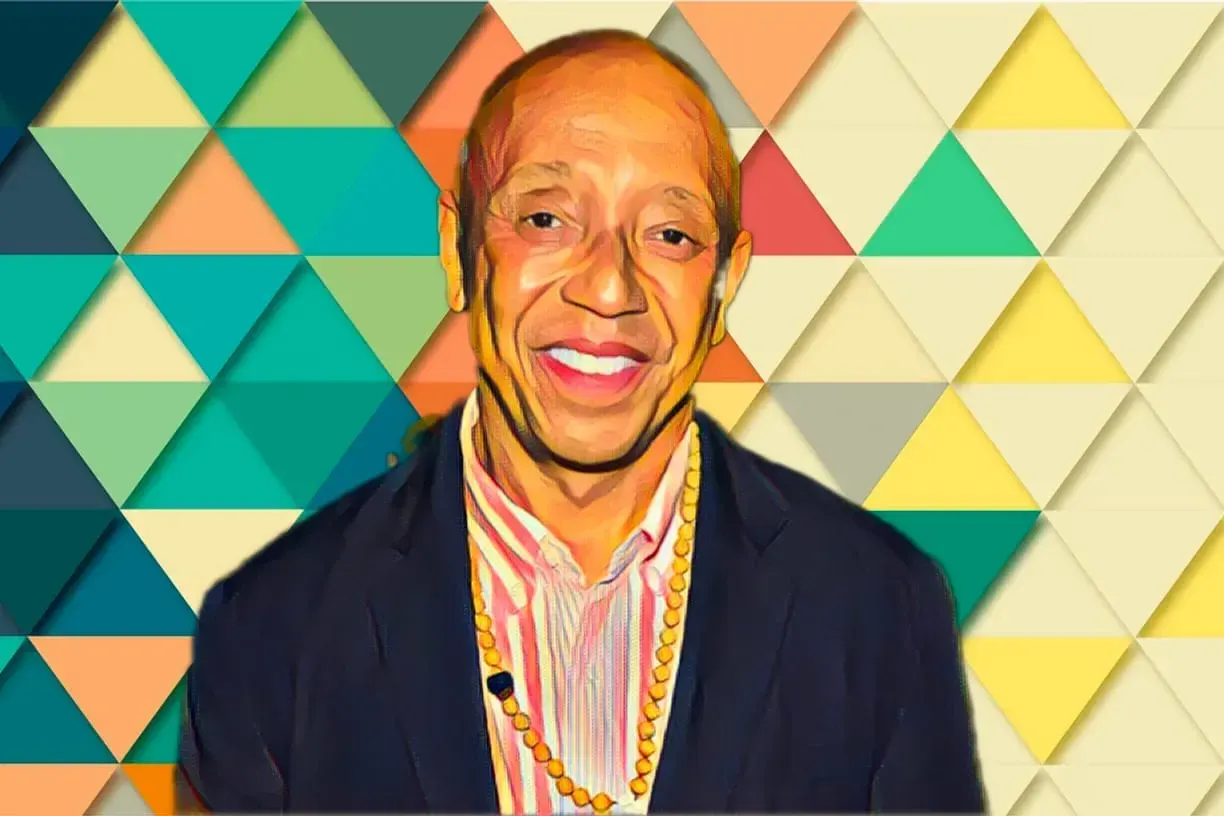
The night Eddie Cheeba performed at Charles' Gallery in Harlem in 1977, Russell Simmons was in the crowd. He was 19, enrolled in sociology classes at City College of New York, and already spending more time in basement parties than lecture halls. What he heard that night was not just music. It was a business model. He dropped out of City College shortly after and began promoting hip-hop shows across Harlem and Queens, charging admission, paying artists, and pocketing the difference. He was operating on pure instinct and almost no capital, and he was right about everything.
That instinct would eventually produce Def Jam Recordings, Phat Farm, Def Comedy Jam, UniRush Financial Services and Rush Communications, an umbrella company that at its peak housed more than 10 businesses and three nonprofits and defined what it meant to build a commercial empire out of Black urban culture. It would produce a fortune Forbes estimated at $340 million by 2011, built through a sequence of exits that remains one of the most disciplined divestment records in American entertainment history. And it would collapse, or rather splinter, when more than a dozen women came forward in 2017 and afterward with allegations of rape and sexual misconduct that Simmons has denied but that have nonetheless ended his public career, estranged him from his daughters, and left him living in Bali while unpaid legal settlements mount in American courts.
The story of Russell Simmons is the story of a man who understood, before almost anyone else, that talent creates culture and ownership creates wealth. It is also the story of what happens when the wealth survives and the ownership continues but the man who built it is no longer welcome in the rooms where it lives.
The label that invented an economy
In 1978, Simmons began managing a rapper named Curtis Walker, who performed as Kurtis Blow. He could not get Blow a record deal through conventional channels, so he pressed vinyl copies of their collaboration "Christmas Rappin'" himself and distributed them to DJs and clubs, creating enough demand that Polygram Records signed Blow when they began receiving retailer inquiries. The hustle worked. Simmons had manufactured leverage out of nothing, a skill he would apply at every stage of his career.
By 1984, he had co-founded Def Jam Recordings with Rick Rubin, operating first out of Rubin's New York University dormitory room and then out of a two-room suite at 1133 Broadway in Manhattan. The label's initial roster reflected both men's instincts about what was being ignored by major labels: LL Cool J, the Beastie Boys, Public Enemy, and Run-DMC, whose lead member, Joseph Simmons, was Russell's younger brother. Def Jam became the vehicle through which hip-hop crossed from Black neighborhoods into white suburban living rooms and from there into a global commercial phenomenon worth hundreds of billions of dollars annually. The label signed Jay-Z. It signed Kanye West. It signed DMX, Method Man, Redman, and Ja Rule. It was the most consequential record label of its generation and it belonged, for 15 years, to a man from Hollis, Queens who had learned the music business by throwing parties.
Simmons sold his remaining shares in Def Jam to Universal Music Group in 1999 for $120 million. The timing, which preceded the collapse of physical music sales by only a few years, was either brilliance or extraordinary luck, and Simmons has always described it as the former. The sale was consistent with a philosophy he would later articulate clearly: build the company to the point where a larger partner can take it further, and get out while the price reflects the future rather than the present.
A fashion empire and a financial services bet
The clothing line Simmons launched in 1992 under the name Phat Farm was, by his own admission, a decade-long education in what patient capital looks like when you believe in the product and no one else does yet. He estimated he lost $10 million during the label's first six years while the market caught up to what he was building. Phat Farm was not the first attempt to put hip-hop aesthetics into mainstream retail, but it was the most sustained, and when the market finally arrived, it arrived at scale.
In 2004, Simmons sold Phat Farm and Baby Phat, the women's line his then-wife Kimora Lee Simmons had built into its own cultural phenomenon, to the Kellwood Company for $140 million. Combined with the Def Jam proceeds, the Phat Farm exit pushed his net worth past $300 million and confirmed the model he had been refining since the days of pressing Kurtis Blow records in his bedroom: identify the white space, build the category, extract the capital before saturation.
The third major divestment came a decade later, from a more unlikely venture. In 2003, Simmons co-founded UniRush LLC, a financial services company offering prepaid debit cards to the roughly 48 million Americans who at that time lacked access to traditional banking relationships. The RushCard, as it became known, was a genuinely innovative product aimed at an underserved market, and it grew into a significant business despite a damaging technical outage in 2015 that froze hundreds of thousands of customer accounts and drew regulatory scrutiny. In January 2017, Green Dot Corporation acquired UniRush for $147 million, adding a third nine-figure exit to the Simmons scorecard. The three sales together, Def Jam, Phat Farm and UniRush, totaled more than $400 million in gross proceeds, a record of divestment discipline that few entertainment entrepreneurs of any background have matched.
Rush Communications, the umbrella company Simmons built around these and other ventures, also produced Def Comedy Jam for HBO, which premiered in 1989 and launched the careers of Martin Lawrence, Chris Tucker, Cedric the Entertainer, Jamie Foxx and Steve Harvey among others. It produced Def Poetry Jam, which ran on HBO from 2002 to 2007 and spawned a Broadway production that won a Tony Award for Special Theatrical Events in 2003. It produced Eddie Murphy's 1996 comeback film "The Nutty Professor." It included a magazine, an advertising agency with clients including Coca-Cola and ESPN, a jewelry company, a book publishing imprint, and at various points a video gaming division and a digital media property in Global Grind. The breadth of Rush Communications was not accidental. It was the deliberate architecture of a man who believed that hip-hop culture was not a genre but an economic ecosystem, and that the person who understood it most completely should own as much of it as possible.
The weight of what came after
In November 2017, Simmons stepped down from his companies following allegations of sexual misconduct from screenwriter Jenny Lumet and model Keri Claussen Khalighi. More women followed. By the time the initial wave of allegations had been reported, more than a dozen women had publicly accused Simmons of rape or sexual misconduct across a period stretching from the 1980s to the 2010s. Simmons has denied all allegations of nonconsensual conduct. The New York Police Department opened a preliminary investigation. A documentary, "On the Record," focused on the account of former Def Jam executive Drew Dixon, premiered at the Sundance Film Festival in 2020 to strong reviews. Simmons has filed a defamation lawsuit against the documentary's producers and HBO, which distributed it; that case remains ongoing.
Simmons relocated to Bali in February 2018 and has been based there since, presenting himself publicly as a yogi and wellness advocate. He has insisted the relocation has nothing to do with the legal proceedings against him, and that he travels to Los Angeles, New York and Miami regularly. The reality as reflected in court documents is more complicated. Court filings from October 2024 show that Simmons agreed to pay more than $3 million in settlement payments to three women, Wendy Franco, Sil Lai Abrams, and Sherri Abernathy, and had failed to make those payments for more than a year. As of January 2025, he also owed at least $8 million to three additional accusers. Celebrity Net Worth currently estimates his net worth at $10 million, a figure dramatically lower than the $340 million peak cited by Forbes in 2011, and in June 2023 he reportedly sent a message to his daughter claiming to be "literally broke."
The Celsius energy drink dispute added a separate layer of complexity. Simmons had a minority stake in a company called Nu Horizons Investments that held Celsius shares, and he sued his ex-wife Kimora Lee Simmons and her husband Tim Leissner in 2021, alleging they had transferred those shares without his consent to secure Leissner's bail on federal charges related to a Malaysian bribery scheme. The U.S. government filed a memorandum supporting dismissal of Simmons' claim, arguing that as a minority shareholder in Nu Horizons he had no ownership of the corporation's assets and that the stock transfer had been seized by the government as part of a forfeiture order against Leissner. The case illustrated, more than anything, how far the infrastructure Simmons built had fragmented.
What the empire meant and what it leaves behind
The tension at the center of Russell Simmons' story is not simply the contrast between the commercial achievements and the personal allegations. It is the contrast between a man who spent four decades arguing, correctly, that Black culture was being undervalued by the institutions that profited from it, and who built a fortune by owning what others dismissed, and the accounts of women who say he used his position within that same infrastructure to harm them in ways that stripped them of their own agency and careers.
The Peebles Corporation's comparison to Berry Gordy is a common one in the hip-hop world, and it is apt on the business level: as Gordy industrialized soul music into Motown, Simmons industrialized hip-hop into a vertically integrated commercial operation that launched more careers and generated more wealth than any comparable Black-owned enterprise in entertainment history. Def Jam alone gave the world LL Cool J, the Beastie Boys, Public Enemy, Jay-Z, Kanye West, and DMX. The fashion ecosystem his labels and endorsements seeded produced billions in economic activity. The financial services product he built served millions of Americans the banking system had abandoned.
That legacy does not resolve the allegations. It coexists with them in the uncomfortable way that large legacies often coexist with the worst things their owners did. What Russell Simmons built between 1978 and 2017 was real, consequential and in some respects irreplaceable. What was alleged to have happened alongside it, and what the courts are still working through, is also real. Both things sit inside the same story. Neither cancels the other, and neither cancels the human cost of the second.
The intelligence satisfies curiosity. The paid briefings satisfy strategy.
Every Monday, Elite subscribers receive an Investor Memo breaking down the deal, the structure and the positioning behind the week's most consequential African wealth story - the kind of analysis that doesn't appear anywhere else.
Twice a month, a Wealth Intelligence brief profiles a single billionaire's holdings, cash flows and expansion pipeline in detail no public source matches.
→ Executive ($25/mo): Daily newsletter + Deep-Dive Reports
→ Elite ($75/mo): Everything above + Investor Memos + Wealth Intelligence + Quarterly Analyst Briefings
Subscribe now