

Table of Contents
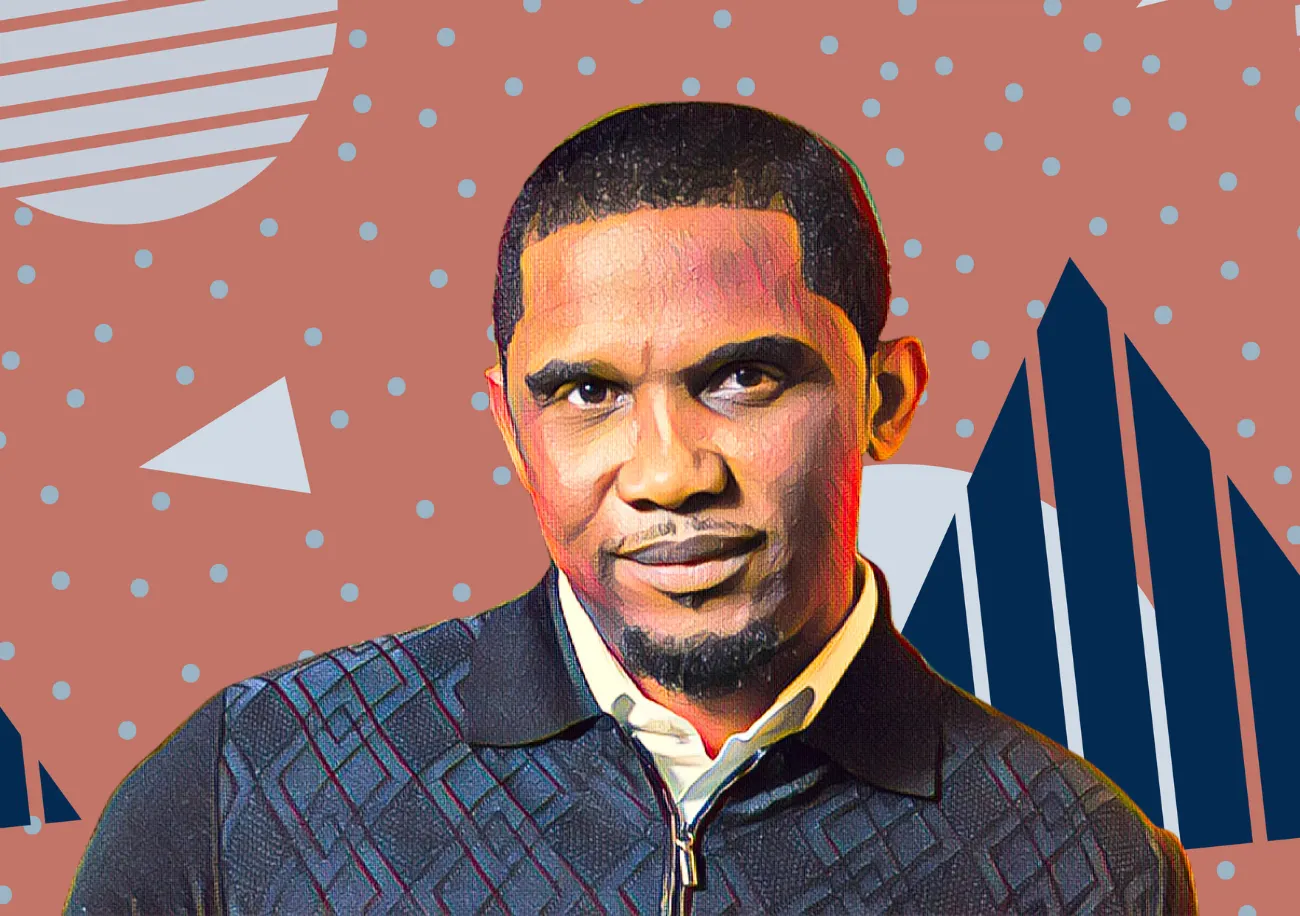
In February 2015, newspapers from London to Lagos reported that Samuel Eto'o had bought a ghost. The property was Villa Altachiara, a 40-room cliff-top palazzo above the Ligurian fishing village of Portofino, and the price tags attached to it ran to about $28 million (18.5 million pounds). The villa came with a legend. It had once belonged to Lord Carnarvon, the British aristocrat who financed the opening of Tutankhamun's tomb in 1923 and died soon after, feeding a century of talk about a pharaoh's curse. The story wrote itself. Africa's greatest striker, then the best-paid footballer alive, was said to be moving into a haunted Italian mansion.
There was only one problem. Eto'o said it was not true. When the reports reached him, he took to social media with the bemused tone of a man reading his own fiction. He joked that he had apparently spent 30 million without knowing it, wondered aloud how he had managed such a purchase in his sleep, and added that it was a little sad to watch a respectable profession lose its grip on the truth. He never bought Villa Altachiara. No deed, no sale and no move ever materialized.
A decade later, that denial is the most revealing fact in Samuel Eto'o's entire property story. The cursed palazzo he says he never owned remains, by some distance, the most famous mansion anyone associates with his name. For a man who earned a fortune estimated at around $95 million, that is a remarkable void. Eto'o left one of the faintest personal real estate footprints of any athlete of his wealth and fame, and the gap between his earnings and his visible holdings is the story.
The cliff-top palazzo and the curse that came with it
The villa at the center of the myth is real, even if Eto'o's ownership never was. Villa Altachiara is a palazzo of roughly 1,100 square meters set in some 30,000 square meters of parkland on the cliffs near Portofino, grand enough to carry its own folklore. Its association with Lord Carnarvon, who bankrolled Howard Carter's excavation of Tutankhamun and died in Cairo months after the tomb was opened, gave rise to the legend of a curse that has clung to the property ever since. The darker chapter came later. The villa eventually passed to Countess Francesca Vacca Agusta, a socialite tied to the Italian aerospace dynasty, who vanished from the estate on a stormy night in early 2001. Witnesses said she had stormed out toward the sea, and her body washed up weeks later near Saint-Tropez on the French coast. By the time Eto'o's name was attached to it, estate agents reckoned the house needed as much as $3.3 million (3 million euros) of restoration to recover its former glory. Eto'o had joined nearby Sampdoria that January and was reportedly living in a hotel while he settled in Italy, the perfect set of circumstances for a rumor about a 40-room palazzo with its own swimming pool to take hold. It was the kind of place that draws legends and headlines in equal measure, which is precisely why a wandering striker was so easy to write into its history.
A residence that exists mostly online
The myth has proven stubborn. Years after Eto'o's denial, celebrity-home websites still catalog Villa Altachiara as his Portofino residence, complete with breathless descriptions of the parkland and the curse, none of it supported by a transaction anyone has ever produced. The persistence of that error is itself telling. It survives because there is so little verified property to put in its place. Eto'o is reported to own a home in Spain, in the affluent belt outside Barcelona where many of his former teammates settled, and several houses in Cameroon, but no public records, addresses or confirmed valuations stand behind those descriptions. During his five seasons at Barcelona he was said to keep a residence in the same wealthy enclave as Lionel Messi and Carles Puyol, though, as with the rest of his holdings, the claim rests on hearsay rather than any registry. Unlike the meticulously cataloged mansions of comparable stars, whose square footage and purchase prices circulate freely, Eto'o's personal holdings sit behind a wall of privacy, asserted in passing and almost never documented. The footballer who spent two decades in the brightest spotlight in sport has kept the question of where he actually lives unusually dark.
The richest man in football who would not buy a house
The clearest illustration of his attitude to property came at the very peak of his earning power. When Anzhi Makhachkala made him the best-paid footballer on earth in 2011, on a deal worth about $29 million (20 million euros) a year after tax, Eto'o declined to live in the Russian republic of Dagestan at all. The contract instead included a private jet that ferried him in for matches and out again, an arrangement that let him collect the richest salary in the sport without ever putting down roots near it. A man at his financial summit, and the headline perk was a way to avoid buying a home. The pattern fits a career in which the wages were enormous and the bricks-and-mortar evidence of them strangely scarce. He moved through Madrid, Mallorca, Barcelona, Milan, Makhachkala, London, Liverpool, Genoa and a string of Turkish and Qatari cities, a 13-club odyssey that gave him every reason to rent and few to build. Even in Spain, where he spent the better part of a decade and set a club goal-scoring record at Mallorca, no signature residence ever became part of his public story. Eto'o treated houses the way he treated clubs, as places to pass through on the way to the next thing. By the time he retired in 2019, after a final tour through Turkey and Qatar, he had out-earned almost every forward of his generation and anchored himself almost nowhere.
The buildings he actually put his name on
The irony is that Eto'o has left a substantial footprint in brick and concrete. It simply was not built for him. Through the Samuel Eto'o Foundation, registered in Cameroon in 2006, the striker has financed a string of public structures that stand as the real estate legacy his personal portfolio never became. The centerpiece is medical. In 2017 his foundation built and fully equipped a 48-bed children's ward inside the largest public hospital in Douala, Cameroon's commercial capital, a pediatric facility aimed at a country where children under five die at nearly double the global rate. Eto'o has described that building as close to the purpose of his life, a place where families could arrive frightened and leave in good health, and it remains the most consequential thing his money ever put up.
The football academies extended the same logic across the continent. In Libreville, Gabon, his foundation runs a youth academy housed in a complex the Gabonese state had built as a training base for the 2012 Africa Cup of Nations and then handed over, a facility Eto'o reopened in 2012 in the company of his former Barcelona teammates Xavi Hernandez and Victor Valdes. In Kenya, he lent his name and money to the Samuel Eto'o Laikipia Unity Football Academy and Environmental Education Centre, built at Segera in partnership with the Zeitz Foundation and local conservancies to develop young players alongside environmental education. His foundation has funded 100 scholarships at an all-girls school in Sierra Leone and announced plans for a school in northern Cameroon, and its wider work has reached into orphanages, road construction and public-health campaigns during the 2020 pandemic. That record as a builder of public goods earned Eto'o roles as a UNICEF goodwill ambassador in Cameroon and a roving ambassador for neighboring Chad. The buildings carry his name, but the deeds belong to the public good, a deliberate inversion of the trophy-estate model that defines most footballer fortunes.
The one deed that was never about him
The single property transaction most firmly attached to Eto'o as an individual was an act of charity, not acquisition. In 2018, after a documentary exposed the plight of Norbert Owona, a former Cameroon captain from the 1960s and 1970s who had been left homeless and ailing on the streets of Douala, Eto'o visited him in the hospital, handed over about $800 (500,000 CFA francs) and pledged to buy him a house. Owona had represented Cameroon at two Africa Cup of Nations tournaments and then slipped into a poverty so complete he said he was living like an animal, a fate that befalls a striking number of African footballers once the cheering stops. Another former international, Joseph Kamga, who was part of Cameroon's 1982 World Cup squad, had spent years pleading on behalf of old teammates reduced to destitution, calling their situation indescribable. The most concrete real estate gesture in Eto'o's public record, in other words, was a home meant for someone else. It is consistent with a man whose wealth has always shown up more reliably in gestures than in title deeds, and who understood from his own beginnings in a hard district near Yaounde how thin the line could be between a celebrated footballer and a forgotten one.
A fortune that leaves almost no footprint
The deeper irony is that the asset class that nearly sent Eto'o to prison was not property at all. The tax fraud he admitted to in a Barcelona court in 2022, close to $4 million (3.8 million euros) in undeclared earnings, involved image rights routed through shell companies in Hungary and Spain rather than money parked in visible estates. His wealth moved through paperwork, not architecture, a habit that has come to define both his finances and the suspicion that now trails them. As president of the Cameroon Football Federation, he has faced investigations into missing funds and questions about money he cannot easily account for, the same opacity that makes his personal property so hard to map. Whether by design or by temperament, the most decorated African footballer in history built no signature compound, no land empire and no trophy estate to anchor his name, and the grandest house ever linked to him is one he laughed off as someone else's invention.
That absence says something about the kind of empire Eto'o actually chose to build. The fortune is real, estimated at around $95 million, but he poured his ambition into institutions rather than residences, seizing control of Cameroonian football and the machinery of the game in his homeland while leaving his own front door deliberately hard to find. The buildings that bear his name are a hospital ward and a clutch of academies scattered across Africa, monuments to where he came from rather than how much he made. It is a portfolio of a different kind, measured in hospital beds, classrooms and football pitches rather than acreage and asking prices. The man who could have monumentalized his wealth in stone instead spread it thin and wide, a striker who spent his career knowing exactly where the goal stood and his retirement making sure no one could quite map where his money lived.
The intelligence satisfies curiosity. The paid briefings satisfy strategy.
Every Monday, Elite subscribers receive an Investor Memo breaking down the deal, the structure and the positioning behind the week's most consequential African wealth story - the kind of analysis that doesn't appear anywhere else.
Twice a month, a Wealth Intelligence brief profiles a single billionaire's holdings, cash flows and expansion pipeline in detail no public source matches.
→ Executive ($25/mo): Daily newsletter + Deep-Dive Reports
→ Elite ($75/mo): Everything above + Investor Memos + Wealth Intelligence + Quarterly Analyst Briefings
Subscribe now