

Table of Contents
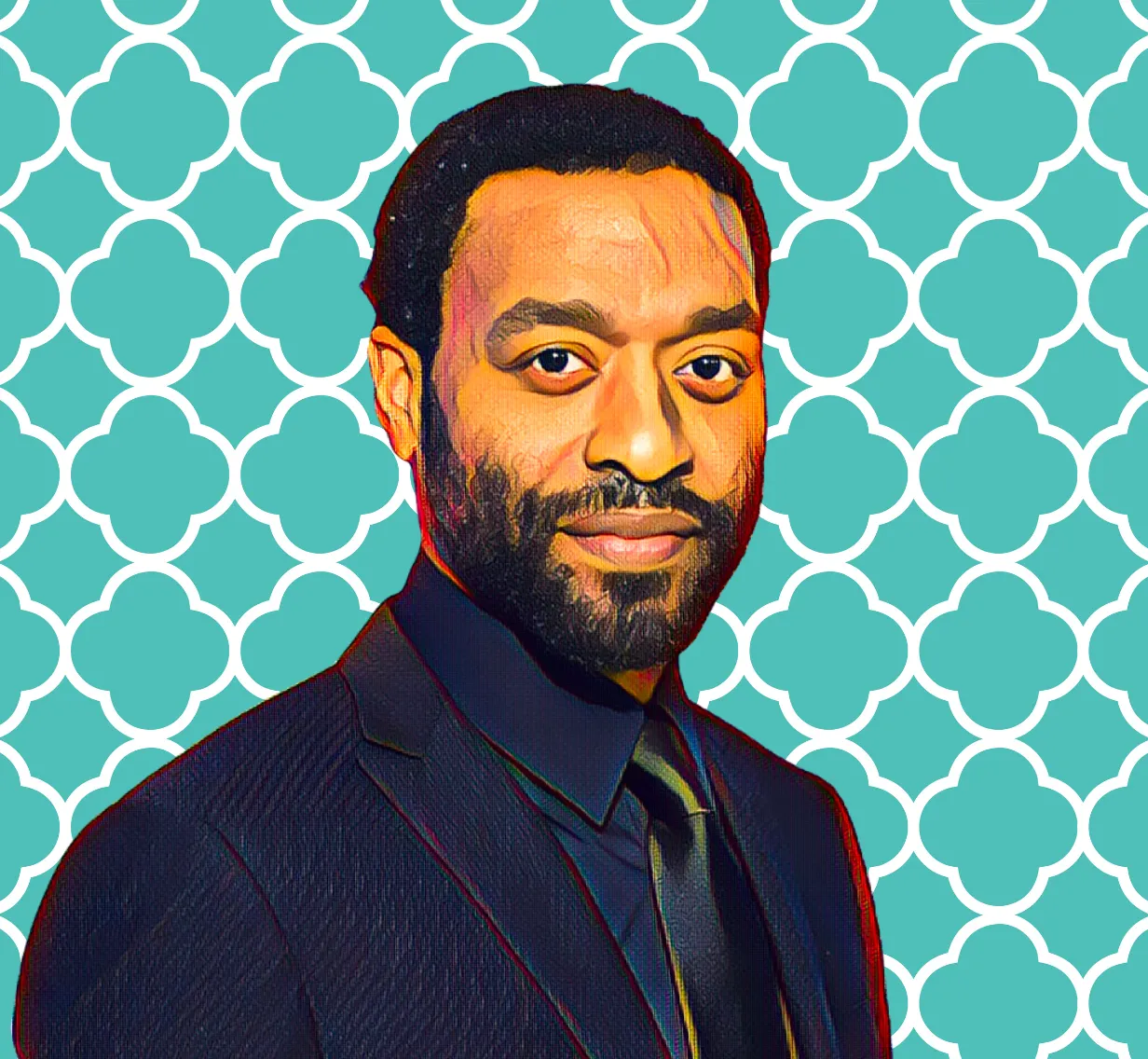
On the night of March 2, 2014, the British-Nigerian actor sat in the Dolby Theatre in Hollywood as the film that had made him a star was named Best Picture. The movie was 12 Years a Slave, and Chiwetel Ejiofor had carried it, playing Solomon Northup, a free Black man kidnapped and sold into bondage, in a performance of such restraint and devastation that it earned him an Academy Award nomination for Best Actor. A son of Nigerian immigrants from the East End of London stood at the very summit of American cinema.
The journey to that seat was long and largely unglamorous, built on craft rather than celebrity. Ejiofor has assembled a reported fortune of about $16 million (about 22 billion naira) across three decades of work, moving between prestige dramas, billion-dollar blockbusters and, more recently, a director's chair. He is one of the most respected actors of his generation and one of the most private, a man who let the roles speak and kept almost everything else to himself.
The wealth he built is modest by the standards of Hollywood's biggest names, but the career behind it is among the most admired. Ejiofor never chased fame for its own sake. He chased the work, and the work, eventually, made him rich.
Ejiofor was born on July 10, 1977, in Forest Gate, in the East End of London, to middle-class Nigerian parents of Igbo descent. His father, Arinze, was a doctor and his mother, Obiajulu, a pharmacist, a household that prized education and achievement. The defining tragedy of his childhood came at age 11, when he and his father traveled to Nigeria for a wedding and were in a car accident that killed his father and left the young Chiwetel badly injured. The loss shadowed his early life and, by his own account, shaped the seriousness he brought to everything afterward.
He found refuge in performance. Educated at Dulwich College and active in the National Youth Theatre, Ejiofor was still a teenager when the director Steven Spielberg cast him in the 1997 film Amistad, an extraordinary early break. He trained at the London Academy of Music and Dramatic Art and built a formidable stage career alongside his screen work, eventually winning a Laurence Olivier Award for his portrayal of Othello, a credential that marked him as a serious classical actor and not merely a movie face.
The combination of discipline and range became his signature. Ejiofor was never the loudest presence in a room or on a marquee, but he was reliably the most convincing, an actor who disappeared into roles rather than imposing a persona on them. That quality would carry him from the London stage to the center of Hollywood, and it would prove unusually durable in an industry that often discards its talent quickly.
Ejiofor's film career built slowly and deliberately through the 2000s. He earned critical acclaim in Stephen Frears' Dirty Pretty Things, charmed audiences in the British hit Kinky Boots, and delivered memorable turns in Children of Men, Joss Whedon's Serenity, American Gangster opposite Denzel Washington and the disaster epic 2012. He was a familiar and trusted presence, the kind of actor directors cast when they needed a role anchored by genuine depth, even if mainstream fame still eluded him.
Everything changed with 12 Years a Slave. Steve McQueen's 2013 film gave Ejiofor the role of a lifetime in Solomon Northup, and he met it with a performance that won the BAFTA Award for Best Actor and earned an Oscar nomination, while the film itself took Best Picture. The role moved him from respected character actor to leading man and awards-season fixture, the culmination of nearly two decades of patient work. It was the performance that defined his reputation and elevated his market value.
The breakthrough was hard-won and all the more meaningful for it. Ejiofor had spent years proving himself in supporting parts and on the stage, and 12 Years a Slave was the payoff, a film of enormous cultural weight built around his quiet, unbreakable center. It announced him not just as a great actor but as a star capable of carrying the most serious material Hollywood produces.
The recognition reshaped his standing in the industry. An Oscar nomination for Best Actor is the kind of credential that changes the offers an actor receives and the fees he can command, and it arrived when Ejiofor was in his mid-thirties, mature enough to capitalize on it without being defined by a single early hit. Almost overnight he became a name attached to prestige projects and a magnet for the awards conversation, a status that translated directly into leverage. The years of unshowy excellence had finally compounded into genuine star power.
If prestige drama made Ejiofor's reputation, big-budget franchises filled out his fortune. He joined the Marvel Cinematic Universe as Karl Mordo in Doctor Strange in 2016, returning for Doctor Strange in the Multiverse of Madness in 2022, and lent his voice to the villain Scar in Disney's 2019 photorealistic remake of The Lion King, a film that grossed more than $1.6 billion worldwide. He also appeared in Ridley Scott's The Martian, the Netflix action hit The Old Guard and a string of other commercial titles.
The economics of that work are straightforward. Ejiofor's per-film paydays have reportedly ranged from $1 million to $3 million, and he has earned around $2 million in a typical year, the steady income of a working star rather than the nine-figure paychecks of the very biggest names. The blockbusters provided the financial stability that allowed him to keep choosing the smaller, riskier and more personal projects that drew him to acting in the first place.
The balance is the strategy. By alternating between franchise films that pay well and demanding dramas that build prestige, Ejiofor constructed a career that was both commercially sustainable and artistically respected. Many actors manage one or the other. He managed both, and the collective box office of his films runs well into the billions.
The franchise work also bought him longevity, the rarest commodity in acting. A role in a recurring Marvel property or a Disney tentpole keeps an actor visible to global audiences and in demand with studios, insulating him from the dry spells that end most careers. Ejiofor used that visibility not to coast but to fund his independence, treating the blockbusters as the financial base that let him take chances elsewhere. It is the same logic that governs a sound investment portfolio, a stable core that underwrites the riskier, higher-conviction bets.
In recent years Ejiofor has expanded from performer to filmmaker, the move that may define the next phase of his wealth and legacy. In 2019 he wrote, directed and starred in The Boy Who Harnessed the Wind, a Netflix drama set in Malawi and based on the true story of a teenager who built a wind turbine to save his village from famine. The film, his directorial debut, was a critical success and a statement of intent from an artist determined to tell African stories on his own terms.
He followed it in 2024 with Rob Peace, a biographical drama he wrote and directed about a gifted young man navigating poverty, education and crime, which premiered at the Sundance Film Festival before reaching Netflix. Directing gives Ejiofor something acting rarely does, creative control and a stake in the storytelling itself, positioning him to build value as an author of films rather than only a hired performer. It is the natural evolution of a career built on substance.
The choice of subjects is telling. Both films center on overlooked lives and difficult truths, the same kind of weighty material that has always drawn him as an actor. Ejiofor is using his standing not to chase the most lucrative projects available but to make the films he believes should exist, a luxury his blockbuster income affords him.
Ejiofor is notoriously guarded about his personal life, and that discretion extends to his money and his property. Unlike many stars of his stature, he has not publicized lavish real estate holdings, splashy car collections or endorsement empires, and he maintains a relatively low-profile base in London rather than a portfolio of trophy mansions. His wealth, such as it is publicly known, was built almost entirely on his earnings as an actor and increasingly as a director, not on branded businesses or investments paraded for the cameras.
That privacy is itself a kind of statement. In an era when celebrity wealth is performed as relentlessly as any role, Ejiofor has kept his finances and his homes out of view, letting his filmography stand as the only public record of his success. The approach fits the man, an actor who has always seemed more interested in the work than in the trappings that come with it.
Ejiofor's contributions have been formally recognized by his country. He was appointed an Officer of the Order of the British Empire in 2008 and elevated to Commander, a CBE, in 2015 for his services to drama, among the highest honors a British artist can receive short of a knighthood. The recognition reflected both his artistic achievement and his standing as a role model for a generation of Black British performers.
His Nigerian heritage has remained central to his identity and his work. Ejiofor starred in Half of a Yellow Sun, the screen adaptation of Chimamanda Ngozi Adichie's novel about the Biafran war, and he has received a Global Promise Award recognizing philanthropic engagement connected to Nigeria. The son of Igbo immigrants who lost his father on Nigerian soil has carried that connection through his career, returning to African stories both in front of and behind the camera. His heritage is not a footnote to his success but a throughline of it.
Ejiofor enters the next stage of his career with a widening range of options, balancing his continued presence in major franchises with an expanding body of work as a director. The dual identity of actor and filmmaker gives him more control over his earnings and his legacy than acting alone ever could, and it points toward a future in which he shapes projects rather than simply appearing in them.
The arc from a grieving boy in East London to an Oscar nominee and Netflix director is a quietly remarkable one, achieved without scandal, spectacle or self-promotion. Ejiofor built a reported $16 million fortune the old-fashioned way, one carefully chosen role at a time, and he did it while guarding his privacy as fiercely as he guarded the integrity of his performances. He never needed to be the loudest star in the room. He only needed to be the best actor in it, and for three decades he frequently has been.
The intelligence satisfies curiosity. The paid briefings satisfy strategy.
Every Monday, Elite subscribers receive an Investor Memo breaking down the deal, the structure and the positioning behind the week's most consequential African wealth story - the kind of analysis that doesn't appear anywhere else.
Twice a month, a Wealth Intelligence brief profiles a single billionaire's holdings, cash flows and expansion pipeline in detail no public source matches.
→ Executive ($25/mo): Daily newsletter + Deep-Dive Reports
→ Elite ($75/mo): Everything above + Investor Memos + Wealth Intelligence + Quarterly Analyst Briefings
Subscribe now