

Table of Contents
The uncle handed him N200 (less than $1 at today's exchange rate) and told him to leave. No explanation. No apology. Just the money and the door.
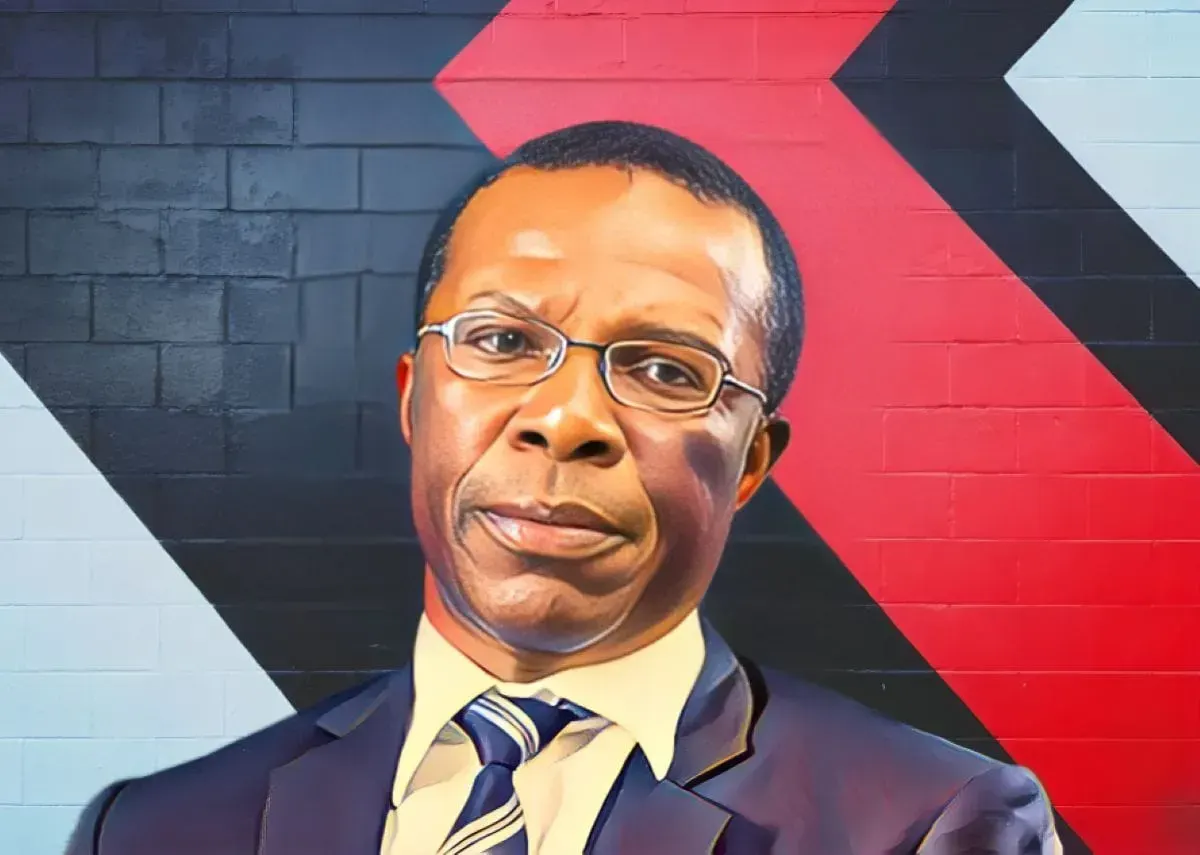
Cosmas Maduka was 14, trained as an automobile apprentice since the age of 12, and had just been dismissed without cause after closing his uncle's shop one afternoon to attend a church camp program. The N200 was not payment. It was a dismissal. In the arithmetic of humiliation, it was the kind of sum you hand a boy to make the ending official.
What the uncle could not have known was that the dismissal was the founding moment of one of Nigeria's most quietly formidable private conglomerates. Maduka did not go home. He did not complain. He took the N200, added what little else he had, and went to work. The Coscharis Group, which today employs thousands of people, operates in more than ten countries, holds the sole distributorship of BMW, MINI, Rolls-Royce, and Jaguar Land Rover in Nigeria, and has secured a $4 billion renewable energy project described as the largest green initiative in West Africa, began with that moment of rejection on a street in Lagos.
The boy from Jos who never finished primary school
Cosmas Maduka was born on Dec. 24, 1958, in Jos, in what was then Northern Nigeria, to Peter and Rose Maduka, an Igbo Christian family from Nnewi, Anambra State. His father died when he was four. There was no insurance, no savings, no relatives positioned to absorb the loss. His mother, Rose, was left to raise the children alone, and young Cosmas adjusted accordingly. He dropped out of primary school at age six to help sell akara, the fried bean cakes his mother made, on the streets of Jos. By age 12, his mother had sent him to Lagos to live with his uncle and learn a trade. That trade was automobiles. He spent the next two years learning the language of engines, spare parts, and Japanese import goods in his uncle's shop at Ebute Metta, earning enough trust to travel alone to Nnewi and Sokoto to make purchases on his uncle's behalf. He learned everything. Then he was dismissed with N200.
His first attempt at independence was a partnership. He teamed up with a friend named Dave and they opened a spare parts business called CosDave. It failed quickly and cleanly. The loss did not break him. In 1977, at age 19, he started again. He called the new company Coscharis, a compression of Cosmas and Charity, named after himself and the woman he would marry at 21, and he started it with N300 (about $0.22 at today's naira rate, and approximately $476 in 1977 dollars). The company focused on automobile spare parts, particularly Japanese components, in a market Maduka understood from his years of apprenticeship. He had no formal education. He had no family money. He had a name he would share with his wife sewn into a business, and he had the product knowledge of a man who had learned to read an engine before he learned to read a book.
The early years were not linear. Flush with ambition, Maduka went into importation. A consignment arrived wrong. The loss was heavy. His landlord padlocked his shop for unpaid rent. He borrowed, rebuilt, and kept going. That cycle, of catastrophe absorbed and forward motion resumed, would become the defining rhythm of his business life.
The 1982 government license that changed everything
Nigeria in 1982 was a country of restricted imports. The government controlled foreign exchange, issued import licenses to selected companies, and held enormous power over who could grow and who could not. That year, the federal government granted import permits to just ten motor companies. Coscharis was one of them. It is not clear, from available records, exactly what combination of merit, positioning, and timing put Maduka's name on that list. What is clear is what the license meant: access to a legitimate and scalable import pipeline at a moment when the Nigerian auto market was hungry and undersupplied.
Maduka moved fast. He used the license to build Coscharis Motors into a serious import operation, bringing in Japanese auto parts in volume and establishing the supply chain relationships that would become the foundation of everything that followed. By the late 1980s and through the 1990s, the company was no longer a parts shop. It was a full distribution business with growing relationships with global automotive manufacturers. The logic he applied was not complicated. Find what Nigerians need. Build the infrastructure to supply it reliably. Protect the relationship with the manufacturer.
The franchise relationships that emerged from that logic are the most commercially significant fact about Coscharis Motors. The company holds the sole distributorship in Nigeria for BMW, MINI, Rolls-Royce, Jaguar, and Land Rover. These are not brands that hand out exclusive national rights casually. Each franchise represents years of demonstrated operational competence, financial stability, and after-sales capability. Together, they give Coscharis Motors a commanding position in Nigeria's premium car market that no competitor has been positioned to crack. In 2015, Coscharis Motors became the first company to build an assembly plant for the Ford Ranger in Nigeria, producing the country's first locally assembled pickup truck under a partnership with Ford Motor Company. The plant, located in Awoyaya, Lagos, gave Maduka a manufacturing credential to sit alongside his distribution franchises and anchored his relationship with Ford's global operations. Renault subsequently confirmed its own partnership with the Awoyaya plant, with its country manager visiting in 2024 to inspect production lines running the Renault Duster and Logan models.
Forbes Africa estimated the Coscharis Group at $500 million in 2015 when Maduka appeared on its cover. Maduka himself has been more ambitious in his own accounting. Speaking in 2025, he said flatly that if Coscharis were a publicly listed company, he would be worth $5 billion. It is a striking claim, but not an implausible one. The group operates across automobiles, manufacturing, ICT, petrochemicals, agriculture, healthcare, mobility services, and consumer products, in a private structure that generates no public reporting obligations and shows no interest in external capital. The $500 million figure is a decade old. The $5 billion claim is Maduka's.
The farm, the $4 billion solar bet, and the man still building at 67
Maduka's diversification has always followed a simple thesis: go where Nigeria has a structural need that is not being met. In 2016, the Anambra State government approved 5,000 hectares of land for Coscharis Farms to cultivate rice. Nigeria imports billions of dollars worth of rice annually, making domestic production one of the most reliably commercial agricultural bets in the country. The farm was designed to generate more than 3,000 jobs on completion. That number alone makes it a meaningful contributor to rural employment in a state where agricultural land use has historically been fragmented and underutilized.
The most striking recent move is the $4 billion renewable energy project announced by Coscharis Technologies in October 2024, described at the time of its announcement as the largest green energy initiative in West Africa. The deal was finalized in Delhi, India, by Coscharis Technologies Managing Director Sunday Mukoro in partnership with international investors. The project is structured around solar energy deployment for government entities, banks, manufacturing companies, and small businesses, with residential access to follow. Maduka personally commended the deal and framed it as proof of Coscharis's capacity to lead in sectors well beyond its automotive roots.
That pivot matters. Nigeria's chronic power deficit has made energy reliability the single most expensive operational problem facing the private sector. A company that can supply solar power to businesses on structured payment terms is not entering a crowded market. It is solving a problem that no incumbent has solved at scale. Coscharis Technologies, founded in 1983 and initially focused on ICT hardware distribution, is now moving into the energy space with a capital commitment larger than the entire annual budget of several Nigerian states.
Maduka's personal philosophy has remained consistent through five decades of building. He attributes a significant portion of his operational discipline to his early exposure to Japanese business culture through the spare parts trade. He cites their values of commitment, humility, precision, and hard work as the foundation of everything Coscharis has become. He completed an executive education program at Harvard Business School in 2012, was conferred with the Commander of the Order of the Niger (CON) by President Goodluck Jonathan in the same year, and received an honorary doctorate from the University of Nigeria, Nsukka, in 2003.
He served as Access Bank director for 12 years, from 2000 to 2012, a tenure that gave him both financial governance experience and visibility at the intersection of banking and commerce. He chaired the Nigerian Table Tennis Federation for 16 years, leading the national team to four Olympic Games: Atlanta in 1996, Sydney in 2000, Athens in 2004, and Beijing in 2008. He provided N150 million (approximately $97,000 at current rates) in interest-free capital to Stanley Uzochukwu, who would go on to build the Stanel Group. Uzochukwu repaid it in full after a year without a formal agreement. Maduka later said he was not surprised. He said he knew what Uzochukwu was made of before he transferred a single naira.
His wife Charity, the woman whose name is embedded in the company's name and whose partnership shaped its early years, died in November 2021 at the age of 61. They had been married for four decades. He has continued to run the group. He has not changed the name. The woman whose name is in the company still is.
At 67, Maduka remains the president and CEO of a group with operations across more than ten countries, including a major automobile company in Japan. He preaches at church. He speaks at youth conferences. He tells the same story about the N200 dismissal, not because it is the most impressive part of his life, but because it is the truest. The man who dismissed him could not have imagined what that morning's decision would eventually produce. Neither could anyone else in Lagos in 1977. Certainly not the uncle who handed him N200 and told him to leave.
The intelligence satisfies curiosity. The paid briefings satisfy strategy.
Every Monday, Elite subscribers receive an Investor Memo breaking down the deal, the structure and the positioning behind the week's most consequential African wealth story - the kind of analysis that doesn't appear anywhere else.
Twice a month, a Wealth Intelligence brief profiles a single billionaire's holdings, cash flows and expansion pipeline in detail no public source matches.
→ Executive ($25/mo): Daily newsletter + Deep-Dive Reports
→ Elite ($75/mo): Everything above + Investor Memos + Wealth Intelligence + Quarterly Analyst Briefings
Subscribe now