

Table of Contents
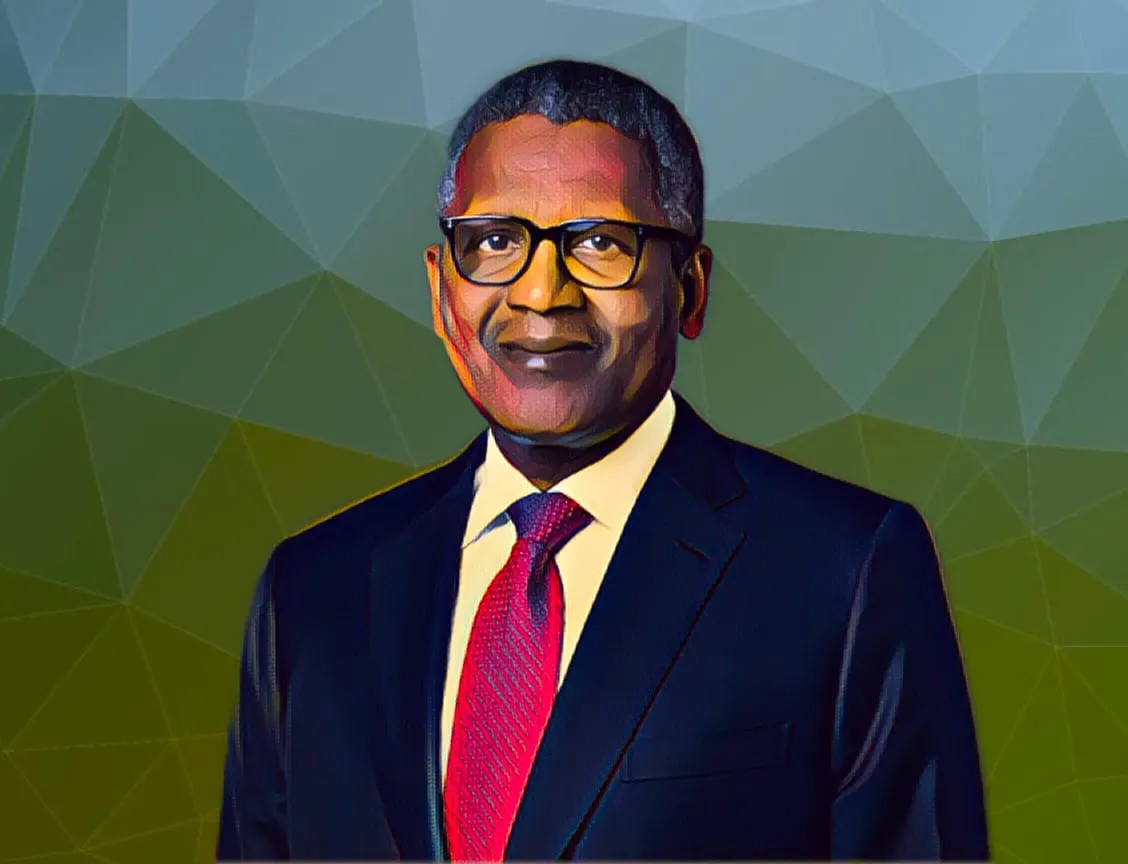
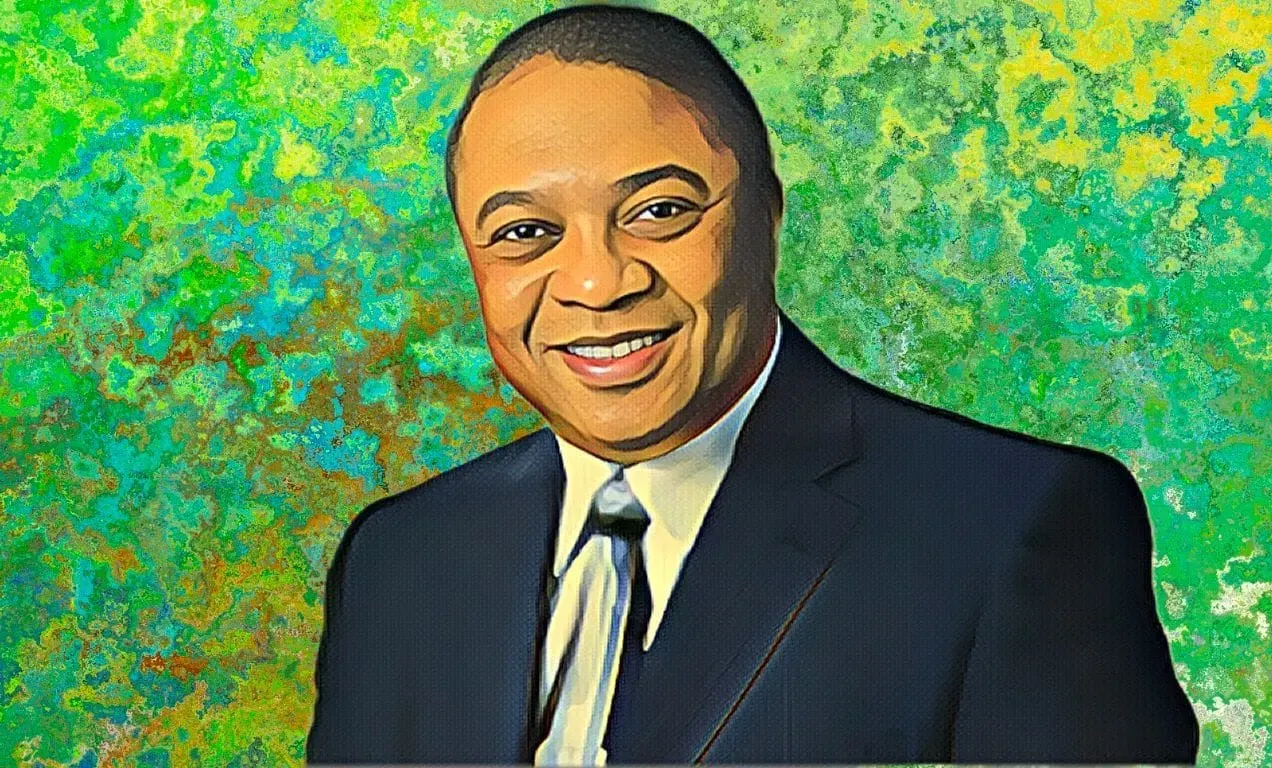
The year was 1970, and the Nigerian Civil War had just ended. Cletus Ibeto was 17 years old, broke, and standing at the starting line of what he intended to make a business. His only assets were a leather bag his brother had given him, a Biafran round-neck suit, and a parcel of APC analgesic tablets he had picked up from an abandoned hospital in the wreckage of what had once been Biafra. He sold the suit. He sold the bag. He sold the tablets. The combined proceeds, a sum of a few British pounds, became the startup capital for a commercial empire that today carries an estimated net worth of $3.8 billion (approximately N5.9 trillion).
That detail captures what makes him unusual even among the unusual cohort of self-made industrialists who emerged from Nnewi, Anambra State, Nigeria's so-called "Japan of Africa." It is not simply that he started with nothing. Plenty of people start with nothing. It is that he started with the wreckage of a war, converted it into something useful, and never stopped converting.
Cletus Madubugwu Ibeto was born on November 6, 1952, in Otolo, Nnewi, to Boniface Odochukwu and Lucy Ibeto. He was a boy who wanted desperately to go to school. He prepared his boxes. He packed his provisions. And then, on the morning he was supposed to leave, his father sat him down and told him that was not going to be his path. The 13-year-old was sent to Onitsha instead, to apprentice under an auto spare parts dealer named John Akamelu. He arrived wearing his school uniform. The other traders called him "schoolboy." His master used a rod to make clear the point that they were not in a classroom.
The scar he calls a trophy
Ibeto has said in interviews that the scar from his master's cane remains visible on his arm. He describes it as a trophy. That reinterpretation of humiliation as instruction runs as a consistent thread through everything he has built. The civil war cut short his apprenticeship in 1967, but he returned after peace was declared. By the early 1970s he had established the Ibeto Brothers Trading Company, importing and distributing automotive batteries and plastic motor accessories across Eastern Nigeria's recovering commercial arteries.
The moment that changed the trajectory from good to generational happened in the early 1980s, when President Shehu Shagari's government introduced an import licensing regime that effectively froze the movement of goods into Nigeria. Other importers paused and waited. Ibeto moved. He spent N3 million to secure an import license, then used it to bring in 65 containers of motor parts before the bureaucratic door shut on everyone else. By the time the Shagari government fell to a military coup and the borders closed entirely, Ibeto had a monopoly. He sold at a 500 percent markup. People queued to buy anyway. He has said that he used boxes to store the money because he could not move it to banks fast enough.
He stopped importing and started building
By March 1988, Ibeto had made a decision that separated him from thousands of Igbo spare parts dealers who had preceded him: he stopped importing and started manufacturing. His factory in Nnewi was complete, and the distinction mattered enormously.
That bet crystallized in Union Autoparts Manufacturing Limited, incorporated on June 2, 1987. Today it is one of Nigeria's leading manufacturers of lead-acid automotive batteries, with documented annual capacity of 300,000 units of lead-acid batteries and 120,000 units of sealed maintenance-free batteries, backed by an integrated lead and aluminum smelting operation on-site. The company has exported pure lead and antimonial lead to Europe, Asia and Africa since 1991, meaning Ibeto was building export markets out of southeastern Nigeria three years before democracy returned to the country.
In October 1996, he moved into petrochemicals. Ibeto Petrochemical Industries Limited operates as a blender of oil lubricants and producer of petroleum products for domestic and regional African markets. Its most strategically significant asset is a liquid storage facility at Apapa Wharf and Ibru Jetty Complex in Lagos, with over 60,000 metric tonnes of capacity, one of the largest petroleum product storage facilities in Nigeria. In a country where logistics and storage are perpetual constraints on commerce, the entity that controls the tank owns the conversation.
Ibeto Cement Company Limited, incorporated in 1997, grew into the operator of an ultra-modern bagging terminal in Port Harcourt with flat storage of 50,000 metric tonnes and a documented production capacity of 6,000 metric tonnes per day. Before Dangote Cement entered the market, crashed prices and deployed government-backed backward integration, Ibeto Cement was the dominant voice in southeastern Nigeria. In 2018, Ibeto and Chinese industrial group Sinomas announced plans for two full-scale manufacturing plants in Ebonyi State targeting 5 million tonnes per annum. As of early 2026 those plants had not come online, and the Nkalagu site remained the subject of reported disagreement between the Ibeto Group and the Ebonyi State Government.
The group's energy subsidiary, Ibeto Energy Development Limited, founded in 2008, became the center of his most serious legal controversy. In April 2023, the EFCC filed a 10-count fraud charge against Ibeto and two of his companies, alleging he obtained N4.8 billion from Sir Daniel Chukwudozie of the Dozzy Group through a fraudulent land transaction in Port Harcourt. In December 2024, the Lagos State High Court struck out all counts after Ibeto refunded N3.2 billion as part of an out-of-court settlement. The criminal matter is closed. The Dozzy Group has separately claimed $3 million remains outstanding. Ibeto denies that amount was ever received.
He got his certificate after the billions
To understand why Ibeto's biography is extraordinary even by the compressed standards of Nigerian self-made wealth, one must sit with the detail of his education. He was denied secondary school at 13. He became a billionaire without it. And then, at 48 years old, when most people of equivalent commercial achievement would have no remaining reason to prove anything academically, Ibeto sat for the West African Senior School Certificate Examination. He passed. He enrolled at the University of Nigeria, Nsukka, graduating with a bachelor's degree in accountancy at 54. He was not collecting a title. He was finishing something his father started by proxy in 1966, the day he packed that school box and was told to unpack it.
Innocent Chukwuma of Innoson Motors, Nigeria's first indigenous car maker, is among those who credit Ibeto with helping him survive the early years of building. "If you run into financial problems and go to him for help, he would help you out," Chukwuma said. "Ask any of the big business persons from Nnewi and they would tell you the same thing."
His philanthropy is rooted literally in the ground under Nnewi. He financed the construction of St. Cletus Catholic Church, Otolo, a 2,300-seat parish church, single-handedly. He donated a fully equipped administrative complex to the College of Health Sciences at Nnamdi Azikiwe University in 2022. He constructed a 20-kilometer road, installed transformers, sank boreholes and in May 2025 commissioned the Oduda flood control channel and reconstructed Ukwaka Bridge in Nnewi North. Traditional rulers conferred on him the title Omekannaya, meaning "leader of leaders." The federal government awarded him the Commander of the Order of the Niger in 2012.
At 73, Ibeto sits atop a conglomerate whose diversification maps the full arc of Nigerian industrialization. The cement ambitions remain unfinished. The legal disputes leave residue. But the battery factory still exports across three continents, the tank farms still anchor Lagos Harbour, and the man who arrived at his master's shop in a school uniform seven decades ago still lives in Nnewi, still building, still converting whatever the moment gives him into something that last.
The intelligence satisfies curiosity. The paid briefings satisfy strategy.
Every Monday, Elite subscribers receive an Investor Memo breaking down the deal, the structure and the positioning behind the week's most consequential African wealth story - the kind of analysis that doesn't appear anywhere else.
Twice a month, a Wealth Intelligence brief profiles a single billionaire's holdings, cash flows and expansion pipeline in detail no public source matches.
→ Executive ($25/mo): Daily newsletter + Deep-Dive Reports
→ Elite ($75/mo): Everything above + Investor Memos + Wealth Intelligence + Quarterly Analyst Briefings
Subscribe now