

Table of Contents
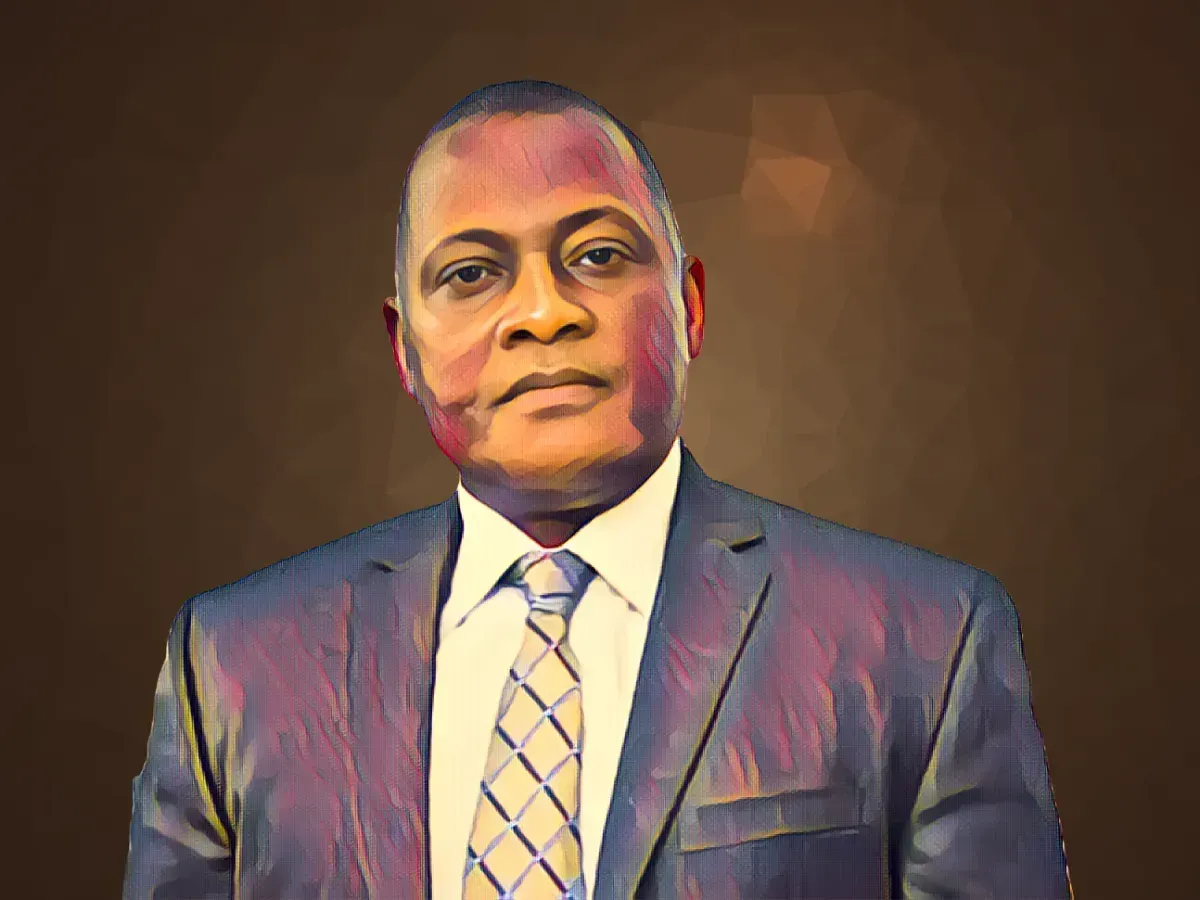
The insight that made Innocent Chukwuma arrive inside a 40-foot shipping container. In the early 1980s, the importers who supplied Nigeria's motorcycle dealers were shipping the machines fully assembled, and a single container could swallow only about 40 of them at a time. Chukwuma, a young spare-parts trader in the market town of Nnewi, looked at that arithmetic and saw waste where everyone else saw routine.
His fix was almost insultingly simple. Ship the motorcycles in pieces, pack as many as 200 into the same container, and bolt them back together after they cleared the port. The reassembled machines cost a fraction of the imports. He brought the price of a new motorcycle down from around 150,000 naira to roughly 60,000, undercut every rival on the street and watched his sales climb. The principle underneath the trick, that the real money lies in doing the assembly at home rather than paying someone abroad to do it, would become the single idea Chukwuma spent the next 40 years scaling.
He eventually aimed it at the hardest target in the Nigerian economy. Cars. No Nigerian had built a homegrown automobile industry that lasted, and the country's wealthy bought imported vehicles, as they always had. Chukwuma, a man who had never been allowed to study engineering, decided he would manufacture the thing everyone else only shipped in. That decision is why Innoson Vehicle Manufacturing exists and why he matters.
The container that taught him everything
Chukwuma was born on October 1, 1961, in Uru-Umudim, Nnewi, in what is now Anambra State, the youngest of six children of a civil servant father and a homemaker mother. He finished secondary school in 1978 with one ambition, to study engineering, and was turned away when he missed the admission cut-off. The rejection became the hinge of his life. Instead of a lecture hall, he got the Nnewi market.
He learned the trade as an apprentice to a motorcycle spare-parts dealer, then went into business with his elder brother Gabriel at a venture called Gabros International before striking out alone. In 1981, he began trading Honda parts under the name Innoson Nigeria Limited. Within a few years, he had pushed the semi-knocked-down import trick into a real assembly operation, was among the first to bring the Jingcheng motorcycle brand into the country, and by the mid-1990s had entered a joint venture with a Chinese manufacturer to assemble machines locally. Nnewi, the dense industrial town often called the Japan of Africa, handed him a ready-made ecosystem of fabricators and traders, the same soil that produced fellow Nnewi industrialists like Cletus Ibeto. Chukwuma was building inside a cluster that already believed Nigerians could make things.
Build the parts, then the car
What grew out of that first venture is a conglomerate that mirrors his localize-everything creed, and each arm exists to feed the next. Innoson Nigeria Limited, the original company, still makes motorcycles, tricycles and spare parts in Nnewi, the cash engine that funded everything after it. Innoson Technical and Industrial Company, in Enugu, turns out the plastics, household goods and industrial components a manufacturer would otherwise have to import, a deliberate move to own the inputs rather than buy them at someone else's margin. A separate tyres and tubes operation, also in Enugu, supplies the rubber. The structure is the philosophy made physical, each piece built so the next one does not depend on a foreign supplier.
The crown came in 2007, when Chukwuma founded Innoson Vehicle Manufacturing in Nnewi. Goodluck Jonathan, then the president, formally inaugurated the plant on October 15, 2010, and Nigeria had at last an indigenous automaker. IVM builds buses, trucks, pickups, sport utility vehicles and passenger cars engineered for Nigerian roads and Nigerian budgets, with a high share of components sourced or made at home. The company sold them to the buyers who set the tone for everyone else, the Nigerian Army, the police and a long line of state and federal agencies, turning government patronage into a proof of concept. Chukwuma likes to call automaking the "industry of industries" because a car plant drags steel, plastics, rubber, glass, electronics and engineering along behind it. That is the whole thesis of his career compressed into three words.
The scale is now real by the standards of Nigerian manufacturing. Innoson employs about 8,000 workers across the country and has said it plans to add another 2,000 as new lines come on, figures that make it one of the most important private employers in the country's industrial heartland. It has leaned for more than two decades on financing from the Bank of Industry, the state development lender, to bankroll that expansion, a partnership that has helped Innoson survive the brutal economics of building cars in a country that imports almost everything else.
The fortune no one can audit
The obvious question, how rich Chukwuma actually is, has no clean answer, and that absence is part of the story. Innoson is privately held, with no listed shares and no audited public accounts, which is exactly why Forbes has never ranked it. The magazine has said it leaves out privately held Nigerian fortunes precisely because there is no verifiable financial data to value them. Nigerian media routinely put his net worth at around $1.5 billion, but that number rests on estimate and repetition rather than disclosure, and it is better read as folklore than as fact.
What is not in doubt is the conviction behind it. Chukwuma is famous for refusing to be seen in any vehicle his own factory did not build, a piece of theatre that doubles as a sales pitch and a statement of belief. The man drives what he sells, and he sells what he drives, and in a country where status is measured in imported steel, that refusal is itself an argument.
That conviction has cost him fights. He spent years locked in one of Nigeria's most closely watched corporate legal battles, a dispute with Guaranty Trust Bank that wound through multiple courts over banking and loan claims and became a proxy war over whether a homegrown industrialist could stand up to one of the country's most powerful banks. He has also had to knock down rumors that threaten the brand, including reports in early 2026 that Innoson intended to move its operations to Ghana, which the company flatly denied, insisting Nigeria remains home. Both episodes fit the pattern of a builder who treats doubt about his project as something to be answered rather than ignored.
The same bet, in new forms
At an age when many founders coast, Chukwuma is still placing the same bet in new forms. In October 2025, he announced plans to build a compressed natural gas vehicle plant in Bayelsa State, aimed at buses, ambulances and utility vehicles and pitched as both a cleaner-transport play and a roughly 1,000-job jolt to a state better known for oil than industry. He has also moved to set up a tractor plant tied to the University of Nigeria, Nsukka, reaching for the farm-equipment market and the country's food-security anxieties in a single stroke.
The through-line never changes. Locate the factory where the jobs are needed, make the thing locally, and dare the establishment to keep importing. His community investment, as far as it is publicly known, runs along that same channel, less about grand-named foundations than about putting plants and payrolls in places the formal economy tends to skip. The job is the gift.
Chukwuma's current moment is the one his whole life has been arguing toward. Nigeria, squeezed by a weak naira and the rising cost of imports, is finally talking seriously about making more of what it consumes, and the man from Nnewi has been making that case, and the vehicles, for nearly two decades. The unresolved question is whether the country and its government will buy enough of what he builds to prove the thesis at full scale. The young man who was never admitted to engineering school has already built the industry. What he is waiting for now is for Nigeria to believe in it as completely as he does.
The intelligence satisfies curiosity. The paid briefings satisfy strategy.
Every Monday, Elite subscribers receive an Investor Memo breaking down the deal, the structure and the positioning behind the week's most consequential African wealth story - the kind of analysis that doesn't appear anywhere else.
Twice a month, a Wealth Intelligence brief profiles a single billionaire's holdings, cash flows and expansion pipeline in detail no public source matches.
→ Executive ($25/mo): Daily newsletter + Deep-Dive Reports
→ Elite ($75/mo): Everything above + Investor Memos + Wealth Intelligence + Quarterly Analyst Briefings
Subscribe now