

Table of Contents
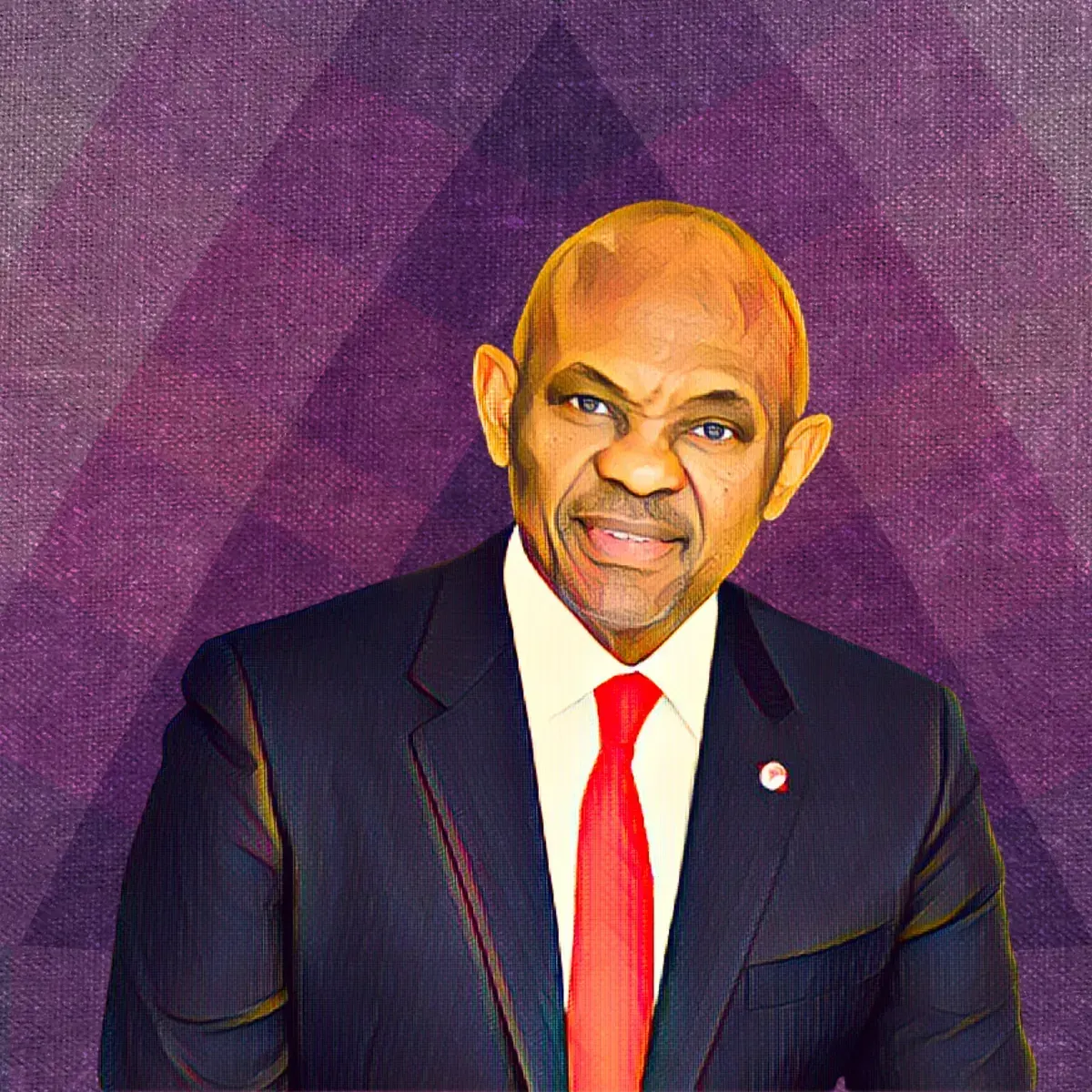
Tony Elumelu has said he got rich by luck. The statement came during a candid sit-down with popular YouTube interviewer Korty EO, filmed in Abuja just before the Tony Elumelu Foundation's 2026 cohort announcement, and it has ignited one of the more spirited public debates about success, meritocracy and opportunity in Nigerian business circles in recent memory.
"I got rich by luck," Elumelu said. "At times you don't come out best in class because you're the fittest or most energetic. Sometimes you need luck and I'm a product of luck." He added that success does not always go to the smartest or most capable person in any given room, and that timing, opportunity and circumstances beyond personal control play a defining role in outcomes that conventional success narratives tend to attribute entirely to individual effort and discipline.
The remarks landed with unusual force coming from Elumelu specifically. He is widely regarded as one of Africa's most relentlessly driven business leaders, a man who turned a struggling mid-tier bank, Standard Trust Bank, into United Bank for Africa through a merger in 2005, built it into a 20-country pan-African institution, and subsequently constructed one of the continent's most diversified investment holdings through Heirs Holdings across banking, energy, hospitality and real estate. He began his career during his National Youth Service Corps year in 1985 at Union Bank, where he worked as a bank salesman. He later joined Allstates Trust Bank and rose through successive roles to become managing director of Standard Trust Bank at 34. None of those moves look accidental from the outside. All of them appear to be the product of deliberate strategy, precise timing and relentless execution.
Which is why his luck admission caught so many people off guard.
The reaction across Nigeria's social media and business commentary space has been sharply divided. One school of thought, broadly sympathetic to Elumelu's framing, argues that he is displaying genuine intellectual humility, acknowledging the role of systemic factors, timing and opportunity in outcomes that are too often attributed entirely to individual brilliance. Nigeria's business environment is one in which structural advantages, including the right connections, the right moment and the right regulatory environment, can determine outcomes independently of merit. A man willing to acknowledge that reality publicly, this argument goes, is more trustworthy than one who claims to have built everything from nothing by sheer force of will alone.
The opposing school argues that Elumelu's self-description is false modesty that inadvertently diminishes the very real and very exceptional qualities that actually drove his success. He scored a 2:2 degree at the University of Jos and still had the confidence to apply to Union Bank at a time when such grades were considered disqualifying for the most competitive banking roles. He identified Standard Trust Bank as an undervalued platform and executed a strategy to acquire and merge it with UBA at a moment when most of his peers in Nigerian banking were consolidating conservatively. He committed his foundation to disbursing $100,000 grants each to 10,000 African entrepreneurs annually at a time when private philanthropy at that scale and that ambition was essentially non-existent on the continent. None of those choices look like luck.
Elumelu did not say luck was the only factor. He said it was a necessary one. The distinction is important. His full argument appears to be that preparation and hard work create the foundation, but that luck — meaning the arrival of the right opportunity at the right moment — is what converts that foundation into exceptional outcomes. That is a less provocative position than his headline quote suggests, and it is consistent with a longstanding thread in his public commentary about the role of the African business environment in shaping what individuals can achieve.
He also used the interview to urge aspiring entrepreneurs not to allow setbacks or adversity to derail their ambitions, stressing that persistence and a disciplined work ethic remain essential regardless of luck's role. The Korty EO interview, filmed as part of the Flow with Korty series, has accumulated significant viewership since its release, with Eniola Olanrewaju Korty EO, the content creator and filmmaker behind the format, receiving widespread credit for drawing one of Elumelu's more unguarded public conversations in years.
Whether Elumelu is right about luck may ultimately be less important than the conversation his admission has started. In a country where success is often attributed either entirely to hard work or entirely to connections, a prominent billionaire volunteering that the truth is somewhere more complicated is itself an unusual contribution to how Nigerians think and talk about wealth.
The intelligence satisfies curiosity. The paid briefings satisfy strategy.
Every Monday, Elite subscribers receive an Investor Memo breaking down the deal, the structure and the positioning behind the week's most consequential African wealth story - the kind of analysis that doesn't appear anywhere else.
Twice a month, a Wealth Intelligence brief profiles a single billionaire's holdings, cash flows and expansion pipeline in detail no public source matches.
→ Executive ($25/mo): Daily newsletter + Deep-Dive Reports
→ Elite ($75/mo): Everything above + Investor Memos + Wealth Intelligence + Quarterly Analyst Briefings
Subscribe now