


Table of Contents
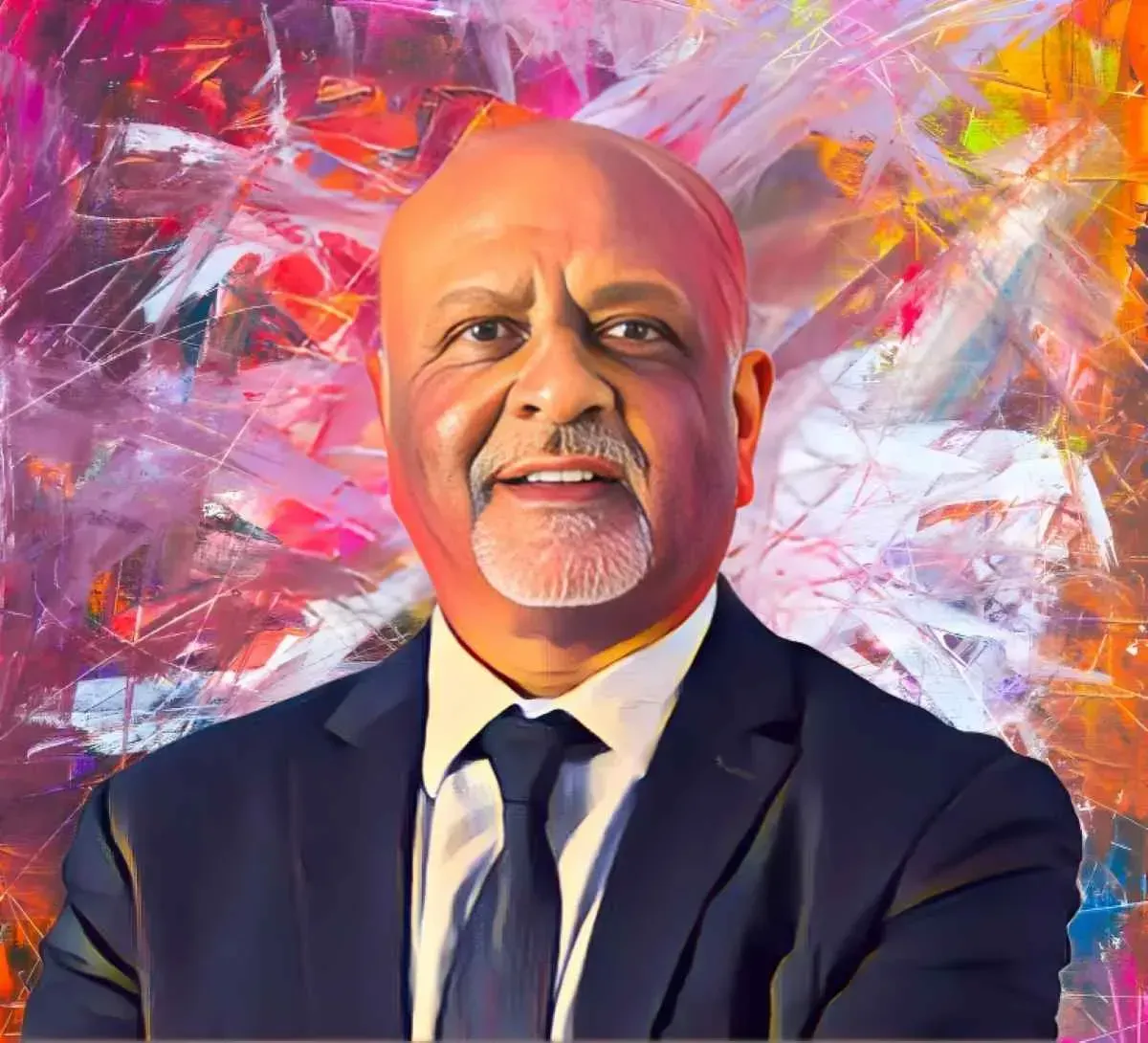
When Chandrakanth Chauhan arrived at Sefalana Holding Company in 2002, the business he was joining had a market capitalization of BWP64 million, equivalent to just $4.87 million. It was a sprawling, underperforming retail and wholesale operation that had been the first company ever to list on the Botswana Stock Exchange, and that had spent much of the intervening decades doing precisely nothing remarkable with that historic distinction. There was no controlling shareholder to impose discipline, no clear strategic direction, and no particular urgency in a business that had been coasting for too long on its founding reputation. The man arriving to fix it was a Zambian-born chartered accountant who had trained with KPMG in the United Kingdom, qualified with the Institute of Chartered Accountants of England and Wales, and decided to build his career not in London or Lusaka but in Gaborone. He had made his choice. The work was now the thing.
Twenty-three years later, Sefalana closed its 2025 fiscal year with revenue exceeding $800 million, the highest in the company's 51-year history, a 15 percent increase from the $695.7 million recorded the year before. The market capitalization that stood at $4.87 million when Chauhan arrived had grown to BWP4.01 billion at April 2026 share prices, making Sefalana the 11th most valuable stock on the Botswana Stock Exchange and representing a compound appreciation that has outperformed most listed consumer retail companies on the African continent across that period. He owns 5.64 percent of the company's shares, worth BWP226.15 million at current valuations, making him Sefalana's largest individual shareholder and the single person most directly aligned with the value of everything he has built. His annual compensation from Sefalana is BWP19.83 million, approximately $1.48 million, structured with 27.2 percent as salary and 72.8 percent as bonuses, company stock and options, a structure that concentrates his personal financial interests in the performance of the business rather than in the certainty of a fixed paycheck.
That alignment is not accidental. It is the organizing principle of a career that has never separated the question of personal wealth from the question of institutional performance. Chauhan is not a founder who built a company from inspiration and family capital. He is an operator who arrived at an institution that was failing, diagnosed why, rebuilt it from the inside, and accumulated equity at every stage of the improvement. The wealth he has built is, in the most literal sense, the residual of competence applied consistently over two decades.
The turnaround nobody expected to last
Chauhan received his undergraduate degree from the University of Zimbabwe before moving to the United Kingdom, where he qualified as a chartered accountant with KPMG and earned fellowship of both the Institute of Chartered Accountants of England and Wales and the Botswana Institute of Chartered Accountants. He is a Chartered Accountant from the Institute of Chartered Accountants of England and Wales, and a Fellow Member of BICA for over 20 years. The KPMG years gave him the analytical tools that a retail turnaround requires: the ability to read a balance sheet for what it is hiding rather than what it is reporting, to identify the gap between operational capacity and financial performance, and to construct the sequence of interventions that closes that gap without destroying the institutional goodwill that makes a consumer brand worth saving.
He joined Sefalana Cash and Carry as director in 2003 and became Group Managing Director the following year, taking full operational control of a business that needed both structural reform and strategic direction simultaneously. The restructuring he undertook in those early years converted a diffuse, poorly governed collection of retail assets into a disciplined operating company with clear segment reporting, cost management systems and a regional expansion logic that the previous administration had never articulated. The market capitalization's growth from $4.87 million in 2004 to its current level is the most concise summary of what that restructuring produced, but the number understates the operational depth of the transformation.
Sefalana's business model as Chauhan found it was centered on cash and carry wholesale and basic supermarket retail in Botswana. What he built it into was a regional multi-format consumer goods operation across six territories. The group now operates supermarkets under the Sefalana Shopper brand, cash and carry outlets under the Sefalana Cash and Carry brand, hypermarkets under Sefalana Hyper, convenience stores and liquor outlets, with the retail division accounting for approximately 93.6 percent of group revenue. The geographic expansion moved in deliberate stages. Sefalana first expanded outside Botswana in 2014 when it opened its first store in Katima Mulilo, Namibia, and then in July 2014 purchased the Metro Group of 12 Namibian stores. Lesotho followed. Zambia followed. In May 2020, Sefalana entered the Australian market through an equity stake in the Seasons Group, which operates 10 IGA-branded stores across Brisbane, extending the group's geographic footprint to six territories across three continents. The Australian investment is equity-accounted as an associate, reflecting significant influence rather than full operational control, and provides Sefalana with both foreign exchange diversification and a beachhead in a high-income consumer market.
The Namibian operation represents the second-largest revenue contributor after Botswana, and reflects Chauhan's willingness to invest in markets where Sefalana's wholesale and distribution capabilities translate directly into margin advantage. Lesotho and Zambia are smaller contributors but provide the regional depth that converts a Botswana-focused retailer into a genuinely pan-African consumer goods platform.
The manufacturing layer that separates Sefalana from its competitors
The dimension of the Sefalana business that most distinguishes it from a conventional southern African food retailer is the manufacturing division, which represents approximately 3.9 percent of group revenue but which carries strategic significance well beyond its revenue share.
Sefalana's food processing and manufacturing operations, run through its Foods Botswana subsidiary, include the production and transformation of sorghum, soybeans, corn and malt, as well as the manufacturing of toilet soaps, laundry soaps, dishwashing liquid and edible oil. These are not peripheral activities. They represent Chauhan's most deliberate move toward vertical integration: a retailer that manufactures the commodity goods it sells through its own stores reduces its dependence on third-party suppliers, controls the quality and cost of its most price-sensitive categories, and builds a manufacturing capability that can be extended as the regional distribution network grows. In a market where Botswana's retail sector has historically been dominated by South African brands and supply chains, Sefalana's domestic manufacturing capability is both a commercial differentiator and a structural cost advantage. Foods Botswana contributed 4 percent of group turnover and 14 percent of group profit before tax in the most recent reporting period, a margin contribution that comfortably exceeds its revenue share, precisely what a vertical integration play should deliver.
The group's diversification extends further. Sefalana's commercial motors division operates MAN, TATA and Honda dealerships, adding an automotive sales and servicing capability that generates revenue independent of the grocery retail cycle. The Sefalana Properties division owns and manages commercial and industrial real estate assets across Botswana, Zambia, Namibia and Lesotho, providing rental income and store-adjacent land holdings that create long-term asset value. The group has also launched a Puma-branded fuel filling station at its flagship Setlhoa store, adding another non-grocery revenue line to the portfolio.
The record 2025 fiscal year result, with net profit rising from $24 million to $30.5 million on the back of strong growth in the FMCG and manufacturing divisions, reflected Chauhan's disciplined approach to cost management in a region where input cost inflation and currency volatility have squeezed retailer margins throughout the post-pandemic period. The result was achieved across a workforce that Sefalana's 2025 annual report places at more than 8,100 employees, 938 more than the prior year, with an almost equal gender split, making the group one of Botswana's largest private sector employers.
The boardroom portfolio and the institutional life beyond retail
The commercial life Chauhan has built around his Sefalana leadership reflects the same disposition toward institutional improvement that defined the turnaround itself. He does not collect directorships as status markers. He takes positions where his operational and financial expertise adds specific value and where the institution's improvement is the measurable outcome.
He served as chairman of Botswana Life Insurance Limited from 2020 to 2025, Botswana's largest life insurer, a position that gave him oversight of a financial services institution with a policyholder base spanning a significant proportion of Botswana's formal workforce. He served as Lead Independent Non-Executive Director of Botswana Insurance Holdings Limited from 2009 to 2023, the listed holding company that controls Botswana Life, and as chairman of the Botswana Insurance Fund Management. Across these positions, Chauhan built a parallel expertise in Botswana's financial services sector that gave him insight into capital allocation, governance and institutional risk management practices of the country's largest financial institutions, none of which is irrelevant to running a listed retail company whose own governance standards are scrutinized by the same institutional investor base.
His total annual compensation of approximately $1.48 million places him above the average for companies of comparable size on the Botswana market, a positioning that Sefalana's board has justified on the basis that his compensation has increased in line with company earnings growth. The structure, heavy on equity-linked bonuses, means that in a year when Sefalana posts record revenue and profit, Chauhan's compensation rises accordingly, and in a year when margins compress, as they did in the first half of the 2026 fiscal year, his variable pay reflects that compression.
The half-year pressure and what the numbers actually mean
For the six months ended October 26, 2025, Sefalana reported revenue of BWP5.82 billion from BWP5.36 billion a year earlier, but net income fell to BWP138.6 million from BWP156.4 million. Basic earnings per share from continuing operations declined to 0.552 pula from 0.624. The result illustrates the structural challenge facing every southern African food retailer at the current moment: rising turnover paired with tighter profitability as input costs, competition and the cost of regional expansion weigh simultaneously on margins. The Australian associate posted a loss of BWP7.4 million during the period, reflecting strain in the Brisbane economy, with Sefalana expecting the operation to break even by the end of the 2027 financial year. The half-year pressure is a cycle management problem in a business with a 20-year record of managing cycles, not a strategic crisis. But the margin compression is real and the competitive intensity across southern Africa, from South African retailers pushing into Botswana and Namibia, is not diminishing.
Sefalana also holds a strategic 30 percent equity stake in UIH South Africa, converted from preference shares, a position that extends the group's South African market exposure through a financial investment rather than direct retail operations and that underscores Chauhan's broader ambition to build Sefalana into a regional holding company rather than a purely operational retailer.
The company Chauhan joined was worth $4.87 million. His own stake in the business he rebuilt is currently worth BWP226.15 million. The difference between those two numbers is the arithmetic of what two decades of operational discipline, institutional knowledge and patient equity accumulation produces in a market that most international investors have never heard of and that most southern African peers have consistently underestimated. Botswana has not yet produced a dollar billionaire. Chauhan has not crossed that threshold. But in the specific question of what a chartered accountant from Zambia with a KPMG qualification and a willingness to bet his career on a struggling Gaborone retailer can accomplish across 23 years of sustained, unglamorous institutional improvement, the answer is $800 million in annual revenue, six territories, a Brisbane grocery chain, and a market capitalization that has grown more than 800 times since he arrived.
The intelligence satisfies curiosity. The paid briefings satisfy strategy.
Every Monday, Elite subscribers receive an Investor Memo breaking down the deal, the structure and the positioning behind the week's most consequential African wealth story - the kind of analysis that doesn't appear anywhere else.
Twice a month, a Wealth Intelligence brief profiles a single billionaire's holdings, cash flows and expansion pipeline in detail no public source matches.
→ Executive ($25/mo): Daily newsletter + Deep-Dive Reports
→ Elite ($75/mo): Everything above + Investor Memos + Wealth Intelligence + Quarterly Analyst Briefings
Subscribe now