


Table of Contents
In November 2006, on the campus of the University of Dar es Salaam, the President of Tanzania, Jakaya Kikwete, stood before a gathered crowd that included a large contingent of Botswana professionals and formally opened a shopping complex that had cost $80 million to build on 40 hectares of university land in Ubungo, along Sam Nujoma Road. The project, named Mlimani City, was Tanzania's first indoor air-conditioned shopping mall, anchored by Game and Shoprite, more than 80 percent leased at opening, and the largest single foreign direct investment in Tanzanian retail real estate at that time. The man who had conceived it, financed it through the Botswana International Financial Services Centre, supervised its construction and stood at the launch was not a South African developer or a multinational real estate fund. He was a Gaborone businessman who had built his family conglomerate from scratch, spotted an opportunity in a Tanzanian city that everyone else was underestimating, and backed his judgment with $80 million of capital. President Kikwete, in his remarks, described the investment as evidence that Botswana was "an economic powerhouse in this part of the world" and expressed hope that more Botswana investors would follow Abdoola's example. Two decades later, nobody has quite matched the ambition of that original bet.
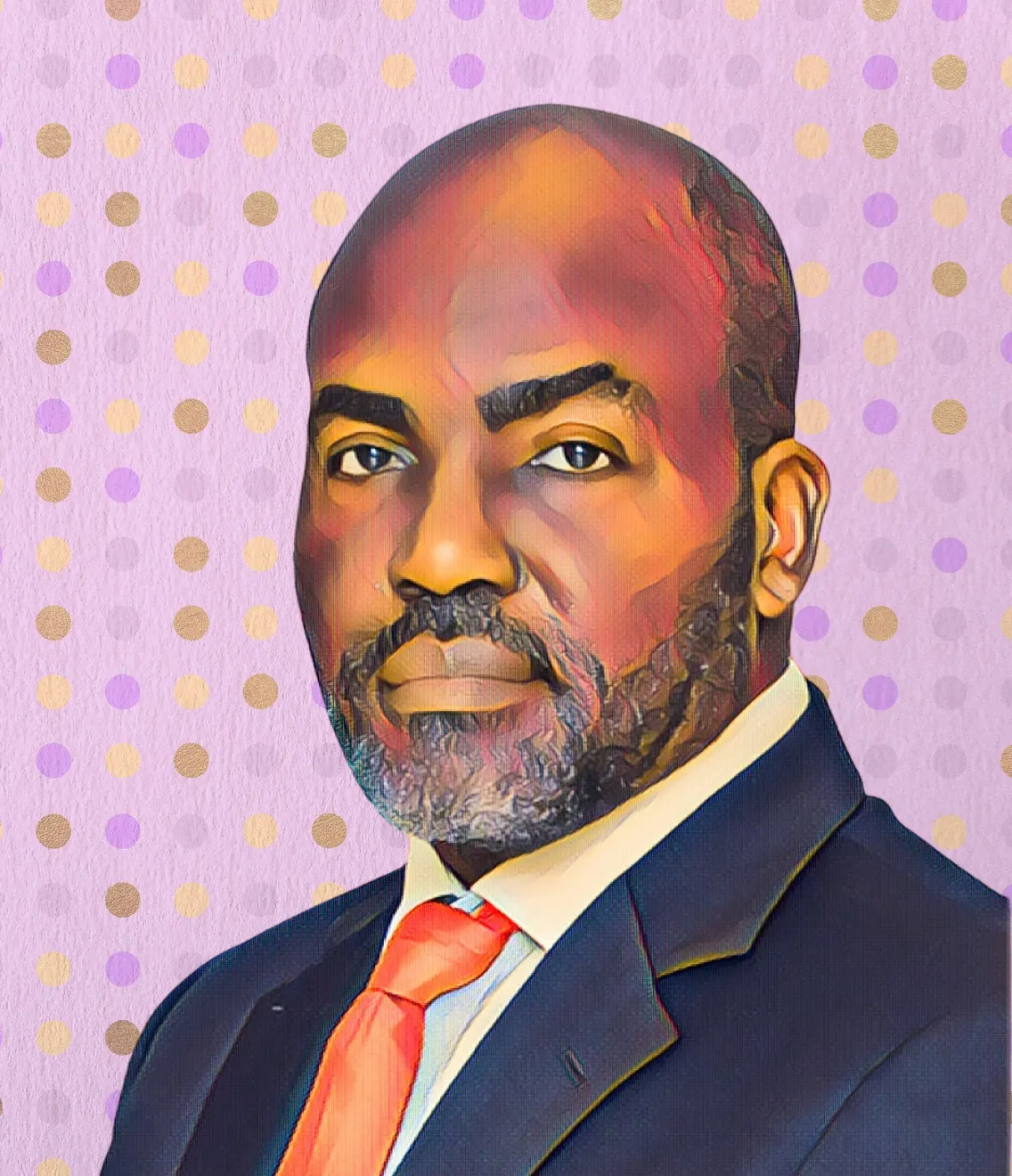
Gulaam Husain Abdoola has been the executive chairman of GH Group, his family-owned conglomerate, since 1986, a tenure that spans four decades of Botswana's economic transformation from a diamond-dependent frontier economy into the most stable and consistently growing country in southern Africa. The group he has built across those decades operates across property development, retail, wholesale, restaurants, hospitality, diamond supply, tyres, spare parts and petroleum retail, a breadth of commercial activity that reflects both the diversification logic of a man who learned early that no single sector is safe forever and the specific character of a Botswana market where the most successful conglomerates have always done several things simultaneously. GH Group is the engine behind everything else in the Abdoola commercial story. It is the vehicle through which properties are identified, developed and initially held before being sold or transferred into the listed structure. And it is the entity through which he has built the personal equity stake that makes him one of Botswana's wealthiest individuals.
Abdoola founded Turnstar Holdings in 2001, listing it on the Botswana Stock Exchange in 2002 as a property loan stock company, a structure common in southern African real estate markets that combines equity and debenture returns for investors and provides the developer with a listed vehicle through which to attract institutional capital for acquisitions. The structure gave Abdoola a platform that GH Group alone, as a private family conglomerate, could not provide: access to the Botswana institutional investor base, the governance disciplines of a listed company, and the ability to acquire assets at a scale that private balance sheets find difficult to sustain. The combination of GH Group as developer and Turnstar as listed acquirer has been his fundamental commercial architecture for 25 years.
The model that turned construction risk into institutional equity
The Abdoola model has been consistent across two decades and clearly documented in an independent governance review conducted by Desai Law Group. A report by that firm found that it has been the case over the past two decades that a property project is developed throughout the construction risk period by GH Group and is then sold by GH Group to Turnstar. The examples cited by DLG include the Nzano Centre in Francistown and Mlimani City in Dar es Salaam: both were developed by GH Group under Abdoola's supervision, with GH bearing the construction risk and execution complexity, and then acquired by Turnstar once the asset was producing income. DLG found that it was agreed by the board that Abdoola was to disclose fully to it any project he was to undertake at GH Group or otherwise, whether or not there was any interest by Turnstar in the relevant project, and that his role as deal originator for Turnstar was formally recognized as part of his mandate as managing director.
The commercial logic of this model is straightforward and, when executed with discipline, extremely powerful. GH Group absorbs the development risk, the construction uncertainty, the permitting delays and the cost overruns that make greenfield property development the most financially dangerous segment of the real estate value chain. Once the asset is stabilized, tenanted and generating predictable rental income, it is sold to Turnstar at a valuation that compensates GH for the development work and gives Turnstar a quality income-producing asset without the construction exposure. Abdoola sits on both sides of that transaction as the largest shareholder in Turnstar and as the executive chairman of GH Group, which is why full disclosure and board approval are procedurally essential, and why the governance review that examined the arrangement was careful to note that all transactions were conducted on a disclosed basis with board and, where required, shareholder approval.
Turnstar's current portfolio spans eight properties in Botswana, four in Tanzania and one in Dubai, covering retail malls, office buildings, industrial space, residential estates and conference facilities across three continents. In Botswana, the crown jewel is Game City Mall in Gaborone, the largest shopping center in Botswana by gross lettable area and one of the most heavily trafficked retail destinations in southern Africa. Turnstar's Botswana portfolio includes seven properties with 265 active tenants and 96,730 square meters of total gross lettable area valued at BWP1.3 billion, anchored by Game City but including Nzano Mall in Francistown, the Gaborone International Commerce Park, and Tapologo Estate, a residential development of 50 units with shared amenities in Gaborone, as well as 14 residential units in Mogoditshane.
The $80 million Tanzania bet and how it changed the portfolio
The Mlimani City investment is the most consequential single decision of Abdoola's commercial life and the one that most clearly illustrates his willingness to operate at a scale and in a geography that his Botswana peers were not yet considering.
In 2004, GH Group entered into a 50-year lease agreement with the University of Dar es Salaam to develop 40 hectares of land along Sam Nujoma Road in Ubungo, a location on the western edge of Dar es Salaam's expanding urban footprint that was then underdeveloped but that Abdoola identified as correctly positioned for the retail and office demand that the city's growing middle class would generate. The total initial investment was $80 million, financed through the Botswana IFSC, making it one of the largest Botswana-originated investments in the East African market at that time. Construction produced a 19,000-square-meter indoor mall, a conference center, an office park and residential development, with Shoprite and Game as anchor tenants and Truworths, Vodacom and multiple local retailers filling the remainder. The mall opened in November 2006 to strong demand and was over 80 percent leased at launch.
In 2012, Turnstar acquired Mlimani City from GH Group for $77 million, completing the transfer from GH's development balance sheet into Turnstar's income-producing portfolio. The transaction followed the established model precisely: GH developed the asset, absorbed the construction and stabilization risk, and sold a mature, tenanted property into the listed vehicle at a premium to construction cost. The $100 million expansion project that followed, adding villas, banking areas, a kids' corner and hotel components, extended Mlimani City into a multi-purpose complex of approximately 30,000 square meters, cementing its position as Tanzania's premier retail and commercial destination and the single most valuable asset in the Turnstar Tanzania portfolio.
The Dubai presence, held through Turnstar Investment Limited, adds international diversification to a portfolio that was previously concentrated in two southern and East African markets. The UAE investment provides exposure to a real estate market that operates in a different currency, interest rate and economic cycle from the BWP and TZS-denominated assets in Botswana and Tanzania, reducing portfolio volatility at the consolidated level.
The governance scrutiny, the 22 percent profit dip and the handover
Abdoola's 25-year tenure as Turnstar's managing director has not been without institutional friction. The governance review conducted by Desai Law Group, which examined the relationship between GH Group and Turnstar and Abdoola's dual role in both entities, found the arrangement acceptable under full disclosure principles, but the review itself was evidence of shareholder concern about a structure in which the managing director of a listed company is simultaneously the founder and executive chairman of its primary property development counterparty. At Turnstar's most recent interaction with shareholders before the succession announcement, some expressed a desire for Abdoola to step down. The incoming board chair described the ask as a fair one.
In April 2026, Turnstar warned the Botswana Stock Exchange that pretax profit would fall 22 percent to BWP146.6 million for the year ended January 31, down from BWP188.6 million the year before, driven by weaker property valuations in the Botswana market. The headline number was softened by the underlying operating data: operating profit slipped just 0.78 percent, indicating that rental income was holding, tenants were paying and the portfolio's fundamentals remained intact. The profit fall was primarily a function of asset valuation methodology, which applies discounted cash flow models sensitive to prevailing interest rates and vacancy assumptions, rather than a deterioration in the group's trading performance.
Abdoola also announced he would step down as managing director at the end of June 2026, with long-serving chief financial officer Comfort Rankgomo in line to take over. The timing of the exit, against a backdrop of a profit warning and the institutional scrutiny of the dual-role arrangement, was not ideal optics. The substance was more straightforward: a man who has run the same company for 25 years, taking it from a blank page to a $115 million listed entity with assets across three continents, had decided it was time to step back from the operational role while retaining his equity position and his platform at GH Group.
The Memon community, the charity work and what comes next
The philanthropic dimension of Abdoola's public life reflects the cultural and religious commitments that have shaped his identity across five decades of Botswana commercial life. He serves as chairman of the Botswana Muslim Association, as a director of the Masiela Trust Fund, and as trustee and secretary general of the World Memon Organization, an international charity organization rooted in the Memon community, a South Asian Muslim trading community with historical roots in the Sindh and Gujarat regions whose members have been among the most commercially active in eastern and southern Africa since the colonial era. The World Memon Organization position is not a nominal appointment. It connects Abdoola to a global network of Memon businessmen and philanthropists whose commercial and community relationships span the UAE, the United Kingdom, South Africa, East Africa and the Indian subcontinent. The network has been part of the fabric of how GH Group accesses financing, partnership opportunities and regional market intelligence across the territories where Abdoola has built assets.
He previously served as chairman of Stanbic Bank Botswana, as chairman of McCarthy Retail Botswana, which comprised Game Discount World, Bee Gee, Savelles, Happy Homes, Bears, Guys and Girls and Bonus Building Supplies, and as chairman of Prefsure Insurance, a set of institutional board positions that extended his influence across Botswana's retail, financial services and insurance sectors and gave him oversight experience of institutions considerably larger than GH Group at the time he joined their boards.
His 80-million-share position in Turnstar, held through GH Group, with Turnstar's market capitalization standing at $115.3 million as of the most recent BSE data, places the value of his listed stake at approximately $12 to $14 million depending on the prevailing exchange rate and share price at any given date, alongside the unlisted value of the GH Group conglomerate, which spans operating businesses across retail, hospitality, petroleum, automotive parts and diamond supply that have never been publicly valued as a combined entity.
What Abdoola built across 40 years of GH Group and 25 years of Turnstar is not measurable in a single net worth figure because the most valuable parts of it are not listed. Game City Mall in Gaborone has shaped the retail geography of Botswana's capital for two decades. Mlimani City in Dar es Salaam introduced a generation of Tanzanian shoppers to air-conditioned indoor retail at a moment when the country's commercial infrastructure was not yet able to produce that investment domestically. The Gaborone CBD office tower that GH Group built as the first private development at that site was, in Abdoola's own words at the time, intended to set a standard for what Botswana could aspire to commercially. That ambition, stated in 2007 and evident in every major transaction of his career, is the thread that runs through the whole story. He is stepping back from the managing director's chair. He is not stepping back from the work.
The intelligence satisfies curiosity. The paid briefings satisfy strategy.
Every Monday, Elite subscribers receive an Investor Memo breaking down the deal, the structure and the positioning behind the week's most consequential African wealth story - the kind of analysis that doesn't appear anywhere else.
Twice a month, a Wealth Intelligence brief profiles a single billionaire's holdings, cash flows and expansion pipeline in detail no public source matches.
→ Executive ($25/mo): Daily newsletter + Deep-Dive Reports
→ Elite ($75/mo): Everything above + Investor Memos + Wealth Intelligence + Quarterly Analyst Briefings
Subscribe now