

Table of Contents
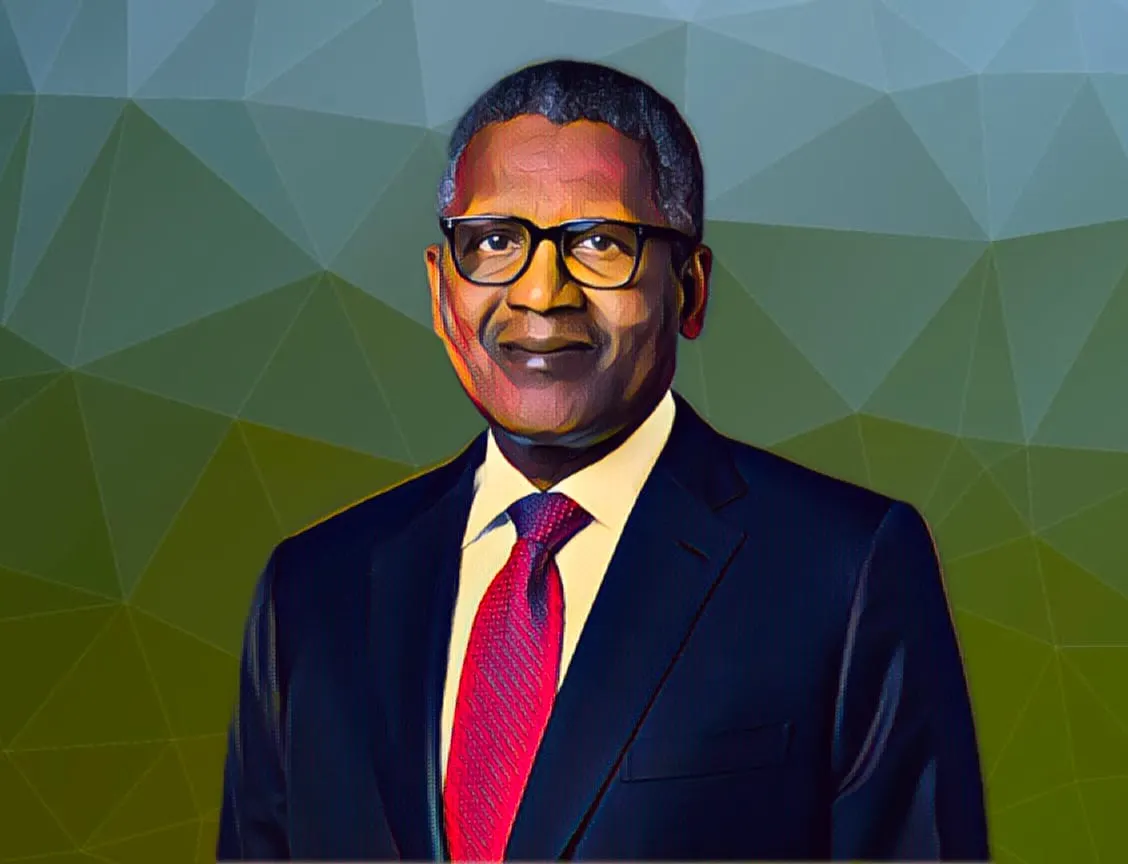
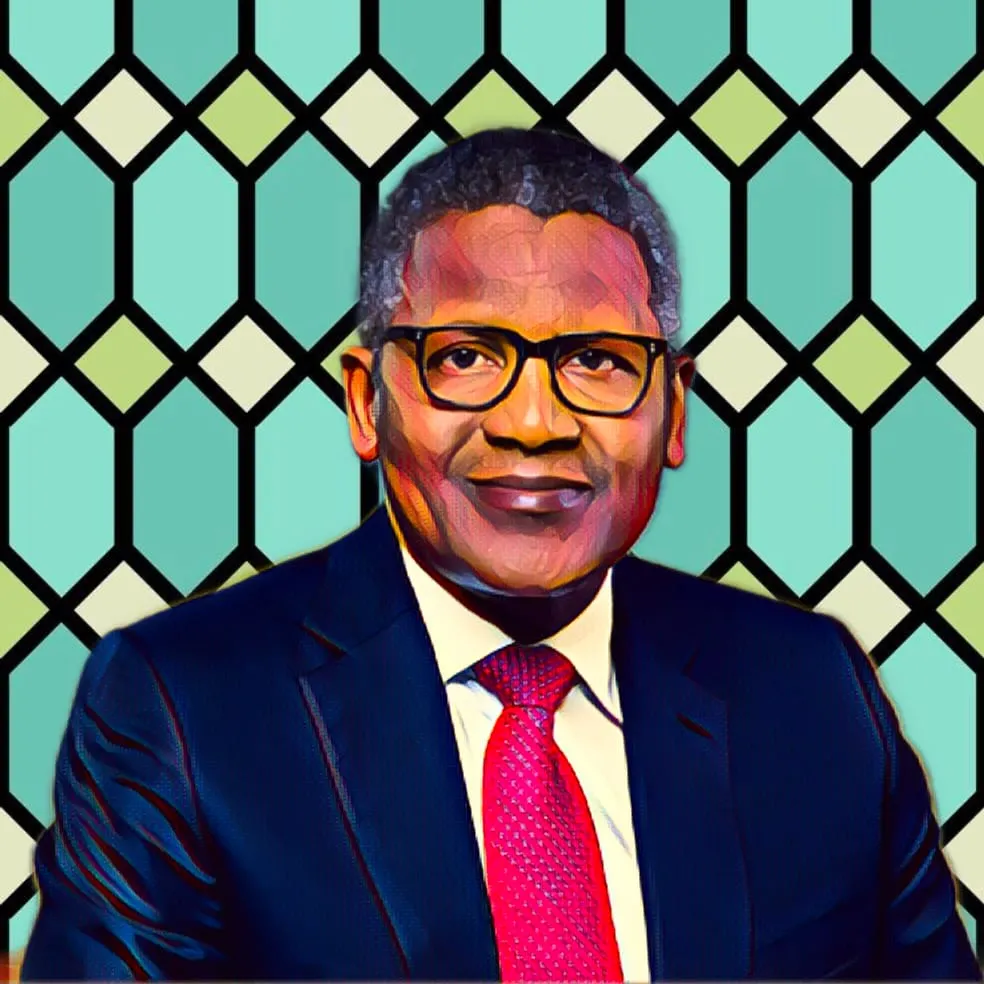
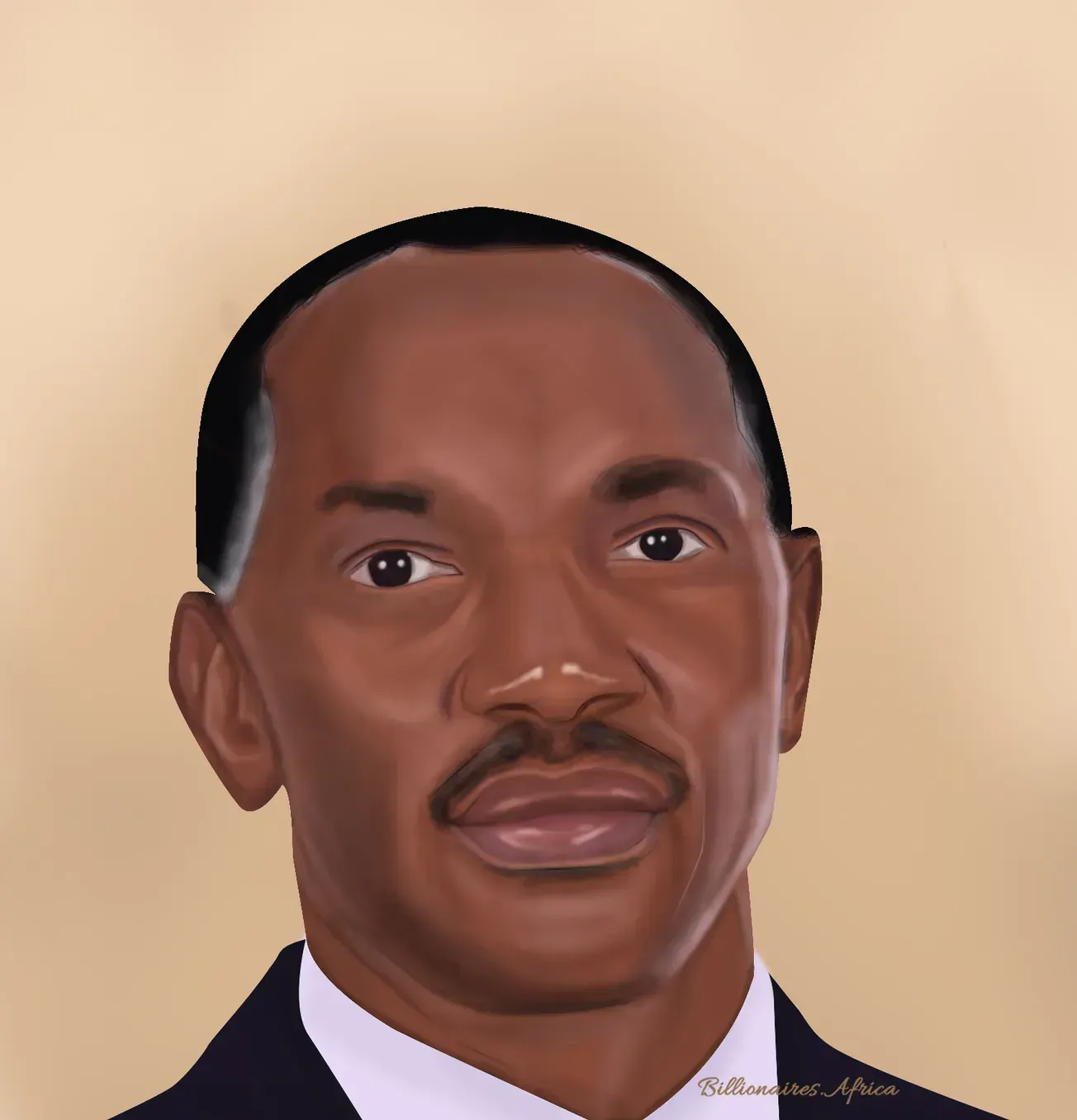
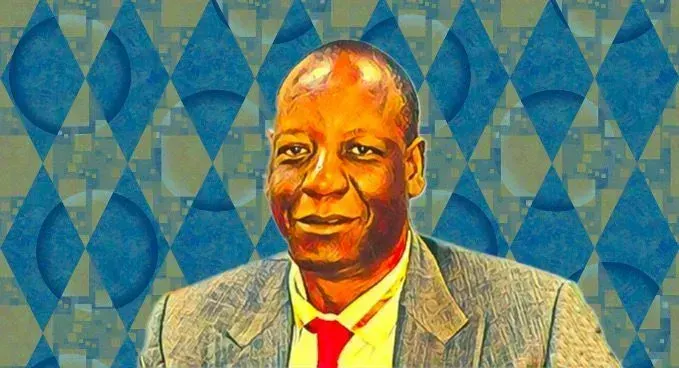
In March 2024, in a ceremony in Gabon, President Brice Clotaire Oligui Nguema broke ground on the Andem International Airport, a FCFA220 billion project, equivalent to $370 million, that will serve as one of Central Africa's primary aviation hubs once completed before 2030. The company leading the development was EBOMAF Group, the Burkinabe construction and infrastructure conglomerate founded by Mahamadou Bonkoungou. Standing at that groundbreaking, Bonkoungou was representing something that had not existed 36 years earlier: a privately held West African construction company capable of winning and executing a $370 million airport commission on a foreign government's most strategically sensitive piece of infrastructure. He had built that company with a baccalaureate, no university education, a father's example, and a talent for finding the angle nobody else was looking at.
The father's example is the place to begin. Mahamadou Bonkoungou was born on May 23, 1966, in Dédougou, the capital of Burkina Faso's Boucle du Mouhoun region, a Sahelian province that produces cotton and cattle and exports most of its talented young people to Ouagadougou. His father was known locally as Zind-Naba, a grand commerçant of the old school, a trader whose routes and relationships had given him a commercial education that no formal institution could replicate. Bonkoungou completed his secondary schooling across Dédougou, Bobo-Dioulasso and Ouagadougou, obtaining his baccalauréat D in 1988. Rather than continue to university, he looked at his father and made the same calculation his father had made a generation earlier: the market was the school, and he needed to get into it immediately.
He began trading between Lomé, Monrovia, Lagos and Ouagadougou, selling cassettes, generators, musical equipment and various manufactured goods, running the informal cross-border commerce routes that connected Francophone West Africa's capitals before any of them had functioning highway infrastructure. He moved into gold, buying raw material from artisanal miners around the Kalsaka mine in the Yatenga Province, transporting it to Cotonou, and returning with motorcycle spare parts and household appliances. In September 1989, at 23 years old, he created his company in Dédougou. He called it Entreprise Bonkoungou Mahamadou et Fils. The acronym was EBOMAF. The sons were notional at founding. They became real as the business grew.
The road that led to everything
The pivot from trading to construction was neither immediate nor accidental. It followed from an observation that Bonkoungou made in the 1990s about where Burkina Faso's economy was going to spend its money for the next several decades: not on cassettes or generators, but on the physical infrastructure that a landlocked, post-colonial country needed in order to function. Roads. Bridges. Public buildings. Airport runways. Water systems. The infrastructure deficit was enormous and the government contracts to address it were real, recurring and worth following.
EBOMAF reoriented progressively toward building and public works from the late 1990s onward, winning its first major road construction contracts in Burkina Faso before expanding into Benin, Guinea, Togo and Côte d'Ivoire. The model was the same in each market: identify the infrastructure gap, build the relationship with the relevant government procurement authority, price the bid competitively, execute with the equipment and the workforce that Bonkoungou's distribution arm could supply, and use the completed project as the reference for the next contract. By 2019, EBOMAF was generating a global turnover of more than one billion euros annually, with a year-end order book representing nearly 1,000 billion CFA francs, approximately 1.5 billion euros, in road and airport projects across the region.
The political dimension of that growth has been noted and contested simultaneously. Jeune Afrique has reported that Bonkoungou maintains relationships with several African heads of state, including Faure Gnassingbé of Togo, Patrice Talon of Benin, George Weah of Liberia, Alassane Ouattara of Côte d'Ivoire and Umaro Sissoco Embaló of Guinea-Bissau. Bonkoungou has consistently pushed back against the suggestion that his contracts flow from political connections rather than competitive merit. The counter-argument his critics make is that in Francophone West Africa's public procurement environment, the distinction between the two is difficult to sustain with precision. What is verifiable is the output: more than $3 billion in construction contracts across multiple West African countries over the past decade, producing roads, bridges, airport infrastructure and public buildings across a region that had too little of all of them.
In September 2021, EBOMAF claimed 20 million euros from the government of Guinea in connection with a road construction project, a dispute that illustrated the risks of operating at the intersection of public infrastructure and African government procurement: contracts of that scale are inherently political, and political transitions, of which West Africa has had several in recent years, create payment disputes that can take years to resolve. The Guinea claim remained unresolved as of the most recent available reporting.
The banking acquisition and the aviation empire
The Bonkoungou of 2026 is not the same commercial proposition as the road contractor of 1999. The three-decade arc of EBOMAF's growth has produced a conglomerate that now extends well beyond construction into banking, aviation, machinery distribution, logistics and, most recently, military procurement.
The banking entry came through the acquisition of the Togolese Bank for Commerce and Industry (BTCI), executed through IB Holding, Bonkoungou's financial services group. BTCI, renamed IB Bank under EBOMAF's ownership, gives Bonkoungou a licensed banking platform in Togo with deposit-taking capacity, commercial lending infrastructure and the institutional relationships that a construction company generating billion-euro revenue requires for treasury management, project financing and cross-border transactions. The banking acquisition is the most structurally significant diversification in the EBOMAF portfolio: it converts the group from a company that depends on bank relationships into a company that is, in part, the bank.
Bonkoungou Distribution, the machinery and equipment arm of the group, distributes heavy and light machinery for construction, mining and quarrying sectors across Burkina Faso and the broader region. The distribution business is the commercial infrastructure that supports the construction business: by controlling the supply and maintenance of the equipment that EBOMAF's projects require, Bonkoungou reduces his dependence on third-party equipment suppliers and creates a recurring-revenue business that continues to generate income between major construction contract awards.
The aviation portfolio is the most publicly visible recent expansion and the one that best illustrates the scale of Bonkoungou's current ambitions. Liza Transport International, the private jet charter arm of the group, counts heads of state among its clients and operates a fleet that includes Airbus A318 and A319 aircraft, several Dassault Falcons, cargo aircraft and helicopters. Liz Aviation, the commercial airline subsidiary launched in April 2023 with an inaugural flight between Ouagadougou and Bobo-Dioulasso, had expanded its fleet to four ATR-type aircraft by May 2024, connecting Burkina Faso domestically and extending routes to subregional capitals including Cotonou, Abidjan, Dakar, Bamako and Lagos. In March 2026, Bonkoungou was seated in the front row at Dassault Aviation's Falcon 10X unveiling in Bordeaux, a placement reserved by the manufacturer for serious customers, signaling an appetite for the newest generation of business jets rather than the previous one.
The Gabon chapter and the limits of political proximity
The Gabon relationship is the most complex and revealing recent chapter in the EBOMAF story, because it illustrates simultaneously the scale of what Bonkoungou can win and the risks that attend building an empire on politically mediated contracts.
EBOMAF is building the Andem International Airport, a $370 million project 20 kilometers from Libreville, contracted for completion before 2030. The group is also leading the development of Libreville 2, a planned smart city of 13,000 hectares designed as a sustainable urban extension of the capital, with an agricultural processing hub, rail connections, research centers and employment infrastructure. A 244-kilometer road linking Yombi, Mandji and Omboué, connecting the provinces of Ngounié and Ogooué-Maritime, is another active EBOMAF contract. And Bonkoungou was tasked with overseeing the procurement of Russian-made Mil Mi-35M military helicopters for the Gabonese government, an involvement in sensitive defense procurement that raised questions within Gabon's military establishment about the unusual step of assigning a civilian businessman to a sovereign security purchase.
Against that backdrop of expanding Gabonese engagement, the National Inland and International Navigation Company (CNNII) of Gabon announced on August 20, 2025 that it was terminating its management partnership with EBOMAF, barely seven months after the Burkinabe firm had assumed control of the state navigation company in February 2025. Gabonese officials said EBOMAF had fallen short on its promises, particularly in providing the needed capital and meeting operational targets. The CNNII operated maritime passenger services between Libreville and the oil hub of Port-Gentil. The termination was presented as a joint, calm assessment by both parties reflecting a desire to refocus strategic priorities. It was, by any plain reading, EBOMAF's most public operational failure in a market where it simultaneously holds some of its most ambitious long-term contracts. The airport construction continues. The Libreville 2 city development continues. The road construction continues. The navigation company management does not.
The $2.8 million donation and the hometown that made him
The week before the CNNII termination was announced, and in a sequence that says something specific about how Bonkoungou manages his public image in difficult moments, he was in Dédougou donating.
On July 21, 2025, Bonkoungou donated relief materials worth 1.722 billion CFA francs, approximately $2.8 million, to internally displaced persons and vulnerable host communities in Dédougou, responding to President Ibrahim Traoré's call for national solidarity amid Burkina Faso's worsening security crisis. The donation included 120 metric tons of rice, 400 tents capable of housing 20 people each, 500 solar-powered sanitation units and 120 water boreholes. He did not attend the ceremony personally, sending a representative instead, but the gesture's scale, delivered to the city where he was born and where his father taught him to trade, was consistent with a philanthropic record that has been sustained across his career. He has donated consistently to displaced communities, educational institutions and health facilities across the Boucle du Mouhoun region, operating as the most prominent private contributor to a province that the Burkinabe state's security crisis has made one of the country's most acutely affected.
The Burkina Faso security situation that has produced those displaced communities is also the most significant long-term risk to the EBOMAF business model. JNIM and related jihadist armed groups have been active in the Boucle du Mouhoun region, the province of Bonkoungou's birth and the geographic heart of Burkina Faso's deteriorating security environment. The country's junta-led government under Captain Ibrahim Traoré has pursued an increasingly independent foreign policy, including the expulsion of French forces and the invitation of Russian Wagner Group personnel as security partners, creating a geopolitical environment that affects both foreign investment flows and the conditions under which infrastructure projects can be executed in the country's interior. Bonkoungou's alignment with the Traoré administration, visible in the president's attendance at the Liz Aviation launch, is pragmatic rather than ideological: in Burkina Faso's current political configuration, there is no large domestic construction contract that does not require a working relationship with the junta.
His net worth is estimated at between $250 million and $550 million across various sources, with the $250 million figure cited by Billionaires.Africa as the most conservative defensible estimate given available audited information, and the higher figure reflecting a broader market valuation of EBOMAF's contracted project pipeline and the unlisted assets of its various subsidiaries. What is not disputed is his position as the wealthiest private individual in Burkina Faso, or the trajectory: a man who left school in 1988 with a baccalaureate and a father's example, traded gold between Burkina Faso and Cotonou, built a construction company that now has a $3 billion contract portfolio, a bank in Togo, a commercial airline, a private jet charter operation, a machinery distribution business and a front-row seat at Dassault's aircraft launches in Bordeaux. He started with a baccalaureate and the markets of Lomé. He arrived at Dédougou's Martyrs' Square with $2.8 million worth of relief for his displaced neighbors. The distance between those two points is the Mahamadou Bonkoungou story in its entirety.
The intelligence satisfies curiosity. The paid briefings satisfy strategy.
Every Monday, Elite subscribers receive an Investor Memo breaking down the deal, the structure and the positioning behind the week's most consequential African wealth story - the kind of analysis that doesn't appear anywhere else.
Twice a month, a Wealth Intelligence brief profiles a single billionaire's holdings, cash flows and expansion pipeline in detail no public source matches.
→ Executive ($25/mo): Daily newsletter + Deep-Dive Reports
→ Elite ($75/mo): Everything above + Investor Memos + Wealth Intelligence + Quarterly Analyst Briefings
Subscribe now