

Table of Contents
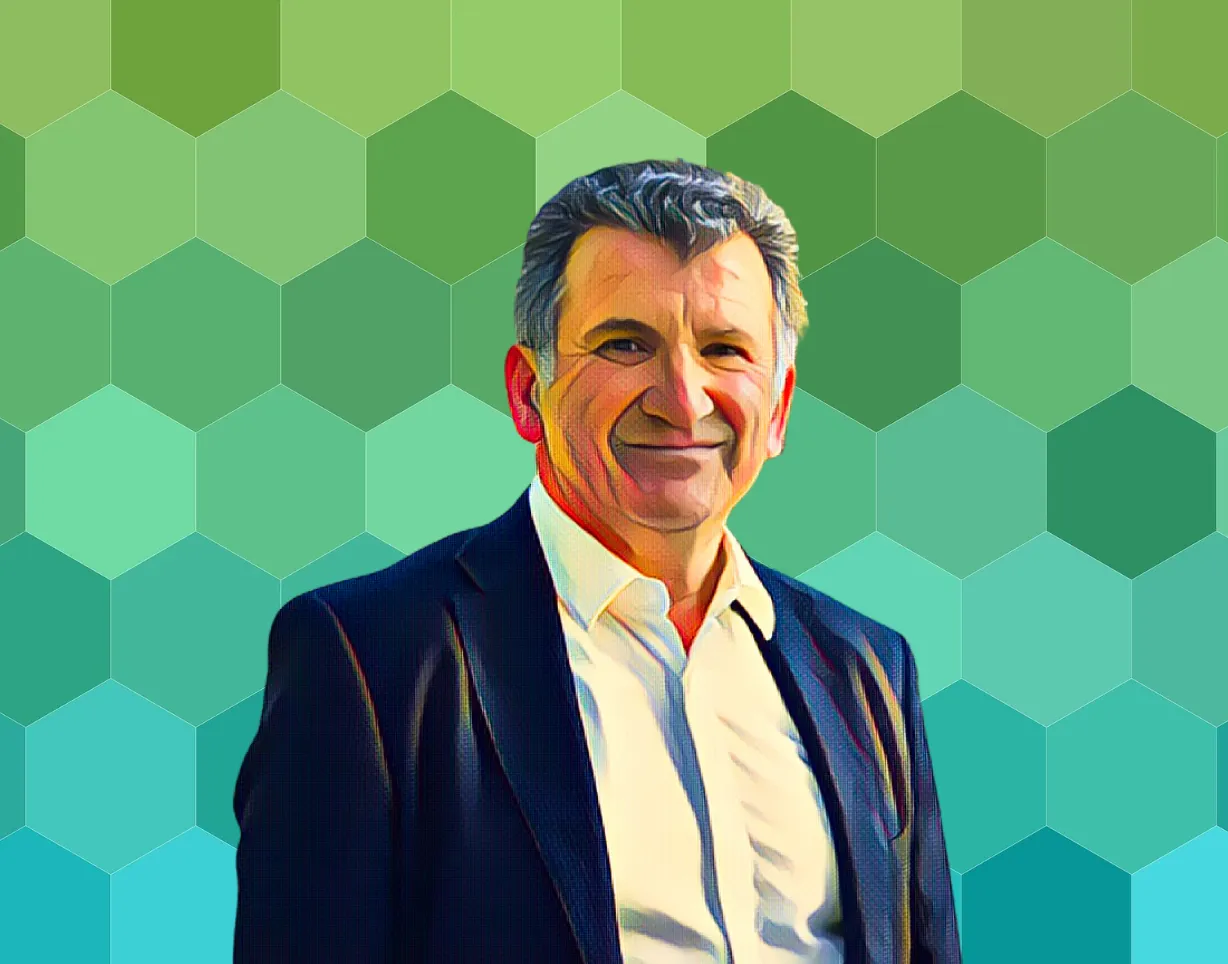
The advertisement ran in the 1980s and asked a simple question. "Does the price of medicine make you sick?" It was cheeky, direct and aimed squarely at a South African consumer being squeezed by pharmacy prices that most people had no choice but to pay. The ad helped turn a single discount pharmacy in the Johannesburg suburb of Mondeor into one of the country's most recognisable retail brands. Ivan Saltzman, who wrote that proposition into every element of the business he and his wife Lynette built over the next four decades, stepped back from his executive role at Dis-Chem on June 30, 2026, at the age of 75. He is now facing the test that every founder-builder eventually faces: whether what he created can survive the handover.
The business he is handing over is, by any measure, formidable. Dis-Chem Pharmacies operates more than 200 retail pharmacies and 44 baby stores across South Africa, with a wholesale arm that services 1,608 independent pharmacies representing approximately 85 percent of South Africa's independent pharmacy market. Its market capitalisation sits at approximately $1.7 billion. Revenue for the six months ended August 2025 reached R21.3 billion, up 8.7 percent, with headline earnings per share rising 9 percent. The business Ivan started in 1978 is now one of the largest consumer healthcare retailers on the African continent.
The succession has been years in the making, which is to say it has not happened overnight, whatever it might look like from the outside. Ivan stepped down as chief executive in July 2023, handing the operational leadership to Rui Morais, the group's former chief financial officer who had been embedded in the business long enough to absorb the Dis-Chem culture before being asked to carry it forward. Lynette stepped back from her executive director role in 2022, remaining connected to the business she co-founded through the group's beauty division. Son Saul, who served as an executive director for 19 years, resigned effective February 2026, shifting to a non-executive role on the board. Ivan himself continued as executive director until June 30, allowing him to oversee the transition while Morais consolidated his own authority.
The ownership architecture underwent its own transformation in June 2025, when Ivan restructured the family's shareholding through the investment vehicle Ivlyn Local Investment Holdings. Sons Dan and Mark, who had held no beneficial interest in Dis-Chem shares before that point, each inherited stakes worth approximately R6.8 billion in combined value through the redistribution. Ivlyn's direct stake fell from more than 29 percent to approximately 4 percent. Dan and Mark each ended up with around 12 percent. The company's messaging around the transaction was consistent: the shares remain within the family. The ownership has been distributed, not diluted.
Whether that distribution strengthens the business or introduces new complications is the question Bloomberg raised in its June 29 feature on the Saltzman succession, which placed Dis-Chem's transition against the broader backdrop of South African retail succession and the mixed record that sector has produced when founding families step back. The lessons from that sector, as Bloomberg frames them, are not uniformly encouraging. Some founder-led retailers have navigated the transition successfully, maintaining the culture and commercial instincts that made them successful in the first place. Others have struggled to replicate what the founders brought to the business with a management team that lacks the same skin in the game.
The early signals at Dis-Chem suggest the market is watching with cautious confidence. Morais has articulated a clear strategic direction: transitioning Dis-Chem from a retail pharmacy into what the group describes as an integrated primary healthcare provider. The store of the future concept, already being rolled out across the network, merges retail, digital health services and wellness ecosystems into a single format designed to capture a larger share of the consumer health wallet than a conventional pharmacy can. The Better Rewards loyalty platform, powered by Bigly Labs by Dis-Chem, rewards customers for filling prescriptions, adhering to chronic treatment plans and making proactive wellness decisions, embedding the pharmacy into the health behaviours of its customers rather than waiting for illness to drive footfall.
Dan and Mark Saltzman have already demonstrated that inheriting a large stake and holding it passively are two different choices. Between January and February 2026, the brothers sold a combined R642 million ($37.9 million) in Dis-Chem shares, just months after inheriting positions worth collectively over R6.8 billion. The sales, disclosed through the JSE's Stock Exchange News Service, triggered market commentary about what the family's long-term commitment to the Dis-Chem share register might look like as the next generation makes its own financial decisions. Neither brother has joined the board in an executive capacity. Their father, as deputy chairman in a non-executive role, remains the most visible Saltzman in the company's governance structure.
Ivan Saltzman built something specific in Dis-Chem. Not just a pharmacy chain, but a retail philosophy built around the idea that health products should be affordable and accessible to ordinary South Africans, and that a business which serves that proposition could grow very large while doing so. "He is indisputably one of the retail giants of his generation who has transformed retail pharmacy," the company's chairman Larry Nestadt said at the time of the step-back announcement. Morais called it "a privilege to work with, learn from, and be inspired by him." Ivan himself described the decision as "the right time to move to a more strategic position." What the position actually requires of him now is something that does not appear on any org chart: staying connected enough to matter without staying involved enough to prevent the people he has empowered from actually running the company. That is the test every founder eventually faces. For Ivan Saltzman, it begins now.
The intelligence satisfies curiosity. The paid briefings satisfy strategy.
Every Monday, Elite subscribers receive an Investor Memo breaking down the deal, the structure and the positioning behind the week's most consequential African wealth story - the kind of analysis that doesn't appear anywhere else.
Twice a month, a Wealth Intelligence brief profiles a single billionaire's holdings, cash flows and expansion pipeline in detail no public source matches.
→ Executive ($25/mo): Daily newsletter + Deep-Dive Reports
→ Elite ($75/mo): Everything above + Investor Memos + Wealth Intelligence + Quarterly Analyst Briefings
Subscribe now