Table of Contents
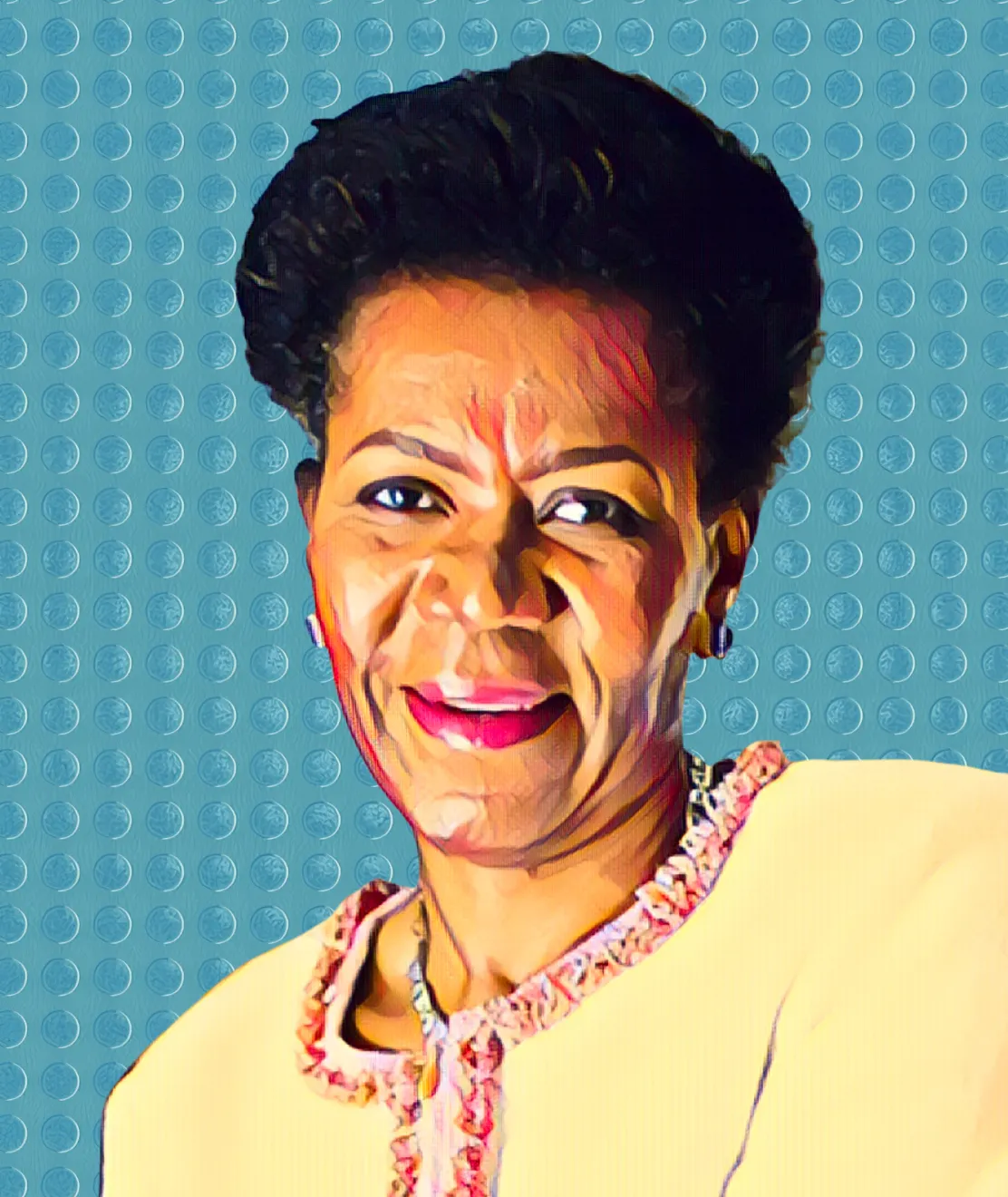
Daphne Mashile-Nkosi controls roughly 67 percent of a $1.3 billion manganese complex in the Northern Cape that houses the largest sinter plant of its kind in the world. She started it with no collateral, having been turned down by every bank she approached.
The complex sits on three farms near Hotazel overlaying more than 960 million tonnes of manganese ore, and comprises an underground mine, an ore preparation plant and the sintering facility. Mashile-Nkosi has described the integrated project, which also includes a planned ferromanganese smelter, as costing $1.3 billion.
She marked its latest phase at the sinter plant launch in November, standing on red Kalahari earth in a white hard hat trimmed with the South African flag.
"We're here to consecrate a battlefield, where a vision refused to die," she said.
Rural organiser, then coal
Mashile-Nkosi came to mining from organising rural women, not from finance or engineering.
She was detained by the apartheid government for her activism and later worked for the National Movement of Rural Women. She joined the Women's Development Bank in 1990 as a community facilitator and loans officer, teaching rural women financial literacy and how to generate their own income.
Her first venture into resources came in 1999, when she established Eyesizwe Coal. Within seven years it had listed on both the Johannesburg and London stock exchanges, and its non-iron ore assets merged with those of Kumba Resources to create Exxaro, one of the largest black-controlled mining companies in South Africa. She was also directly involved in structuring Cell C, the country's third mobile operator, and founded Temoso Telecommunications.
A tip from an old man in Kuruman
An 88-year-old Afrikaans mineworker from Kuruman told her where the ore lay.
The ground was a game farm outside Hotazel, in the John Taolo Gaetsewe district. Mashile-Nkosi drove out with her husband, Stanley Nqobizizwe Nkosi, and found the gate locked.
She and a group of black South African women entrepreneurs registered Kalahari Resources in 2001 to pursue it. Proving the deposit required money she did not have, and she had nothing to pledge. The family home carried a bond and the car was financed, which disqualified both as security.
Banks refused her. Development finance institutions refused her the first time she asked. On the second attempt an investment bank advanced R12 million, about $738,000 at R16.25 to the dollar. She has said she wept in the meeting, and that she did not entirely know why, since she considers herself strong.
She and Nkosi paid for the drilling of 14 exploration holes themselves.
Kalahari Resources received a new order prospecting right in 2005 covering roughly 6,300 hectares across three contiguous farms, Umtu 281, Olive Pan 282 and Gama 283. The Kalahari basin holds about 80 percent of the world's known land-based manganese reserves, and South Africa accounts for 37 percent of global production.
Building the largest of its kind
The Industrial Development Corporation took a stake in January 2007 and Kalagadi Manganese was incorporated.
ArcelorMittal, then the world's largest steelmaker, took 50 percent of the venture, in a transaction Moneyweb valued at more than $400 million. Reported shareholdings during that period placed Kalahari Resources at 40 percent and the IDC at 10 percent, against the 20 percent the IDC holds today. The steelmaker exited in 2016, selling its entire stake to Kgalagadi Alloys.
The structure that emerged gives Kgalagadi Alloys 44 percent, Kalahari Resources 36 percent and the IDC 20 percent, with at least 70 percent of the ultimate shareholders women. Mining Weekly reported her effective holding at 67 percent through Kalahari Resources and Kgalagadi Alloys.
What Mashile-Nkosi chose to build set the project apart. About 80 percent of South African manganese is exported as raw ore, according to Mining Decisions. She built a sintering plant instead, contracting the Finnish engineering group Outotec on a turnkey basis for about 119 million euros to deliver a facility processing 2.4 million tonnes a year.
Sintering heats manganese ore to just below melting point, driving off carbon dioxide and moisture and lifting the grade from 36 to 38 percent up to between 44 and 48 percent. The higher-grade product earns considerably more per tonne and feeds directly into steelmaking. The plant is the largest of its kind anywhere.
The company built its own infrastructure around it: two 132kV power lines from Sishen, an 11-kilometre water pipeline, a 9.5-kilometre access road to the R31, and a rapid rail load-out station with an electrified spur connecting to the Hotazel to Port Elizabeth corridor. A construction village near the site housed up to 1,400 workers.
The plant carries her husband's name. Kalagadi calls it the Stanley Nqobizizwe Nkosi Sinter Plant, after the man who drove with her to the locked gate.
"The decision to build the largest manganese ore processing plant was informed by the country's policy position to beneficiate our products locally so that value is derived across the entire value chain," the company says.
Mashile-Nkosi has put it more directly. Speaking at Tshwane University of Technology this year, where she received an honorary doctorate, she said Kalagadi commissioned its sinter plant before the mine was complete and built the world's largest manganese beneficiation plant before the national framework for it had been imagined.
Kalagadi restructured its senior debt and shareholder loans in 2017. Production began in March 2018, ten years after construction started. By that December the mine had loaded 44,000 tonnes. The first Kalagadi sintered manganese came off the line in February 2019, and Transnet signed a R3 billion rail contract the same year.
"We've put in all our infrastructure," she said at that signing. "Today is a historic moment. We have signed a contract that is a take-or-pay deal. I can't fail. I have to deliver."
Scaling toward three million tonnes
An open pit opened this year, and it changes the arithmetic of the business.
Kalagadi expects the pit to add between 1.3 million and 1.6 million tonnes to the roughly 1.5 million tonnes the underground operation produces, taking the company toward its 3 million tonne annual target and into the upper tier of South African manganese alongside Exxaro's Tshipi é Ntle and Assmang. The pit is designed to run 18 years and create 400 jobs. The underground mine is expected to operate until 2055.
Production is ramping toward 200,000 tonnes a month, with a target of 400,000 tonnes and full-year output of 4 million tonnes.
Ore leaves on 104-wagon trains carrying 63 tonnes each, travelling more than 1,000 kilometres to Coega near Gqeberha and on to China and India. The railhead sits inside the mine and the conveyor can fill a train in under four hours. Kalagadi is testing a 135-wagon configuration. Most of the manganese is alloyed with iron for toughened steel, and roughly a tenth ends up in batteries, largely for electric vehicles.
Kalagadi plans two furnaces over the next two years to produce high-carbon ferromanganese for cars and heavy machinery, which would complete the value chain she set out to build. Running them will need 16 megawatts, enough to power about 16,000 South African homes, and she says talks with Eskom on supply and pricing have been encouraging.
"When you talk about industrialising a country it is projects like this that you need to look at," she told African Business. "We think this year and next year we will see Kalagadi growing by leaps and bounds."
What she owns, and what remains unsettled
The capital that built the complex has not been repaid.
Kalagadi borrowed more than R7 billion, about $431 million, from the IDC, the African Development Bank and Absa. The IDC and the AfDB are owed roughly R3 billion each and Absa nearly R1 billion, and with accrued interest the total has reached about R8.5 billion, some $523 million.
The IDC applied to place Kalagadi in business rescue in 2020, arguing it could not service the debt. Mashile-Nkosi opposed the application and the Johannesburg High Court struck it off the roll as not urgent. Her position has been consistent since: that Kalagadi's assets fairly valued exceed its liabilities, that the lender-approved mining contractor underperformed, and that the debt should be restructured rather than the company placed under supervision. The Supreme Court of Appeal ruled in June last year that the dispute must go to arbitration in London.
Her tone has shifted this year.
"We are trying to talk to each other because, at the end of the day, we need each other," she said in March. "We are no longer interested in fighting. We are interested in building the country."
No published valuation of her personal wealth exists. Forbes and Bloomberg do not track her, Kalagadi is private, and its equity value turns on how the arbitration resolves. She holds chairmanships and directorships across WDB Investments Holdings, the Mpumalanga Gaming Board, Lesedi Drilling and Mining, Pinnacle Treasury Services, Thari Mining, Traxys Africa and the FirstRand Empowerment Trust, none of which discloses what those interests are worth.
Her daughter Zakithi died of hemophagocytic lymphohistiocytosis, a rare immune disorder. The Stanley and Daphne Nkosi Foundation built and donated the Zakithi Nkosi Haematology Centre of Excellence at Chris Hani Baragwanath Hospital in Soweto in her name.
The awards have come from three continents: Africa CEO of the Year at the Africa CEO Forum in Switzerland, African Mining and Metals Deal of the Year at the IJ Global awards in London, African Female Business Leader of the Year in 2015, and the honorary doctorate this year.
"When I walked into the manganese fields, the path was closed," she said at that ceremony.
The intelligence satisfies curiosity. The paid briefings satisfy strategy.
Every Monday, Elite subscribers receive an Investor Memo...
Subscribe now