

Table of Contents
The Republic of Congo's national oil company has opened discussions with Aliko Dangote's refining and petrochemicals business on a strategic partnership designed to strengthen the Central African nation's supply of refined petroleum products, the latest sign that Africa's largest refinery is becoming a continental reference point for fuel security rather than a purely Nigerian asset.
The Société Nationale des Pétroles du Congo, led by Managing Director Maixent Raoul Ominga, sent a delegation to tour the Dangote Petroleum Refinery in Lagos this week as both organisations began exploring how the facility could supply refined products to a country that holds its own refining capacity but has struggled to keep it fully utilised. Ominga described the visit in direct terms. "We have visited this remarkable refinery, which represents a major industrial achievement for Africa. The Republic of the Congo has refining capacity and we are keen to explore strategic cooperation that will help strengthen the supply of refined petroleum products while creating value for both organisations," he said.
The talks, according to both parties, cover refining collaboration, petroleum products supply, energy security, industrial development and knowledge sharing. Ominga praised Dangote Group for proving that an African company could finance, build and operate industrial infrastructure at world-class standard, calling the refinery a milestone in the continent's industrialisation. He also pointed to Dangote's existing cement investments in the Republic of Congo, noting they had already strengthened local industrial capacity, expanded production and improved access to construction materials well before this latest refining conversation began.
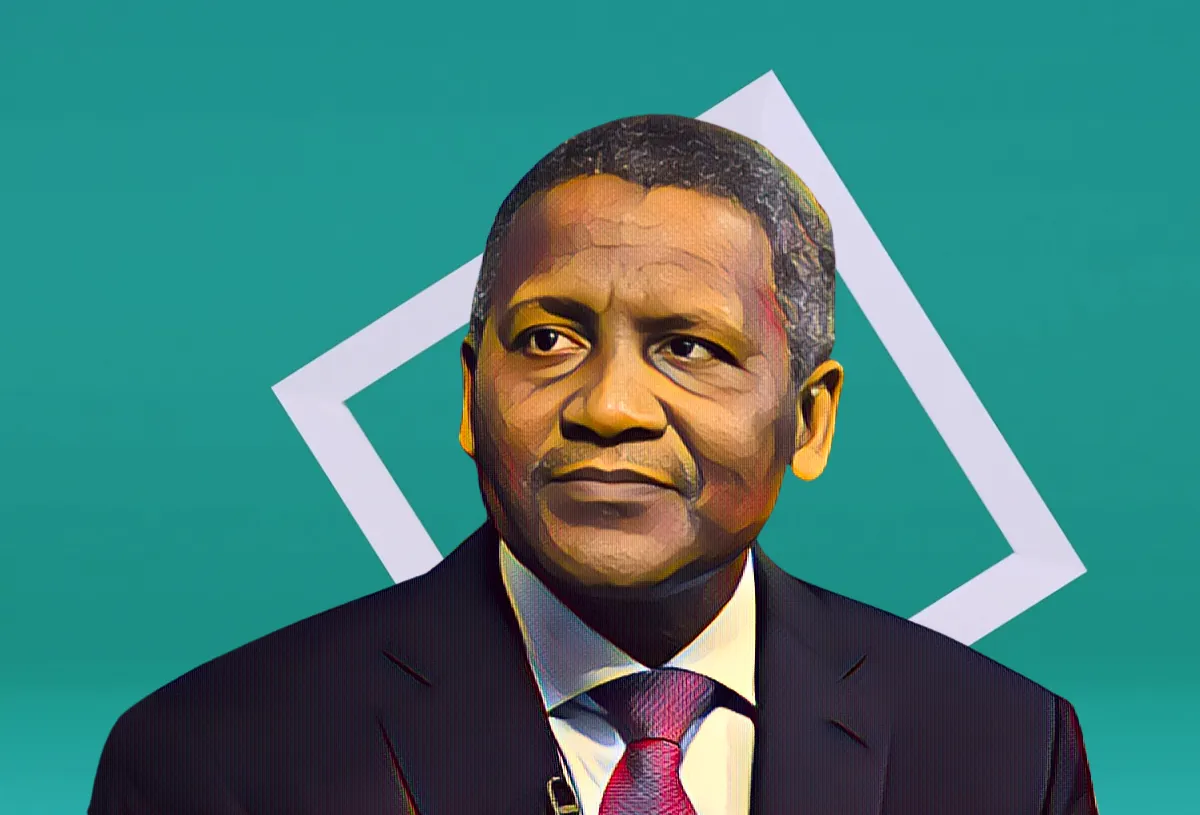
Dangote, addressing the Congolese delegation directly, framed the engagement as consistent with a continental rather than national mandate. "We are for Africa, not just Nigeria. Tell us what you need, and we will see how we can work together," he said. He argued that the refinery has reset the benchmark for fuel quality on the continent, producing products that meet international specifications while reducing Africa's reliance on refined fuel imports from outside the continent, a dependence that has historically cost African governments billions of dollars annually and exposed them to global supply shocks.
The Congo talks arrive as Dangote Group discloses the scale of its next expansion phase. Group Vice President for Oil and Gas, Devakumar Edwin, told the delegation that total refining capacity across the group's African operations is targeted to reach 2.1 million barrels per day, comprising 1.4 million barrels per day in Nigeria and a planned 700,000 barrel-per-day complex in Kenya designed to serve East African markets. Edwin also disclosed that the group intends to invest an additional $46 billion between 2026 and 2028 across its refining, cement and fertiliser businesses, a figure that underscores how aggressively Dangote is positioning the conglomerate as the industrial backbone of African energy self-sufficiency rather than a single-country operator.
For the Republic of Congo, a partnership with the Lagos refinery would address a structural irony that has defined its energy sector for years. The country produces crude oil and holds domestic refining capacity through its own facilities, yet has continued to rely on imported refined products to meet a meaningful share of domestic demand, a gap driven by refining capacity constraints, maintenance backlogs and the technical complexity of running a refinery reliably at scale. A supply arrangement with Dangote's facility, which has already demonstrated it can produce at international specification and at volumes large enough to shift Nigeria from a net importer to a net exporter of refined products, could give Brazzaville a more reliable and cost-competitive source of fuel than the current import mix provides.
The Congolese delegation included Peggy Ndongo, adviser to the President of the Republic of the Congo, alongside SNPC advisers Aymar Ebiou and Norbert Mabiala. On the Dangote side, Fatima Aliko Dangote, Group Executive Director for Commercial Oil and Gas, joined her father at the meeting, continuing her increasingly visible role in the group's oil and gas commercial dealings.
Whether the talks produce a formal supply agreement will depend on commercial terms still to be negotiated, including pricing, volume commitments and logistics for moving refined products from Lagos to Congolese ports. But the engagement itself signals something larger than a single bilateral deal: a growing list of African governments are now treating the Dangote refinery not as a Nigerian industrial project to be admired from a distance, but as a continental energy security asset they are actively seeking to plug into.
The intelligence satisfies curiosity. The paid briefings satisfy strategy.
Every Monday, Elite subscribers receive an Investor Memo breaking down the deal, the structure and the positioning behind the week's most consequential African wealth story - the kind of analysis that doesn't appear anywhere else.
Twice a month, a Wealth Intelligence brief profiles a single billionaire's holdings, cash flows and expansion pipeline in detail no public source matches.
→ Executive ($25/mo): Daily newsletter + Deep-Dive Reports
→ Elite ($75/mo): Everything above + Investor Memos + Wealth Intelligence + Quarterly Analyst Briefings
Subscribe now