

Table of Contents
Sefalana Group, one of Botswana's largest consumer-goods companies, says it lost two major manufacturing projects because the government failed to support them, a setback its managing director blamed on the same bureaucracy that officials say is holding back the country's push to diversify its economy.
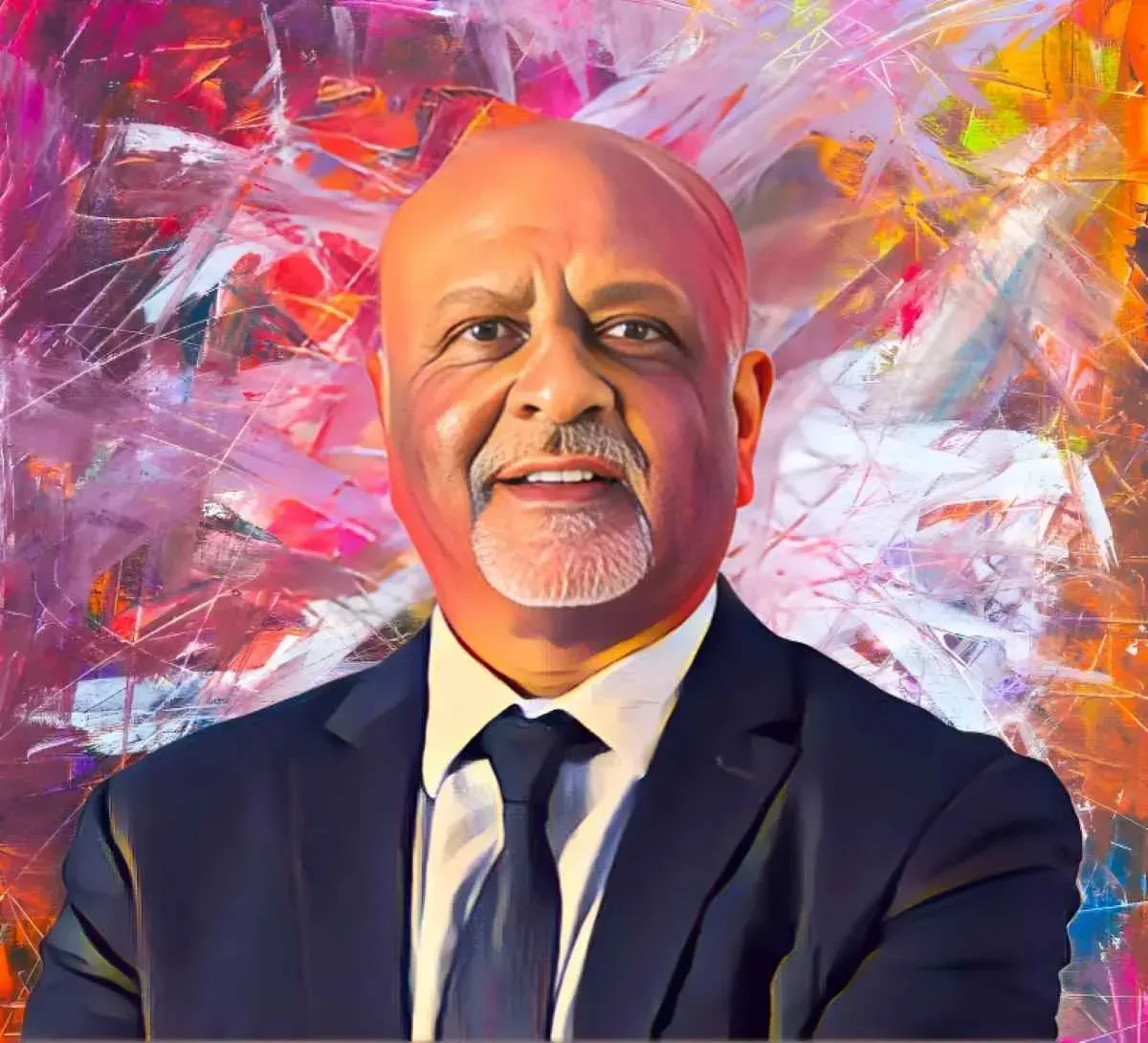
Chandra Chauhan, the retail magnate who runs Sefalana and is its largest individual shareholder, said the company had been developing a dairy business and a cooking-oil plant that would have built out food and beverage manufacturing in Botswana. Both collapsed for lack of government backing, he said, despite repeated calls for the private sector to lead economic growth.
"We were working on two very large projects," Chauhan said at the launch of the World Bank's first Botswana Economic Update, released under the theme of how the country can turn crisis into opportunity. He expressed disappointment at the failure to secure support to see them through.
The dairy project came closest to reality, and its collapse is the sharper illustration. Sefalana had arranged to import 400 pregnant cows from South Africa under a roughly 7 million rand transaction, about $429,000, or 6.12 million pula, to supply a milk operation in Lobatse. Before the animals could be shipped, foot-and-mouth disease struck the region, and authorities refused to allow the cattle across the border even though they were being held in a quarantine area.
Chauhan argued the import should have been permitted under strict conditions rather than blocked outright. The cows were instead rerouted through Zimbabwe and Zambia and ended up in Tanzania, he said, where another farmer took them on.
"What I am trying to say is that if there is a will then we have to find a way to make that happen," he said. "That is why governments are there, that is why veterinary offices are there, that is why customs are there. They needed to do something extraordinary to make that move possible so that we can create an industry."
The complaint lands at a pointed moment for Botswana. The country's economy has been battered by a downturn in the global diamond trade, the source of most of its export earnings and government revenue, and the World Bank report Chauhan was responding to frames the slump as a chance to build industries beyond mining. The private sector is being asked to lead that shift, and Sefalana's experience is being held up by its own management as evidence of how the state undercuts that ambition in practice.
The lost projects fit directly into a strategy Sefalana has pursued for years. The group has been expanding beyond wholesale and retail into food processing and manufacturing, and now owns operations that produce sorghum, soya, maize, malt, soaps and edible oil through its Foods Botswana arm. A dairy business and a dedicated cooking-oil plant would have deepened that vertical integration, allowing the company to manufacture more of what it sells across its store network rather than import it.
That network is substantial. Sefalana operates cash-and-carry outlets, Sefalana Shopper supermarkets and hypermarkets across Botswana, Namibia, Lesotho and Zambia, and has interests stretching to Australia. It was the first company to list on the Botswana Stock Exchange, in 1975, and now ranks among the most valuable stocks on the exchange, with a market capitalisation of about 4 billion pula. It employs more than 8,100 people, making it one of Botswana's largest private-sector employers.
Chauhan has been the architect of its modern rise. A chartered accountant who trained with KPMG in the United Kingdom, the Zambian-born executive joined Sefalana in 2002 when it was worth about $4.87 million and built it into an $800 million regional retailer over more than two decades. He holds a 5.64% stake worth roughly $14.5 million, making him the largest single shareholder in a company that otherwise has no controlling owner.
His frustration reflects a wider tension in Botswana's economy. The country has one of the most stable political systems in Africa and a long record of prudent management, but its heavy reliance on diamonds has left it exposed each time the market turns, and successive efforts to diversify have moved slowly. Business leaders have argued that regulatory caution, however well intended, keeps promising ventures from getting off the ground.
The foot-and-mouth outbreak that sank the dairy deal was a genuine animal-health emergency, and border controls during such outbreaks are standard across the region. What Chauhan was contesting was the absence of any effort to find a workable path for animals already in quarantine, and the message he drew from it, that the state was willing to let an industry-building project fail rather than bend to accommodate it.
Sefalana has not said whether it intends to revive either project. What Chauhan made clear is that the company sees the episodes as a warning about the gap between Botswana's stated ambition to diversify and the support the private sector actually receives when it tries.
The intelligence satisfies curiosity. The paid briefings satisfy strategy.
Every Monday, Elite subscribers receive an Investor Memo breaking down the deal, the structure and the positioning behind the week's most consequential African wealth story - the kind of analysis that doesn't appear anywhere else.
Twice a month, a Wealth Intelligence brief profiles a single billionaire's holdings, cash flows and expansion pipeline in detail no public source matches.
→ Executive ($25/mo): Daily newsletter + Deep-Dive Reports
→ Elite ($75/mo): Everything above + Investor Memos + Wealth Intelligence + Quarterly Analyst Briefings
Subscribe now