


Table of Contents
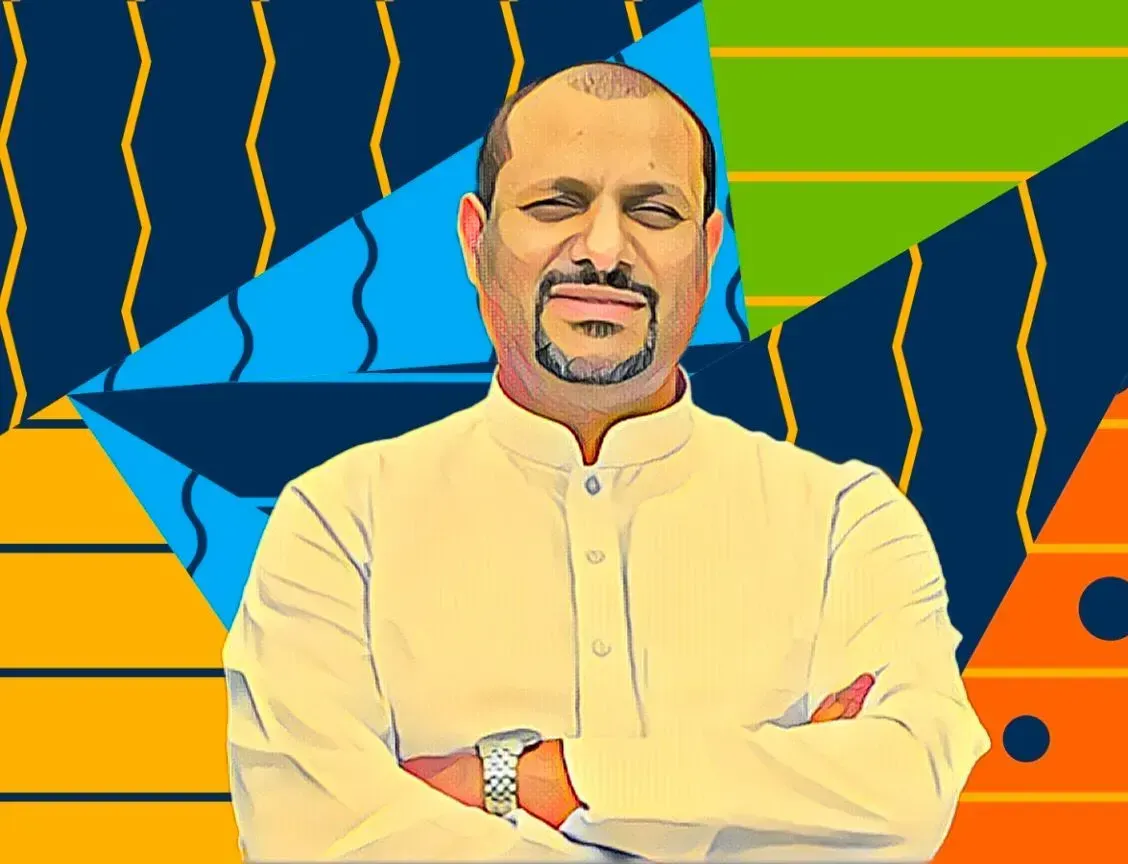
Charles Mbire, the Ugandan tycoon who chairs MTN Uganda, has broken his silence on the collapse of Kampala Cement, saying he resigned from the board more than three years ago over unauthorised transactions linked to his co-directors' business interests elsewhere.
Mbire, who holds a 20 percent stake in the cement maker, said in a phone interview that he had been absent from the boardroom long before creditors moved in. "I have had nothing to do with the management of the board for the past three years," he said. "I also stand a chance of losing the money I invested. But if the receiver sells the business, they can pay me my original capital."
His account is the first from inside the boardroom since KPMG Advisory Limited took control of the company in late June, and it points to a rupture at the top of Kampala Cement well before its lenders acted.
People familiar with the matter said Mbire resigned after alleging that his co-directors moved money out of Kampala Cement to rescue a related company in Kenya. He objected on the grounds that the two firms are separate legal entities, the sources said. The company's other directors are listed as Baryan Manvir Singh Rajinder, Baryan Sukhminder Singh and Singh Rajinder Singh Pritam. They have not publicly responded to the allegations.
The receivership
KPMG partners Edgar Isingoma and Nina Turyamuhabwa were appointed joint receivers and managers over the company's assets on June 29, according to a notice filed with Uganda's Registrar of Companies under the Insolvency Act. The appointment followed the enforcement of a $49.3 million debenture by the Trade and Development Bank, the regional lender formerly known as the PTA Bank.
The debenture is only part of the burden. Kampala Cement had accumulated about $82 million in debt, a figure that had grown over roughly a decade as the company fought to hold ground in a market where margins were squeezed from several directions at once.
A $100 million bet on Uganda's construction boom
Kampala Cement was built to break a duopoly. The company began production in 2015 at a $100 million plant at Namataba, about 30 kilometres from Kampala on the Jinja highway, entering a market long dominated by Hima Cement and Tororo Cement as the country's third producer.
Its ownership brought together two heavyweight investors. Rajinder Singh Baryan, chairman of the Nairobi-based industrial conglomerate Multiple Group, was associated with the venture from the outset, and his company had previously held a distribution agreement with Hima Cement, one of the rivals the new plant was designed to challenge. Mbire's involvement was not publicly known until 2016, when corporate filings revealed him as a partner, giving the venture unusually deep pockets by Ugandan standards.
The plant expanded quickly. In 2016 it was upgraded with a new ball mill, a clinker storage unit and four steel silos of 1,000 tonnes each, as the company chased the infrastructure spending then flowing through Uganda.
It won the contracts to match. Kampala Cement supplied the 600-megawatt Karuma hydropower dam being built by Sinohydro, the second phase of the Kampala Northern Bypass under the Uganda National Roads Authority, the 22-storey Uganda Revenue Authority headquarters, the Mukono-Kayunga road, the Mulago Hospital renovation, housing estates at Nsambya and Nakawa-Naguru, and shopping and hotel developments in Entebbe.
The reputational trouble started early. In 2016, Parliament's Natural Resources Committee questioned the company over the quality of cement it supplied to Karuma after President Yoweri Museveni ordered an investigation into reported cracks in the dam's concrete. Contractors later said the reports had been exaggerated, and no wrongdoing by the company was established, but a parliamentary probe into its flagship contract was damaging publicity for a young brand.
What went wrong
The economics never fully worked. Kampala Cement faced high transport costs moving raw materials to its plant, an expense that ate into margins in a business where cement is heavy, cheap and unprofitable to move far. A price war among Uganda's producers compressed those margins further, leaving the newcomer least able to absorb the pressure while carrying the debt it had taken on to build and expand.
The debt compounded over roughly a decade, and the boardroom fracture removed one of the two shareholders who might have recapitalised the business at the point it most needed support.
Mbire built his fortune across nearly every profitable sector of the Ugandan economy, with interests spanning telecommunications, finance, energy, oil, real estate, agribusiness, transport and logistics. He is best known as chairman of MTN Uganda, the country's largest telecommunications company, in which he has repeatedly increased his shareholding, and he has acquired a stake in Bank of Baroda Uganda. New Vision reported his net worth at more than $350 million in 2016, describing him as the wealthiest indigenous Ugandan.
The cement venture was among his more visible industrial bets, and it is now the one most at risk. His comments make clear he expects to recover his original capital only if the receivers can sell the business as a going concern, an outcome that will depend on whether a buyer sees value in a plant burdened with $82 million of debt in a market that has punished its owners for a decade.
The receivers have not indicated whether they intend to sell the company or restructure it.
The intelligence satisfies curiosity. The paid briefings satisfy strategy.
Every Monday, Elite subscribers receive an Investor Memo breaking down the deal, the structure and the positioning behind the week's most consequential African wealth story - the kind of analysis that doesn't appear anywhere else.
Twice a month, a Wealth Intelligence brief profiles a single billionaire's holdings, cash flows and expansion pipeline in detail no public source matches.
→ Executive ($25/mo): Daily newsletter + Deep-Dive Reports
→ Elite ($75/mo): Everything above + Investor Memos + Wealth Intelligence + Quarterly Analyst Briefings
Subscribe now