


Table of Contents
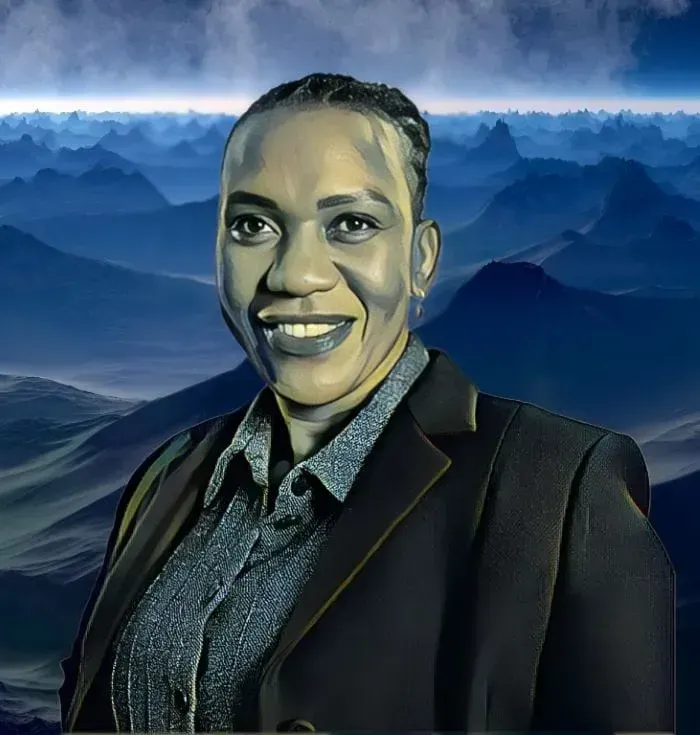
Don Ncube holds 16.35 percent of Kinetiko Energy, the Australian-listed company drilling for natural gas in Mpumalanga, a stake worth about A$9.5 million, or $6.87 million, at Friday's close of 0.038 Australian cents.
The business rests on a single geological fact. Gas in that part of South Africa sits shallow, trapped in sandstone and coal seams between roughly 300 and 750 metres down, close enough to the surface that it can be drawn off with conventional wells rather than fracked. Kinetiko puts the contingent resource across its tenements at 6 trillion cubic feet gross. Contingent means the gas has been found and measured but not yet proven commercially recoverable.
The commercial case is simpler still. Sasol's Mozambican gas fields have supplied South African industry for two decades and are running down. The government's own gas plan warned that shortages would begin this year. Kinetiko's wells sit beside the Lily pipeline, which already runs through the farmland where it drills.
The man who holds the shares
Ncube is 79 and was raised in Alexandra, the square mile of township northeast of Johannesburg that apartheid planners repeatedly tried to bulldoze and never managed to. The Christian Science Monitor, profiling him in 1995, described him as a former political activist who grew up in its squalor.
He left for England and took a master's degree in manpower studies at the University of Manchester, finishing in December 1984. Manpower studies became what is now called human resources, and in the mid-1980s it was one of the only doors through which a black South African could enter the executive floor of a mining house.
Neither Forbes nor the Bloomberg Billionaires Index carries a net worth figure for him.
Twenty-two years at Anglo
Ncube joined Anglo American Corporation and stayed 22 consecutive years, rising to alternate director of both Anglo American Industrial Corporation and Anglo American Corporation of South Africa. He was the first black South African to sit on the parent board. He later served as a director of AngloGold Ashanti.
Anglo at that point controlled a substantial share of the Johannesburg Stock Exchange through a pyramid of cross-holdings, and was under sustained pressure over its labour practices during a decade of mass strikes on the gold and coal mines. Putting a black executive in the boardroom was an appointment and a political signal at once.
He also worked on power station construction during those years, which is where his interest in energy infrastructure started.
What the Anglo years actually bought him
The title mattered less than the education. Twenty-two years inside Anglo taught Ncube how the largest pools of South African capital moved, who controlled them and on what terms they could be persuaded to move.
Every venture he has built since has depended on that knowledge rather than on capital of his own, because he has never had much of his own.
Real Africa, and the class of 1995
Ncube left Anglo and assembled Real Africa Investments Limited, among the first black-controlled companies to list in Johannesburg.
The structure tells you how it was financed. Real Africa was a consortium of financial institutions, trade unions, church groups and a life insurer. Shams Pather, formerly head of investments at Southern Life, which Anglo owned, helped the group buy an equity stake in African Life Assurance. That purchase was the founding transaction.
None of the money was Ncube's. He supplied the structure, the relationships and the credibility, and took equity for it.
The week he became a millionaire on paper
Real Africa listed in March 1995. The Mail & Guardian reported that Ncube, as executive chairman, held shares indirectly worth about R3.7 million at the mid-week close of roughly R2.50. The headline called him one of South Africa's instant millionaires.
By December that year the Christian Science Monitor valued the company at $165 million and noted that three years earlier not one black-owned business had been listed on the exchange.
Real Africa Asset Management, the group's money management arm, became a training ground for a generation of black investment professionals. Mduduzi Ndlovu, now chief executive of Ashburton Investments, joined as an analyst in 1996.
The chairmanships
Alongside Real Africa, Ncube chaired South African Airways, Sun International, the Oceana fishing group and the Atomic Energy Corporation, and later sat as a non-executive director of Gold Fields. He was, through the late 1990s, among the most visible black businessmen in the country.
Real Africa was unbundled around 2005, roughly a decade after listing. Unbundling means a group's assets are distributed to shareholders rather than held together, which ends the company. It was the standard fate of the first empowerment wave, most of which were debt structures wrapped around assets that could not always service the debt.
No investigation or regulatory action attached to it. At close to 60, Ncube started again.
The introduction that produced Badimo
Norman Lowenthal, a former chairman of the Johannesburg Stock Exchange, introduced Ncube in 2005 to two Americans. Brian Hughes was a petroleum engineer. Paul Tromp was a petroleum geologist who had lectured at the University of Zimbabwe. Both had worked Wyoming's Powder River Basin, one of the largest coal bed methane fields in the world, and both believed South Africa held the same thing.
Coal bed methane is gas held inside coal seams. It can be drawn out without fracking and without mining the coal, then cleaned and sold as compressed natural gas for vehicles, power generation, industry or households.
Hughes and Tromp flew Ncube to Powder River and showed him thousands of wells and the pipelines serving them. He founded Badimo Gas in 2006. Badimo is Sotho for ancestors.
A licence nobody knew how to issue
The state had no idea what to do with him. Ncube was told at various points to take his application to Eskom and to Exxaro, neither of which licensed anything. He eventually reached Phumzile Mlambo-Ngcuka, then minister of minerals and energy, who sent him to the Petroleum Agency of South Africa in Cape Town.
The agency had no form for a natural gas application. "There wasn't even a form we could fill in," Ncube later told City Press. Officials adapted one from another process.
Badimo was granted four licences near the Majuba power station, close to a dedicated pipeline.
What he turned down
The Botswana government invited Ncube in 2008 to assess its coal bed methane potential. Depth and logistics made it uneconomic and he left it.
He abandoned a promising area in the Soutpansberg because it sat inside the Mapungubwe National Park, a World Heritage site.
He went to see the farmers around Amersfoort and Volksrust himself and drank coffee with them, which mattered a great deal later when a Scotsman and an Australian appeared in a farmer's mealie field asking to drill.
The constraint that shaped everything after
Ncube had licences, geological data and no money to drill with. Exploration wells cost millions of rand each and produce nothing until they produce everything, which is why explorers are financed with equity rather than debt. Nobody lends against a hole in the ground.
That constraint dictated the next fifteen years. Badimo traded equity for drilling capital, repeatedly, and Ncube's ownership fell each time.
Selling down to stay in
In 2010 Ncube partnered Kinetiko Energy, which listed in Australia in 2011 and raised A$10 million on the strength of Badimo's geological data. Ministerial approval under the Mineral and Petroleum Resources Development Act transferred 49 percent of the Amersfoort licences to Kinetiko, leaving Badimo with 51 percent and black control through the Ncube family trust.
He was direct about his intention at the time. "My aim is not to find something and just sell it on," he told the Financial Mail in 2016, saying he wanted to add to South Africa's gross domestic product and its energy supply.
The joint venture ran through a company called Afro Energy. In 2021 Kinetiko agreed to buy Badimo's remaining 51 percent, consolidating ownership of roughly 7,000 square kilometres of tenements. The deal completed in September 2023 and Ncube joined the Kinetiko board.
His interest in the licences became shares in an Australian microcap.
What the shares are worth
Ncube's 16.35 percent makes him by far the largest individual holder on the Kinetiko board. Executive chairman Adam Sierakowski holds about 5.1 percent and fellow director Robert Bulder about 2.3 percent.
The stock closed at 0.038 Australian cents on Friday, Sept. 11, valuing the whole company at about A$58.4 million, or $42 million, and Ncube's holding at roughly A$9.5 million, or $6.87 million. Conversions are at A$1.39 to the dollar. The shares have traded between 3.6 and 11 Australian cents over the past year and sit near the bottom of that range.
He has kept buying rather than selling down. He took up his entitlement in the June 2024 rights issue, in which existing holders are offered new stock in proportion to what they already own, and subscribed again through placements in September 2025. Placements sell new shares directly to selected investors, which raises cash quickly and dilutes anyone who does not participate.
Why the price keeps moving
Kinetiko became the first company to generate power from onshore gas in South Africa in May 2024, when the Korhaan-1 well near Amersfoort ran a gas generator in partnership with FFS Refiners. The gas measured close to 99 percent methane.
Then the first two wells of a five-well production test programme failed to flow as expected. An engineering study found the drilling method itself was the problem, with water invasion and excessive foam use damaging the reservoir. Drilling resumed in 2025 using revised techniques, and by early 2026 wells at Brakfontein were flowing sustained volumes totalling nearly 8 million cubic feet at methane above 98.5 percent.
The company has a joint venture with the Industrial Development Corporation, the state-owned financier, targeting a 20-well pilot production field at Amersfoort, and has listed on the OTCQB market in the United States. Mxolisi Mgojo, the former chief executive of Exxaro, joined the board in October 2025 and put A$1 million into a placement two months later.
What the record does not show
No commission has examined Ncube, no regulator has sanctioned him and no investigative outlet has published against him, which sets him apart from a good number of his contemporaries in South African empowerment.
The unbundling of Real Africa is the only reversal on the public record, and it was a fate shared by nearly every vehicle of its generation.
Kinetiko has published no date for first commercial gas sales from the pilot field, no figure for what the 20-well programme will cost, and no offtake agreement naming a buyer. Badimo's own accounts are not public, so what Ncube holds outside his Kinetiko shares cannot be established.
The intelligence satisfies curiosity. The paid briefings satisfy strategy.
Every Monday, Elite subscribers receive an Investor Memo breaking down the deal, the structure and the positioning behind the week's most consequential African wealth story - the kind of analysis that doesn't appear anywhere else.
Twice a month, a Wealth Intelligence brief profiles a single billionaire's holdings, cash flows and expansion pipeline in detail no public source matches.
→ Executive ($25/mo): Daily newsletter + Deep-Dive Reports
→ Elite ($75/mo): Everything above + Investor Memos + Wealth Intelligence + Quarterly Analyst Briefings
Subscribe now