

Table of Contents
Dangote Petroleum Refinery and Petrochemicals has raised about $2.5 billion in new equity, completing what the company describes as the largest publicly disclosed primary equity private placement in African history.
The offering was 3.7 times oversubscribed against its initial size, drawing investor demand of close to $4 billion, according to a statement issued Thursday. It was executed in two tranches, of $2 billion and $500 million, at $0.35 a share, with buyers required to take a minimum of one million shares, or $350,000, and further blocks of 500,000. The stock carries a 365-day lock-up.
The placement covered roughly 6 percent of the company and priced it at about $40 billion. It is the first equity raise the refinery has completed with investors from outside its legacy shareholder base. Until now the only outside holder was the state oil company, NNPC, which owns about 7.2 percent.
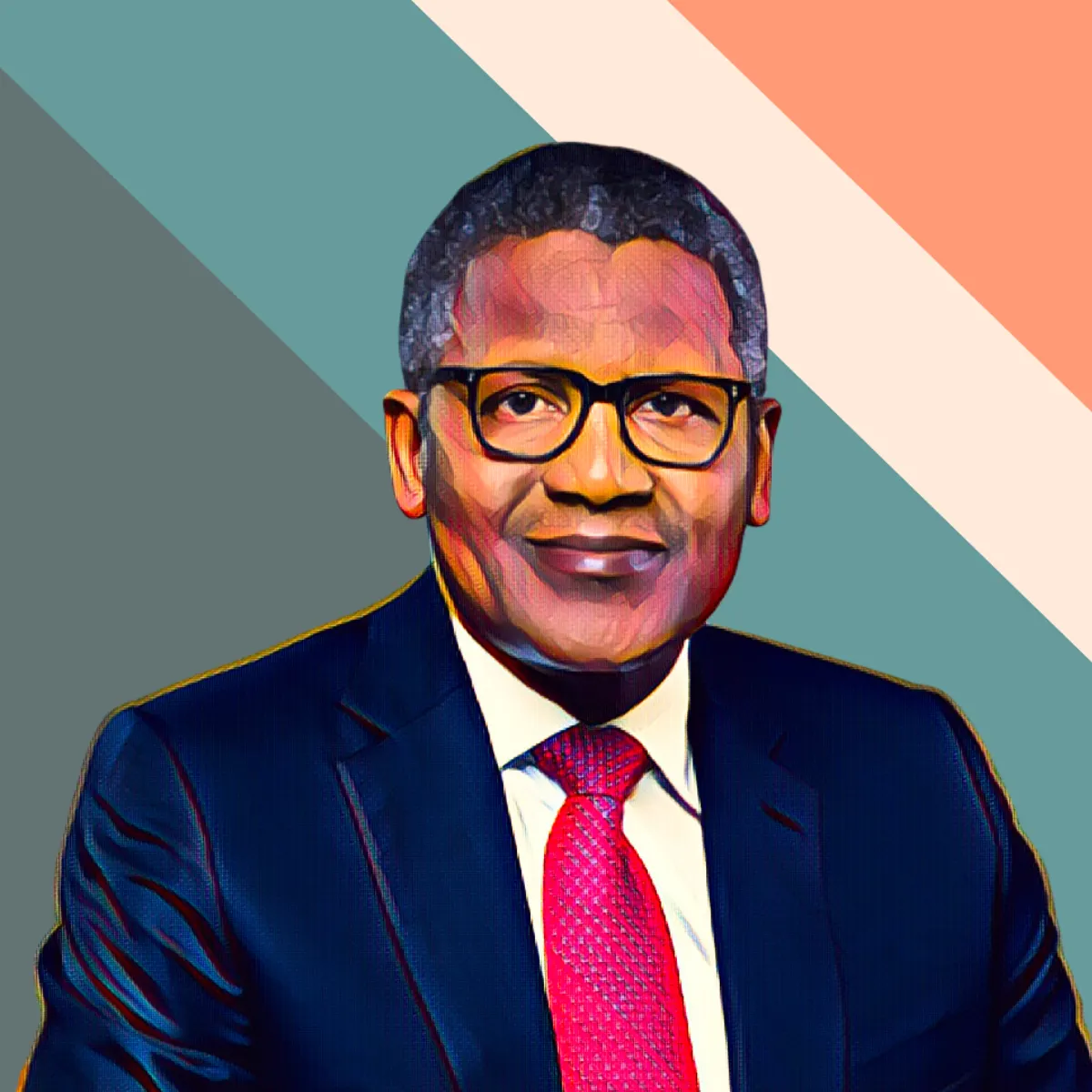
"This further demonstrates our profound commitment to developing domestic refining and petrochemical capacity, reducing Africa's reliance on imported refined products and strengthening the continent's energy security," said Aliko Dangote, the refinery's chairman and Africa's richest person. He described the raise as a move to deepen and institutionalise the shareholder base while complementing internal cash flows and external financing.
David Bird, managing director and chief executive, attributed the response to the company's operational performance.
Dollars from investors rather than the central bank
The timing carries a significance the company has not addressed directly. The refinery has spent recent months unable to obtain enough foreign exchange to buy the crude it processes.
Devakumar Edwin, the group executive director who confirmed the placement to Reuters on July 17, told Bloomberg days earlier that the plant could not get enough dollars from the Central Bank of Nigeria, that selling products in naira made no sense when the proceeds could not be converted, and that the company needed hard currency to buy feedstock. The refinery has been directing a larger share of output to export markets as a result, and Nigeria's gasoline imports more than tripled in June to 18.1 million litres a day.
The placement resolves that problem from a different direction. Rather than waiting on the central bank, the company has raised $2.5 billion in hard currency from institutional investors, much of it regional.
An IPO the regulator has already had to warn about
The placement is a precursor to an initial public offering the company intends to complete this year, expected to raise a further $1.5 billion to $2 billion and open the register to retail buyers through the Nigerian Exchange. That listing would be the largest in African history. The refinery is also weighing secondary listings in South Africa, Kenya, Ghana and the regional West African market.
No timetable has been fixed, and the path has not been entirely smooth. Nigeria's Securities and Exchange Commission issued a public warning last month against participating in what it called a purported initial public offering of the refinery, saying no application had been filed with or approved by the regulator. The commission also raised concern that registered capital market operators were soliciting advance subscriptions from investors for an offer that did not formally exist.
Femi Otedola, chairman of First HoldCo, said during a tour of the refinery in May that he hoped to invest $100 million in the placement. Whether he did has not been disclosed.
What the money is meant to build
Proceeds are directed at expansion, strengthening the capital structure and financial flexibility.
Dangote intends to more than double Nigerian refining capacity from 650,000 barrels a day to 1.4 million, which would make the Lekki plant the largest refinery in the world, ahead of Reliance's Jamnagar complex in India. He has signed a $400 million agreement with a Chinese machinery supplier to accelerate the work, targeting 2029.
The group is also planning a 700,000 barrel-a-day refinery at Lamu on the Kenyan coast, its first outside Nigeria, extending the model into East Africa.
The commercial argument rests on a persistent imbalance. Africa imports more than 70 percent of its refined fuel and roughly $230 billion of essential goods each year, including food, plastics, steel and fertiliser, according to an Africa Finance Corporation report published in April.
Investors bought into a plant running at half speed
The subscription closed during an unusually difficult operating period.
Commodity analytics firm Kpler reported that a fault involving the plant's flue gas steam generator triggered maintenance from July 10, cutting crude runs to between 350,000 and 400,000 barrels a day from 600,000 to 650,000 earlier in the year, and pushing seaborne product exports to a three-month low. Kpler noted that since start-up the refinery's cracker and associated units have required repairs after every six to ten weeks of operation, and identified reliability as the principal risk to sustained high utilisation.
Investors committed at a $40 billion valuation regardless, and the demand exceeded the offer by nearly four times.
The refinery was commissioned in 2023 and began operations in 2024 after eight years of construction and an estimated $20 billion of investment. It is the largest single-train refinery in the world and supplied about 90 percent of Nigeria's gasoline in May.
The intelligence satisfies curiosity. The paid briefings satisfy strategy.
Every Monday, Elite subscribers receive an Investor Memo breaking down the deal, the structure and the positioning behind the week's most consequential African wealth story - the kind of analysis that doesn't appear anywhere else.
Twice a month, a Wealth Intelligence brief profiles a single billionaire's holdings, cash flows and expansion pipeline in detail no public source matches.
→ Executive ($25/mo): Daily newsletter + Deep-Dive Reports
→ Elite ($75/mo): Everything above + Investor Memos + Wealth Intelligence + Quarterly Analyst Briefings
Subscribe now