

Table of Contents
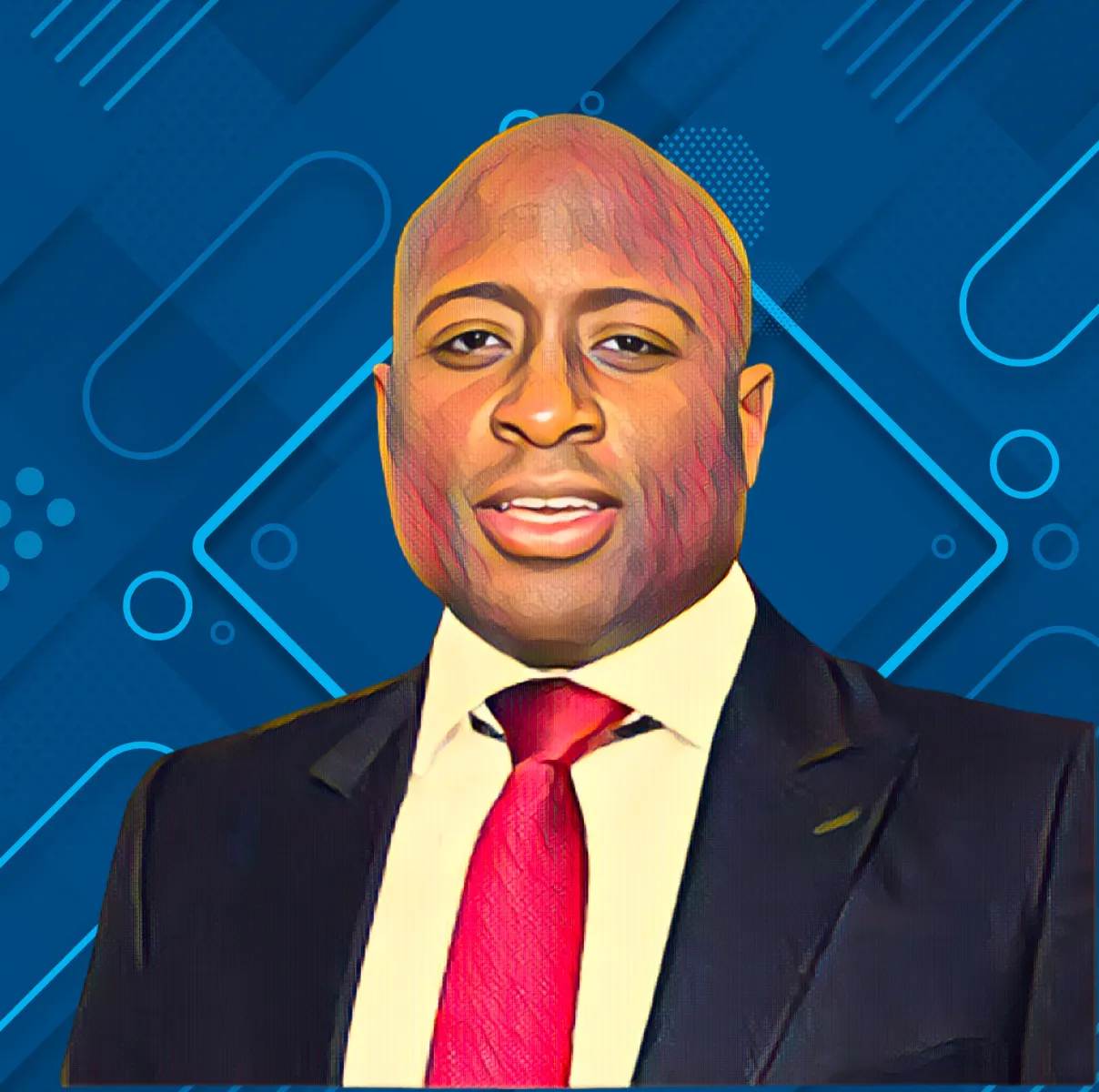
Stanley Jegede solved the hardest problem in Nigerian telecommunications by refusing to dig.
His company, Phase3 Telecom, hangs its fibre-optic cable from the high-voltage towers that carry the country's electricity. The network now runs roughly 6,000 kilometres and reaches all 36 states, built without the trenching, road closures and state-by-state right-of-way permits that have slowed every operator laying cable in the ground.
The method required one thing Jegede did not control. The towers belong to the state, and in 2018 the federal government moved to take the network back and demanded $75.5 million from Phase3 and one other company.
A Verizon desk, then Abuja
Jegede came to the business through two British universities and an American telephone company.
He took an honours degree in business information systems from the University of North London in 1995 and a master's in business information technology from Middlesex University the following year, later qualifying as a certified SAP consultant through the SAP Academy in South Africa. He worked as a business analyst in the United Kingdom between 1997 and 1999, then spent three years at Verizon Communications in the United States, still trading at the time as Bell Atlantic, as a senior business analyst.
He returned home in 2003, and the Nigerian Communications Commission licensed Phase3 Telecom as a National Long Distance Operator that year, permitting it to carry traffic between cities rather than sell connections to consumers. He set up in Abuja rather than Lagos.
Nigeria's terrestrial fibre backbone was thin. Mobile operators had launched in 2001 and were adding subscribers rapidly, moving traffic over microwave links and satellite, and anyone who wanted to lay cable between the cities faced permit costs that varied wildly from one state to the next.
The federal government, then running the grid through the Power Holding Company of Nigeria, put its transmission network out to concession in 2006, offering the right to build and operate fibre along the high-voltage lines. Phase3 and Alheri Engineering Company, a subsidiary of Aliko Dangote's group, won against seven other bidders including Siemens Nigeria, Suburban Telecom, NTL, Optic Networks Limited and the Backbone Company of Nigeria.
Phase3 signed on March 20, 2006, taking a 15-year design, build, finance and operate agreement running to 2021. The deal gave the company points of presence inside transmission substations, access to the fibre along the lines and power supply connectivity at those sites. Correspondence from the Attorney General's office later described it as a $100 million agreement.
Jegede repeated the manoeuvre across the border within months, signing an exclusive right-of-way concession in September 2006 with the Communauté Électrique du Bénin, which runs high-voltage lines across Benin and Togo. That gave Phase3 the longest regional terrestrial fibre network in West Africa at the time and made it the first regional operator with a national fibre backbone spanning six West African countries.
When the state came for the network
The Transmission Company of Nigeria, which inherited the agreement when PHCN was unbundled, wrote to Phase3 on Aug. 30, 2017 cancelling the concession for breach of contract.
The federal government announced in January 2018 that it had terminated both the Phase3 and Alheri concessions. The responsible minister wrote that TCN was moving to recover $75.5 million, or 27.2 billion naira, in outstanding fees from the two companies and to take possession of the infrastructure and commercialise it. Usman Gur Mohammed, then TCN's managing director, put Phase3's arrears at $36.5 million against $40 million due, saying only $3.5 million had been paid.
Both companies rejected the figures. Alheri called the accusation fallacious. Phase3 denied any breach, claimed ownership of the fibre itself, and said it had inherited a non-existent network from TCN and had since deployed more than 3,000 kilometres of cable and installed equipment at a cost above $100 million. The company said TCN was raising the allegations to resist charges Phase3 was entitled to levy for deploying fibre.
Phase3 went to court and won an injunction. On May 28, 2018 the court ordered TCN not to shut down the company's plants and instruments pending determination of the suit, and restrained the TCN managing director from acting on the termination letter. TCN said Phase3 subsequently entered substations at Katampe in Abuja, Keffi in Nasarawa State and Suleja in Niger State to operate the fibre, and the court summoned the TCN managing director in 2019 over non-compliance with its order.
The Attorney General then sided with the concessionaires. Abubakar Malami, then Attorney General and Minister of Justice, advised TCN in writing that summary termination was illegal and a nullity. The Infrastructure Concession Regulatory Commission, TCN and the concessionaires had earlier agreed to appoint a joint auditor to review the dispute, and Malami's advice recorded that TCN had disregarded the auditor's findings and the commission's recommendation.
TCN reversed course on July 9, 2020. Managing director Sule Ahmed Abdulaziz issued an internal letter withdrawing the termination and directing staff to restore access for Phase3 and Alheri to substation points of presence, to the concessioned cable and to power supply connectivity, instructing the National Control Centre in Osogbo to ensure the concessionaires could operate.
Neither party has published a settlement of the fee dispute. The concession reached its scheduled end in 2021, and nothing in the public record explains what replaced it or on what terms Phase3 now runs fibre along Nigeria's transmission network.
Lagos to Dakar
Jegede's most recent build runs 3,500 kilometres along the West African coast.
Phase3 activated a terrestrial fibre route between Lagos and Dakar in May last year with Sonatel, the Senegalese operator, crossing Benin, Togo and Ghana and delivering latency as low as 32 milliseconds. The companies presented it as a land-based alternative to the subsea cables that carry most of West Africa's internet traffic, after disruptions hit the region in 2024.
"This isn't just a route, it's a digital spine for West Africa," Jegede said. "We've created a secure, high-capacity terrestrial path linking Dakar to Lagos while interconnecting our major platforms."
The link extends the company's Lagos to Accra corridor westward, carries Sonatel's Djoliba network into Nigeria and underpins Ikasira, Sonatel's regional platform. It connects into local cloud zones including the AWS Wavelength deployment in Dakar. Sékou Dramé, chief executive of Sonatel, called the partnership a groundbreaking initiative. Craig Lowe, chief growth officer at Phase3, said downtime was no longer an option.
The companies said commercial availability and service packages would be announced soon. Fifteen months on, a search of trade and regional telecommunications coverage produces no such announcement, and neither company has published pricing or named a customer on the route.
Phase3 sells wholesale rather than retail, a business the industry calls a carrier's carrier, supplying capacity to mobile operators, internet service providers, banks, government agencies, universities, hospitals and multinationals. The company says it has delivered more than 400 projects, with partnerships giving clients network access into over 400 cities worldwide. Jegede added Coverage Broadband and P3Tech between 2014 and 2022 to move into enterprise services and technology products, and the company now describes its offering as spanning fibre, media and fintech across the ECOWAS region.
His public roles grew alongside the network. President Goodluck Jonathan appointed him to the presidential committee that drafted Nigeria's broadband roadmap, and Phase3 became a central contractor on Wire Nigeria, the federal programme to extend broadband into every state.
What none of it reveals is what the business is worth. Phase3 is private, publishes no accounts and has never had a valuation published. Jegede does not appear on the Forbes or Bloomberg rankings. His board includes his wife Mosunmola alongside Stephen Bello, Haroun Aliyu, the retired air commodore Babatunde Adekoya and Glenn Prince-Abbi. He founded the Stanley Jegede Foundation, which runs an education development programme, chairs the boards of Cradle 2 Crayon and Springhall British Schools, and lives in Abuja with his wife and three children.
The $100 million the company says it spent building the network remains the only substantial figure attached to a business carrying traffic across much of West Africa.
The intelligence satisfies curiosity. The paid briefings satisfy strategy.
Every Monday, Elite subscribers receive an Investor Memo breaking down the deal, the structure and the positioning behind the week's most consequential African wealth story - the kind of analysis that doesn't appear anywhere else.
Twice a month, a Wealth Intelligence brief profiles a single billionaire's holdings, cash flows and expansion pipeline in detail no public source matches.
→ Executive ($25/mo): Daily newsletter + Deep-Dive Reports
→ Elite ($75/mo): Everything above + Investor Memos + Wealth Intelligence + Quarterly Analyst Briefings
Subscribe now